Kaveri Ingale: From Strategy to Impact
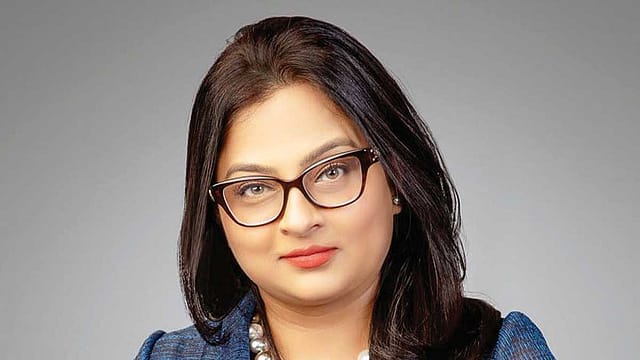
Looking back on your journey what is the one thing that stands out for you about the importance of celebrating Women’s Day in India. In India, where tradition and modern ambition often intersect, celebrating Women’s Day becomes a moment of collective reflection. It encourages young girls to believe their voices are valid. It encourages industries to introspect about equity. What stands out most is the sense of solidarity. The idea that when one woman rises, she creates space for many more. And that is something worth celebrating— not just on one day, but every day.
How has the sum of your work experiences from Wipro technologies to Nokia to Vodafone and much else in between, shaped your perspective of leadership as Managing Director - Operations, Believe? My journey across Multinationals, across Industries and across various roles has taught me that leadership is about clarity of purpose, adaptability and most importantly people. Over the years, I have learnt to balance speed with strategy and performance with accountability. As Managing Director – Operations at Believe, I draw from those experiences daily. Leadership, for me, is about building resilient teams, enabling ownership, and creating systems that empower creativity while delivering scalable and sustainable growth.
What profound changes would you like to see become ‘the new normal’ for women in leadership roles in the corporate world? I’d like to see Women’s evaluation based purely on impact and capability, not on style, personality, or perceived ‘fit.’ Flexibility should be embedded into corporate culture—not as a concession for women, but as a smarter way of working for everyone. I hope to see more women shaping strategy, influencing policy, mentoring others and building inclusive ecosystems.
Women by nature are nurturers and multi-taskers. What needs to be reset in a male dominated corporate culture to unlock opportunities and create inclusivity in the truest sense for women to rise to their full potential at the workplace? The reset we need is moving beyond stereotypes. Leadership opportunities should be defined by capability, competence, and ambition, not assumed traits. Corporate culture must redefine leadership —shifting from command-and-control to inclusive, outcome-driven models. Access and sponsorship are essential. Women don’t just need a seat at the table; they need meaningful visibility in high-impact roles and ownership of P&L responsibilities. However, these opportunities must be earned and entrusted based on credibility, and the potential to deliver results—not extended as concessions or symbolic gestures.
From your own position as a successful Woman leader, how would you rally women to seize the moment and prove their mettle in this rapidly evolving corporate environment? Have you ever heard the term “man leader”? Then why do we so often feel the need to qualify someone as a “woman leader”? Leadership should not require a gender prefix. When we label women differently, even unintentionally, we reinforce the idea that they are exceptions rather than equals. True inclusivity begins when leadership is simply leadership—defined by vision, experience and impact. My message would be to invest deeply in your competence. Build domain expertise, understand the business end-to-end, and take ownership beyond your defined role. Confidence is strong when it’s backed by capability and strongest when reinforced by proven delivery.