How MetaGO Is Helping Users Improve Their Metabolic Health?
Type 2 diabetes, high blood pressure, PCOS, and thyroid-related weight gain are showing up earlier and more often across India, and many of these conditions trace back to one shared root: poor metabolic health.
The ICMR-INDIAB study, the largest national survey of its kind, estimates that 101 million Indians live with diabetes and 315 million with high blood pressure. Against that backdrop, the number on the weighing scale tells only part of the story.
What matters more is how well the body handles sugar, fat, and blood pressure beneath it. MetaGO, a Mumbai-based medical weight management platform, has built its approach around that idea.
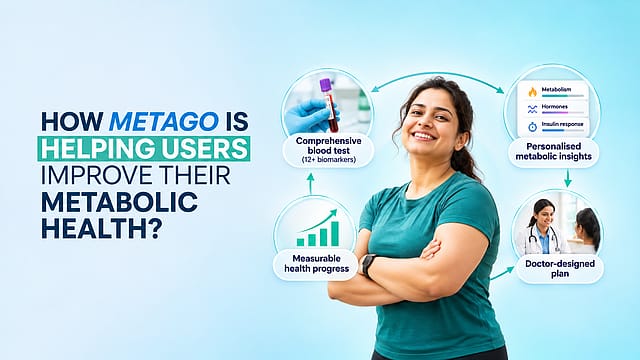
MetaGO improves metabolic health through a doctor-supervised weight loss program that combines in-depth medical tests with doctor-guided GLP-1 therapy. It offers nutrition coaching tailored to Indian diets and ongoing monitoring.
What Is Metabolic Health and Why Does It Matter?
Metabolic health refers to how well the body processes food into energy. It does so while maintaining blood sugar and blood pressure at healthy levels. A person is considered metabolically healthy when these markers sit in the normal range without the need for medication.
Doctors typically assess five markers:
• Waist circumference: 90 cm or more in men and 80 cm or more in women is considered obese for Asian Indians
• Fasting blood sugar: 100 mg/dL or higher
• Blood pressure: 130/85 mmHg or higher
• Triglycerides: 150 mg/dL or higher
• HDL cholesterol: below 40 mg/dL in men and below 50 mg/dL in women
When three or more of these are out of range, doctors diagnose metabolic syndrome, a cluster linked to a higher risk of type 2 diabetes and heart disease.
Indians tend to develop metabolic risk at a lower BMI than Western populations and are more prone to central or belly fat, even when overall weight looks normal. ICMR-INDIAB estimates that 39.5% of Indians, around 351 million people, have abdominal obesity.
This is why MetaGO's assessment looks past body weight to markers that actually reveal what is happening inside the body.
Signs Your Metabolism Needs Attention
Metabolic problems usually build quietly over years. These common signals suggest it may be time to get checked:
• Stubborn belly fat that stays put even when weight elsewhere drops
• Persistent fatigue, especially an energy slump after meals
• Frequent sugar cravings, such as reaching for mithai or chai and biscuits through the day
• Irregular periods, which can be linked to PCOS and insulin resistance
• Rising sugar or BP readings at routine health check-ups
None of these confirms a metabolic condition on its own, and several overlap with thyroid disorders and other issues. Each one is a reason to get tested and speak to a doctor.
Family history matters too: a parent or sibling with type 2 diabetes or heart disease raises the likelihood of metabolic problems. So, these signs deserve earlier attention in people with that background.
Start with Your Numbers: Use the MetaGO BMI Calculator
The simplest first step is to know your numbers, and the free MetaGO BMI calculator provides a quick starting point. Body Mass Index compares weight to height and helps flag whether weight may be raising health risks.
BMI has limits. It cannot tell muscle from fat, and it does not show where fat is stored. Two people with the same BMI can carry very different amounts of belly fat and have very different health risks, which is why doctors pair BMI with a waist measurement and blood tests.
For Indians, the cut-offs also differ. Indian consensus guidelines use lower thresholds than the WHO global ranges to reflect higher risk at lower body weight:
Check your BMI in 30 seconds with the MetaGO BMI calculator. From there, MetaGO's TDEE calculator estimates daily calorie needs, and its ideal weight calculator gives a healthy weight range for your height.
How MetaGO's Weight Loss Program Works
MetaGO's weight loss program is built around metabolic health from the first consultation. It is available online and runs in four connected stages.
Doctor Consultation and Metabolic Assessment
Every user begins with a doctor consultation and a metabolic assessment covering more than 35 health markers.
The doctor reviews medical history, existing conditions, and current medications alongside blood test results, BMI, and waist measurement, building a picture of what is driving weight gain before any treatment is decided. Findings at this stage, such as insulin resistance, raised triglycerides, or an underactive thyroid, each shape the plan differently.
Personalized Medical Plan
Based on the assessment, the doctor draws up a personalized plan.
Where clinically suitable, this can include doctor-guided GLP-1 therapy, a class of prescription medicines that helps regulate appetite and blood sugar. GLP-1 medicines are prescription-only in India. At MetaGO, they are prescribed and monitored by doctors.
Medication is not part of every plan; that decision rests on the doctor's clinical judgment.
Nutrition and Lifestyle Coaching
Users get weekly one-to-one sessions with a nutrition or health coach. Meal plans are built around Indian food habits, whether that means home-cooked dal-roti, an idli-sambar breakfast, or a working professional's office tiffin.
The focus is on adequate protein to protect muscle, balanced portions, and activity goals that fit real daily routines.
Continuous Tracking and Follow-ups
The doctor monitors progress at monthly consultations and confirms it through quarterly blood tests. Changes in weight, blood sugar, blood pressure, and other markers are tracked over time.
Between consultations, users have ongoing chat support with the doctor. They can track their progress on the MetaGO app. The plan is adjusted as there is progress in the numbers.
Why this approach works: Weight is often the visible outcome of underlying metabolic dysfunction. By measuring markers at the start, treating the drivers under medical supervision, and re-testing at regular intervals, MetaGO's weight loss program targets the drivers behind weight gain, with the scale as one measure among several.
Who Can Benefit from MetaGO?
MetaGO's program is designed for adults dealing with:
• Obesity with metabolic risk
• Type 2 diabetes or prediabetes
• PCOS
• Thyroid-related weight gain
• High blood pressure
• A weight plateau despite consistent diet and exercise
• Repeated cycles of losing weight and regaining it
Eligibility for the weight loss program, and for any medication within it, is decided by a MetaGO doctor after the initial assessment. For people who have tried crash diets and gym plans on their own, the program adds medical oversight and a clear, measurable baseline to work from.
Frequently Asked Questions
Can metabolic health be improved without medication?
Yes. Many people improve their metabolic markers through changes in diet, physical activity, sleep, and stress. Medication is considered only when a doctor finds it clinically appropriate, and lifestyle changes remain central either way.
Is BMI enough to judge metabolic health?
No. BMI is a useful screening tool, but it does not measure where fat sits, blood sugar, blood pressure, or cholesterol. Doctors combine BMI with a waist measurement and blood tests for a complete picture.
How long does MetaGO's weight loss program take to show results?Time required varies depending on the person's existing conditions, and the plan prescribed. The person's progress is reviewed at monthly doctor consultations and confirmed through blood tests conducted quarterly.
Conclusion
Improving metabolic health follows a clear path: test the markers, treat the conditions under medical supervision, and maintain progress with regular monitoring. A good first step is checking your BMI with the free BMI calculator from MetaGO. To go further, book a consultation at MetaGO's Andheri clinic or online.
References
1. Anjana RM, Unnikrishnan R, Deepa M, et al. Metabolic non-communicable disease health report of India: the ICMR-INDIAB national cross-sectional study (ICMR-INDIAB-17). Lancet Diabetes Endocrinol. 2023;11(7):474-489. doi:10.1016/S2213-8587(23)00119-5
2. Alberti KGMM, Eckel RH, Grundy SM, et al. Harmonizing the metabolic syndrome. Circulation. 2009;120(16):1640-1645. doi:10.1161/CIRCULATIONAHA.109.192644
3. Misra A, Chowbey P, Makkar BM, et al. Consensus statement for diagnosis of obesity, abdominal obesity and the metabolic syndrome for Asian Indians and recommendations for physical activity, medical and surgical management. J Assoc Physicians India. 2009;57:163-170.
4. WHO Expert Consultation. Appropriate body-mass index for Asian populations and its implications for policy and intervention strategies. Lancet. 2004;363(9403):157-163. doi:10.1016/S0140-6736(03)15268-3