Breathing a Slow Death
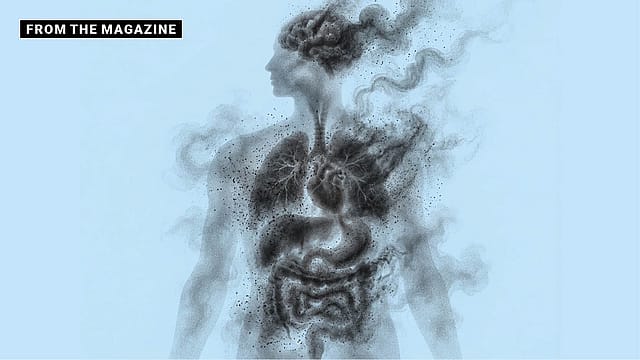
Across vast parts of northern India, millions of people live with chronic pollutant exposure that begins before birth and continues across the lifespan. Delhi, for example, is consistently ranked among the 10 most polluted cities in the world. It has been estimated that Delhi residents may lose 8.2 years of their life expectancy due to air pollution. Environment experts attribute this to multiple causes, including geography, roadside dust, construction activity, industrial pollution, vehicular emissions, farm fires, and others.
For many decades, air pollution was regarded almost exclusively as a respiratory problem. The thought of pollution conjured up images of black lungs, elderly people coughing and wheezing, and asthmatic children puffing on inhalers. It is true that the most devastating and visible effects of air pollution are on our lungs and the heart. However, air pollution can have profound hormonal and metabolic effects. The endocrine effects are often silent and cumulative, becoming evident after long periods of exposure. We now know that air pollution can play a role in insulin resistance, type 2 diabetes, obesity, thyroid dysfunction, and reproductive problems. It can also adversely affect bone health and affect stress-hormone responses.
Contents of Polluted Air
Polluted air is a complex mixture rather than a single toxic substance. Its composition varies with geography, season and sources of emissions.
PM10 (particles smaller than 10 microns) are larger inhalable particles, originating from road dust, construction, industrial activity, and other sources. PM2.5 (smaller than 2.5 microns), which are about 30 times thinner than human hair, can penetrate deep into the lungs and trigger inflammation; the tiniest among them can directly reach distant organs via the bloodstream. It is not just the size that matters; the composition matters too. Diesel exhaust contains polycyclic aromatic hydrocarbons (PAHs). Industrial emissions contain dioxins, furans, and heavy metals such as lead, cadmium, mercury, and arsenic. Agricultural burning releases pesticides and organic chemicals. Indoor air adds phthalates from plastics, flame retardants, and formaldehyde from building materials.
A person breathing Delhi air in November inhales a mixture of PM2.5, PAHs, metals, and gases simultaneously.
We now realise that the endocrine glands and their products, hormones, are sensitive to the effects of air pollution, in particular PM2.5. The classic endocrine glands include the pituitary gland at the base of the brain, thyroid, adrenal glands, gonads, pancreas and parathyroid glands
Effects on Endocrine System
We now realise that the endocrine glands and their products, called hormones, are exquisitely sensitive to the effects of air pollution, in particular PM2.5. The classic endocrine glands include the pituitary gland at the base of the brain (also considered the master gland), thyroid, adrenal glands, gonads (testes or ovaries), pancreas and parathyroid glands.
There are three main routes by which air pollutants reach endocrine tissue. First, in the lungs, the smaller PM2.5 particles (PM0.1) enter the blood within minutes. They carry chemicals on their surfaces, delivering them directly to target organs. Second, ingestion of pollutants can alter the microbiome, increase intestinal permeability, and alter endocrine pathways. Third, solid ultrafine particles can travel along the olfactory (smell-related) nerve to the brain, reaching the pituitary gland and hypothalamus.
The endocrine consequences of polluted air are likely to arise from a combination of direct chemical interference and indirect biological effects and are summarised as follows:
• Oxidative stress: Inhaled pollutants generate reactive oxygen species (ROS), unstable molecules that can damage cells.
• Chronic inflammation: Exposure to particulate matter can cause persistent low-grade inflammation, which increases insulin resistance, obesity and heart disease, and can interfere with hormone signalling.
• Endocrine disruption: Pollutants and chemicals carried by particulate matter can interfere with hormone production, transport, metabolism and receptor activity. Some can mimic or block the actions of natural hormones. These are called endocrine-disrupting chemicals (EDCs). Examples include certain polycyclic aromatic hydrocarbons, heavy metals and organic pollutants.
• Autonomic nervous system activation: Air pollution can activate the sympathetic nervous system and the body’s stress responses. This may increase blood pressure and affect glucose regulation.
• Epigenetic changes: Longer exposure can influence the way genes are switched on or off, and can have a profound long-term impact if exposure occurs during pregnancy and early childhood.
Several of these mechanisms can operate simultaneously.
Pollution and Diabetes
Diabetes in Indian cities has increased almost tenfold in the last four decades. While this has been attributed to reduced physical activity and dietary change, recent data suggest that air pollution may be playing an important role. In a 2018 study published in the Lancet, US researchers followed 1.7 million veterans for 8.5 years. Increasing PM2.5 levels were found to be associated with a rising incidence of diabetes. This association was evident even at levels of particulate matter normally considered safe. As particulate matter crossed 12 mcg (the recommended upper limit), 24 per cent of people developed diabetes. It has been estimated that 14 to 20 per cent of cases of diabetes worldwide could be attributed to air pollution.
More recently, a landmark study conducted by leading Indian researchers (including, among others, Drs V Mohan, Nikhil Tandon and D Prabhakaran) showed that a 10 mcg rise in monthly average PM2.5 exposure was associated with an increase in blood glucose and HbA1c. More significantly, a 10 mcg increase in annual average exposure was associated with a 22 per cent higher risk of developing type 2 diabetes. These findings are particularly concerning for India, which already has a very large population living with diabetes and substantial exposure to air pollution. Reducing pollution may reduce diabetes rates across countries, particularly in heavily polluted countries like India.
Diabetes in Indian cities increased almost tenfold in 40 years. Data suggests that air pollution may play an important role. It is estimated that 14 to 20 per cent of cases of diabetes worldwide could be attributed to air pollution
Increased Risk of Diabetes
First, PM2.5 inhaled into the lungs triggers oxidative stress and inflammation, generating inflammatory signals that cross into the blood and affect adipose tissue and skeletal muscle, leading to insulin resistance. Because of their small size, some PM2.5 particles directly enter the bloodstream too. Second, it affects the liver. Inflammatory signals, metabolic stress and altered signalling can disrupt normal glucose and lipid metabolism. Third, PM2.5 may also directly affect the pancreas. Experimental studies suggest that oxidative stress and inflammation can damage pancreatic β-cells and impair insulin secretion.
Outdoor air pollution can affect diabetes in less direct ways too. Polluted environments are often a reason for people to avoid outdoor activity, including walking. Reduced physical activity plays a major role, both in increasing diabetes rates and aggravating complications. Stress and lack of sleep in polluted environments may themselves aggravate the risk of diabetes.
What about Obesity?
The possibility that air pollution contributes to weight gain is attracting increasing attention. Fat (adipose tissue) is an active endocrine organ that releases several hormones and signalling molecules, collectively called adipokines. Exposure to particulate matter can promote inflammation in adipose tissue, which leads to alterations in adipokines, suggesting a possible pathway linking polluted air with obesity-related metabolic disturbances. Reduction in physical activity in polluted environments can contribute to weight gain too.
What about the Thyroid?
Certain pollutants can affect thyroid hormones. Perchlorate, thiocyanate from cigarette smoke and biomass burning, and nitrate from fertiliser and vehicle exhaust may reduce iodine uptake. When iodine uptake falls, hormone production falls. PAHs and polychlorinated biphenyls and heavy metals such as cadmium and mercury accumulate in thyroid tissue and interfere with thyroid enzymes.
Epidemiological studies have consistently linked PM2.5 exposure to higher thyroid-stimulating hormone (TSH) and lower free T4, particularly in pregnant women and children. Not just PM2.5 but PM10, nitrogen dioxide and sulphur dioxide could also play a role in the development of hypothyroidism. Aggravation of thyroid autoimmunity is another concern.
This could potentially have great importance during early pregnancy, since even minor alterations in maternal thyroid function can impact foetal brain development.
Although the evidence on thyroid effects is not sufficient to establish causality, the link is biologically plausible.
Impact on Stress and Sleep
Air pollution can act as a stressor. Exposure to pollutants may alter cortisol secretion and its normal daily rhythm. Prolonged cortisol excess can produce insulin resistance, raise blood sugar and favour abdominal fat accumulation.
Sleep is also disrupted. PM2.5 and noise pollution associated with traffic increase sleep fragmentation. Melatonin secretion, which is regulated by light and darkness, is suppressed by the need to stay indoors with windows shut and lights on.
The combination of pollution, disrupted sleep, and chronic stress creates a metabolic trap that is difficult to escape through diet and exercise alone.
Reproductive Hormones and Fertility
Reproductive function is a finely regulated process involving several hormones. Certain air pollutants, particularly polycyclic aromatic hydrocarbons and chemicals carried on particulate matter, may interfere with this system.
An association between air pollution and impaired sperm quality, including reduced sperm concentration and motility, and increased DNA damage, has been shown. Oxidative stress is thought to be one of the important mechanisms. PAHs and phthalates reduce testosterone synthesis, which could impact both libido and sperm formation.
In women, pollutants may influence ovarian function. Polycystic ovary syndrome (PCOS, PMOS) is increasingly linked to environmental factors. Menopause appears to arrive earlier in women with chronic high exposure. Long-term PM2.5 exposure is associated with earlier age at natural menopause, likely through accelerated ovarian ageing.
Pregnancy is a particularly vulnerable period. Air pollution has been associated with adverse pregnancy outcomes, including preterm birth, impaired foetal growth and stillbirth. Potential links between pollution and gestational diabetes and hypertensive disorders of pregnancy have been described. Pollutants accumulate in placental tissue and may impact foetal programming. A child exposed in utero to high PM2.5 may be born with normal weight but may have undergone programming that results in metabolic changes that only become apparent years later.
Air pollution has been associated with adverse pregnancy outcomes, including preterm birth and stillbirth. Pollutants accumulate in placental tissue and may impact foetal programming
Vitamin D and Bone Health
Vitamin D is synthesised in the skin upon exposure to UVB radiation. In heavily polluted cities, particulate matter scatters and absorbs UVB, reducing vitamin D synthesis by up to 50 per cent. India is one of the most severely affected countries by vitamin D deficiency, despite abundant sunshine, a paradox explained largely by air pollution. In adults, it can result in osteomalacia—soft, painful bones and muscle weakness. Chronic deficiency can result in weak bones and increased risk of osteoporosis and fractures.
Vulnerability of Children
Children are uniquely vulnerable. They breathe more air per kilogram of body weight than adults, their organs are still developing, and their detoxification systems are immature. They also spend more time outdoors. Both physical and mental growth can be impacted adversely in children. Bisphenol A, phthalates, and certain pesticides can impact fat cell development. Exposure in the mother’s womb or early childhood can increase the number of fat cells, a change that is largely irreversible in adulthood. Exposed children are more likely to develop insulin resistance and diabetes.
Emerging research suggests that certain pollutants that are endocrine-disrupting chemicals (EDCs) may influence the timing of puberty by interfering with hormonal signalling. Girls in high-pollution areas show earlier breast development and earlier onset of puberty.
Vitamin D deficiency impairs bone mineralisation, causing rickets and delayed growth.
A Societal Problem
Vulnerability to the toxic effects of pollution varies by age, sex, genetics, nutrition, occupation, and socioeconomic status.
Pregnant women, infants, children, older adults, and people with pre-existing endocrine disorders are most at risk. Outdoor workers, traffic police, street vendors, and construction workers inhale higher doses. People living near highways, industrial zones, or waste burning sites have higher exposure than those in affluent neighbourhoods with plenty of greenery.
In low-income communities where malnutrition is common, the endocrine effects of pollution are amplified. Air pollution is not just an environmental issue but a societal issue. The endocrine burden falls heaviest on those who are out in the open all day, and do not have a roof over their head at night. For large sections of the population, gadgets like air purifiers are distant dreams.
Protecting Ourselves
The sad reality is that avoiding air pollution completely is nearly impossible for people living in heavily polluted cities. Unlike food, which we can choose, we cannot simply stop breathing. The solution has to be systemic and involve close collaboration between government and industry.
Nevertheless, there are measures that can reduce exposure. Monitor air quality. Follow the Air Quality Index (AQI), particularly during winter and periods of severe pollution. Avoid strenuous outdoor exercise when pollution levels are very high. Walk in green areas far from the main arteries of the city. Move your exercise routine indoors.
Use appropriate masks. A well-fitting N95 can reduce exposure to airborne particulate matter. Ordinary surgical and cloth masks offer less protection against fine particles.
Improve indoor air quality. Keep windows closed during periods of severe outdoor pollution. Use air purifiers if possible.
Breathing is fundamental to human life. It is sad that large sections of humanity have to struggle to breathe normal air. Large empires and civilisations have relocated or perished due to natural phenomena like drying up of rivers, floods or earthquakes. It is time to pull up our socks to address the man-made problem of air pollution which threatens our very existence.
(Dr Ambrish Mithal is Group Chairman of Endocrinology and Diabetes at Max Healthcare)