Youth Issue 2026: Going to the Party
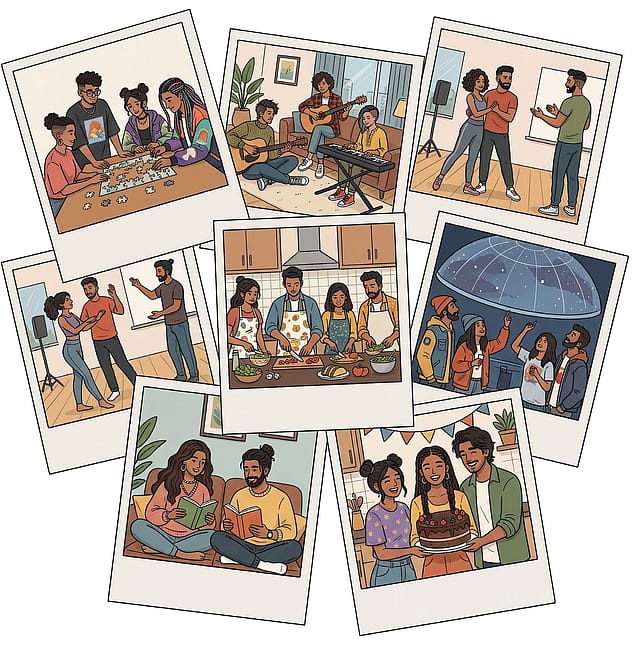
THE GUT-BRAIN connection. How to pop up on a surf board. Mastering a Kathak routine. Sewing a simple stitch. The basics of belly dancing. How to stack habits. Hold on, this is not gibberish. It is everything that my friends and I taught each other at a learning party that I hosted recently. In case you’re wondering what that means, it’s quite literally in the name. Each guest shares a skill of theirs with the group, so by the end of the evening, everyone leaves having taught something, and learnt many new things.
The skills in question didn’t have to be practical, they could also be centred on vibes. I taught people ‘how to avoid hidden gems on holiday’ while a friend showed us ‘how to get over your ex best friend’. Despite the name, productivity didn’t dictate such evenings. The true goal was to bring different friend groups together through a low-stakes ice breaker.
It seems to have worked. Less than a week since the gathering, the group chat is already flooded with more ideas of unconventional parties. DIY T-shirts, beaded plants, at-home cafés and even an ‘anti house warming’ where my friends plan to host a garage sale with a twist. Instead of just selling furniture they no longer need in their new house, they are creating a game night where points double as the currency one uses to buy objects.
Back in the 1500s, William Shakespeare wrote, “The world is your oyster.” Little did he know that, centuries later, Gen Z would interpret this as: anything is a party if you want it to be. Gone are the days when every house party was about passive drinking while sticking to a corner with the three people you knew. The normalcy of that doesn’t cut it for the young people of today. Having grown up online and experienced significant milestones like graduation, first jobs and first heartbreaks through a global pandemic, Gen Z is actively seeking out unique offline events to help them meet new people.
According to a 2025 global survey by ticketing platform Eventbrite, 73 per cent of Gen Z planned to attend live events while 84 per cent found friends through interest-based gatherings. If these parties present the opportunity to create content while fulfilling a need for social interaction, it works as a win-win. “Events that look good on social media are always a big motivator for Gen Z,” confirms psychologist Tanya Percy Vasunia. “It becomes a great validator and aspiration for them to leave the house.”
This probably explains why today, young people no longer want to only wander around a mall, watch movies or check out the new cocktail bar in town. They want all that and more. With dwindling attention spans, they crave more intentional hangouts where novelty drives the experience. The event isn’t just about the three hours spent together but the clout it leaves you with.
In the last two years, we have witnessed the rise of ‘coffee raves’ where a cafe turns into a club, ‘fake shaadis’ where guests dress up in occasionwear and treat a party like a sangeet, and even bhajan clubbing, where spiritual hymns meet the high-intensity atmosphere of a gig. No combination is too weird as long as it helps you get off your phone while still equipping you with enough stories to share, when you get back on your phone.
For Saachi Gupta, 25, events that combine creative learning with a taste of nostalgia are gaining popularity among her friends. “As kids we had a craft period in school, we had music class and dance class, there were a lot of activities,” the Mumbai-based writer explains. “As adults, we don’t have any of this in our routines. My friends and I are trying to bring that culture back.” Recently, they spent the day in the planetarium at the Nehru Science Centre, the museum where their school field trips took place. On another day, they had a crafts party with the Bizarre Bazaar DIY Kit from Mumbai-based crafts brand, Juhu Beach Studio. Each person could use upcycled scraps of fabric, lace and buttons to create trinkets or wonky creatures.
“We aren’t always good at it but it is fun to see what everyone comes up with and how they respond to the frustration of not getting a stitch right,” Gupta says, adding that these hangouts are helping her understand her old friends better. While trying out something different can deepen existing friendships, many Gen Z also use it as a crutch to start new conversations. Ambika, a 21-year-old student from Delhi, has made new friends by hosting zine-making workshops and film screenings.

Although she says these are not her “active and everyday” connections, the events have helped Ambika unlock a new genre of friendship. “I may not meet them all the time but if there’s an art fair happening, I know I can hit that person up. I see a lot of people have similar activity-based friends,” Ambika says. Historically, it was considered normal for people to lose friends as they grow older and get preoccupied with financial and familial responsibilities. In fact, a 2025 Talker Research study shows that on average Gen Z lost about 10 friends in the last decade, significantly higher than other surveyed generations.
In this context, having a few low-stakes friendships that don’t require as much time and commitment, along with your
active circle, feels like a welcome relief for young people. They can tap into that connection when a shared interest pops up but there’s no pressure to constantly check in. “Gen Z is truly generation agency. They take charge of their life experiences whether it is having activity-based friends at a distance or creating opportunities to meet new people,” says Vasunia. “Unlike older generations, they don’t wait for bonding opportunities to show up, they create them at a pace that matches their needs.”
OR INSTANCE, TAKE Seré Supper Club which hosts themed dinners with the sole purpose of helping locals discover new friends. Co-founders Samiksha Chaudhary and Tarini Gupta were both navigating life in new cities. Chaudhary had moved to Gurugram for work while Gupta had returned home to Chandigarh after a decade outside the country. Instead of waiting to stumble upon a community, they created their own across the two cities.
“What started as a way for us to make friends has now become much bigger. Over the many dinners we have hosted, we’ve learnt that play helps people break free from any inhibitions. So we always have a few competitive games to start dinner,” Chaudhary, 28, explains. “Recently for a Japanese-themed supper club, we did a gamified take on kawaii fortune cards that people really enjoyed.” Each person wrote down their bad fortune and tied it on to a tree. The person who came after picked up the fortune and attempted to turn it into something positive. The activity also eased people into conversation.
As more Gen Z leave home at younger ages for college and work, similar communities have popped up around the country that help them find their people. In Bengaluru, Anne Milan hosts the Eleven AM Club, where attendees gather for a different experience every meeting. Whether it’s flower arrangement, still life drawing, collage making, zine workshops or decorating cakes, the task at hand changes but several familiar faces return every month. At 33, Milan herself is millennial but her club draws guests across generations, from 18-year-olds fresh in college to older corporate bros craving a break from their routine.
Even brands have picked up on Gen Z’s desire to socialise differently. Gupta spent the first quarter of 2026 curating interactive events for fashion brand NorBlack NorWhite (NBNW). “We had a panel on intimacy, Juhu Beach Studio hosted a craft event and Anti Disciplinary Art Club came in for guided agitation which is the opposite of meditation,” she explains, adding that the primary attendees were in their 20s.
Gupta believes the meet-ups were a success because they were less about selling NBNW’s clothes and more rooted in creating a space for people to gather. Similarly, in Bengaluru, the newly opened Bar Cameo hosts vinyl listening sessions and artist walkthroughs while design shop General Items invites people for flower workshops.
Yet, as activities become central to Gen Z social hangs, Ambika craves balance. “While these events are great to keep your phone down and do something with your hands, everything is becoming very productivity inclined, if you’re making a plan, you have to see what you can yield from it,” she says. “I want some events to just be pointless, do-nothing spaces.”
This thought trickled into conversations at the Learning Party I hosted as well. While we all enjoyed the skill exchange, a friend suggested that next time we teach each other how to chill. Just switch on the TV, lie down on the couch and hang out without any pressure to do more. Increasingly, I’m learning that the core distinction with Gen Z is that it is never exclusively this or that. It’s an extensive theme party one day and a bed rot the next, the oscillation is what keeps things exciting.