Youth Issue 2026: Gen Z style is a celebration of hybrid identities
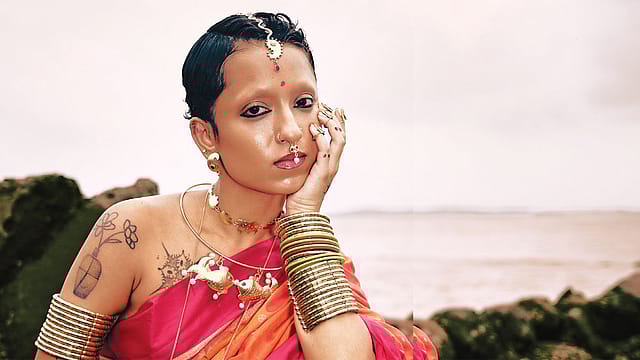
A huge part of my style is shaped by my cultural upbringing,” says Gen Z model Toshada Uma. “I’ve always found ways to incorporate temple jewellery, kurtis, and bangles into my looks. And I will never step out without a bindi, no matter what I’m wearing; it’s an integral part of who I am.”
To say that Gen Z has an amorphous sense of style would be a fairly accurate summation of the generation’s aesthetic. The last five years has seen the popularity of oversized everything, cottagecore-vintage soft silhouettes, romantic laces and pastels, gender-fluid silhouettes, patchwork and upcycling, quiet luxury and streetwear. There has been the resurgence of Y2K fashion (think baby tees, low-rise jeans and butterfly clips), retro streetwear and Eighties-inspired aerobics-wear. “Post the 2010s, fashion has been more fluid, more wide-ranging,” says celebrity stylist Isha Bhansali. “It isn’t as defined by the decade as it once was, or as easily identifiable as the Seventies, Eighties or Nineties aesthetic.” It is an aesthetic emerging as a direct consequence of the access and ubiquity of social media.
Social media, particularly Instagram and TikTok, have created a sartorial breadth that simply didn’t exist even a decade ago. It has become a channel for style ideas beyond the approved mainstream that magazines have been successfully gatekeeping for many a decade. With that breadth has come breathing space for a pastiche of fashion sensibilities; ones that don’t quite live by the ‘rules’ we were raised with. Gen-Z, reportedly the primary users of TikTok and a close second on Instagram, are ungoverned by the bylaws of handbook most previous generations received; match your bag to your shoes, never mix metals–and heaven forbid you pair navy with black.
What it has also created are aesthetics that amalgamate multiple cultures and regions–and invariably, many of those sartorial cultures are European and American. Indian styles and silhouettes have never faltered in their dominance over festivities; from weddingwear to Diwali ensembles. But Gen Z doesn’t want to box the myriad elements of Indian accessories, colours, fabrics and techniques into just ‘occasionwear’. Like Uma, others in the age group unabashedly marries traditional or bold Indian elements with the ‘Western’ silhouettes and sensibility most urban Gen-Z wears on the daily. This desi maximalism can take many forms–from pairing a heavy, traditional Indian necklace with a slip dress, to styling a phulkari-embroidered sharara with a slogan tee and Mary Jane platforms.
“I’ll often wear traditional jewellery–kundan, polki, gold naths, bindis and bangles—with dresses and shirts” says Subiksha Shivakumar. Pairing western silhouettes with near-theatrical jewellery allows the 26 year-old content creator to combine her personal style with her culture. “There’s a lot that certain Indian accent pieces can add to an outfit. We don’t wear naths, bindis bangles and kundan earrings enough–they’re very Indian, but also such a unique way to elevate a look,” she adds.
Model TJ Gill, 27, has always loved wearing his mother’s polki jewellery or dupattas with Western outfits. “I’ll often pair them with a pair of tailored trousers, or jeans. I haven’t worn juttis with them yet (that’s next on my list), but I’ve definitely done Kolhapuris; they’re supremely comfortable, and go so well with a pair of linen pants, an oversize t-shirt or button-down, and a tote.” He’s also obsessed with teaming a black sweater or t-shirt with a dramatic piece of Indian jewellery à la Christy Turlington at Sabyasachi’s 25th-anniversary show.

Shweta Kapur, fashion designer and founder of the label 431-88, admires Gen Z’s “incredible ease” with mixing different worlds in their looks. “They’ll wear heirloom jewellery with a blazer, or style a lehenga with sneakers, and somehow, it just works.” Look at Gen Z fashion influencer Prerna Massey’s page, with examples of oxidised silver naths worn with neon-green gowns, sequinned red minidresses paired with beaded desi chandelier earrings and haath phools, embellished saris styled as skirts with tie-dyed silk boleros. “I often reach for a bold resham-embroidered stole thrown over a structured blazer, juttis with denim, and vintage chandbalis with the most minimal black dress. That tension between restraint and richness is where my style feels most alive,” Massey says.
For Uma, it’s a way to connect the (pop) culture she grew up with to how she dresses now, as a working model. “I feel like Y2K Bollywood and indie sleaze music videos have shaped a lot of my aesthetic, since I was a child,” she says. “Watch the late Shefali Jariwala in the ‘Kanta Laga’ music video (2002), or Aishwarya Rai Bachchan in ‘Kahi Aag Lage Lag Jave’ from Taal (1999), or the camp of indie pop singer Shweta Shetty, and you’ll see my influences.” Much of her wardrobe is built to be model-casting-friendly, but she brings her desi camp flavour into accessories and silhouettes. “My love for maximalism also extends to my décor and shoe choices,” Uma adds.
For Gen Z, leaning towards the desi maximalist sensibility is a way to connect to their roots in a way that feels authentic and adapt it for contemporary freshness. It is on-brand for a generation that is perhaps more anarchic than its predecessors. “Gen Z thrives on mixing style sensibilities–doing red-carpet gowns with sneakers, or little hobo purses (traditionally worn with eveningwear) with crop-tops and wide-legged jeans as daywear,” says Bhansali. “It only makes sense that traditional pieces, fabrics or jewellery would find their way into that mélange of ideas. Juxtaposing elements across cultures can add a lot of character to an outfit; like accenting a breezy resortwear kaftan or a sharp, tailored blazer with an elaborate polki necklace. It gives both pieces a new spin.”
Kapur likes the hybrid because she finds pairing something handcrafted with something minimal gives the look dimension; keeping Indian craft alive in a way that ‘feels relevant and lived-in, not costume-like. “I love when contrast is done with intent; like pairing a heavily-embroidered dupatta with a crisp shirt, or vintage jewellery with structured tailoring. It instantly changes how you perceive a piece.” Bhansali adds, “A single desi element with embroidery and bold colours to a sharp tailored outfit is my favourite take on the trend–like a potli bag with a white shirt, nude heels and jeans.”
Desi maximalism is a crossover Uma believes helps her feel connected to where she comes from, the aspects of her culture that were important to her and her generation. “Style is a powerful reflection of our identities, and wearing pieces from my culture reminds me that no matter where I go, I will always remain true to myself.” Gill remembers a quote from Lady Gaga sticking with him; about carrying her leather jacket everywhere because it was a piece of New York that stayed with her. “For me, that’s my jewellery–especially my rings, which are polki or silver with a Ganesh carved into it.” They are also conversation starters, lending into conversation about his culture and the gods he was raised with. Massey agrees, adding that it lends drama to dressing up. “There’s something magical about letting a traditional element steal the spotlight in an otherwise simple look. It makes the everyday feel a little more cinematic.”