Youth Icons and Achievers of 2026 in Art and Culture
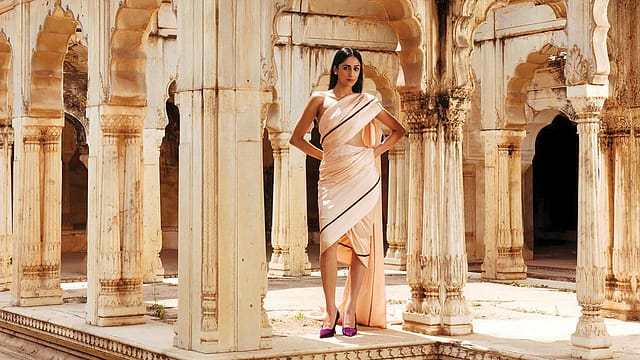
Gauravi Kumari, 26, Patron: Palace Cool
Jaipur’s resurgence as a cultural hotspot in recent years can be credited to a new generation of tastemakers and local ambassadors. Gauravi Kumari is one of the most well-known among them—daughter of Diya Kumari and sister of Sawai Padmanabh Singh—a young woman building her own legacy. A keen hockey player in her early years, Gauravi studied at Mayo College Girls School in Ajmer followed by New York University before returning home to join her family’s philanthropic initiatives while also launching new lifestyle and cultural projects. Chief among her undertakings is the PDKF Store (drawing its name from the Princess Diya Kumari Foundation), which employs women artisans to create contemporary fashion and home goods incorporating the state’s handmade traditions. Gauravi, who launched the label in 2021 with designer Claire Deroo, has played a crucial role in growing the artisans collective enabling them to boost crafts skills and design sensibilities. She is also one of the key figures behind The Palace Atelier, a concept store housed in the City Palace Jaipur that offers products rooted in crafts, and collaborations with Good Earth, Tribe Amrapali and the visual artist Prarthna Singh. Her many projects combined with a flair for fashion has made Gauravi a popular brand ambassador for the likes of Jimmy Choo, Kama Ayurveda and Estee Lauder.
Bhavitha Mandava, 26 Model: Stealing the Show

As conversations around diversity and inclusivity have gained traction in fashion, Indian models are capturing the attention of the global industry like never before. Models from India have made their mark at Paris and New York in the past, but a more recent boom has sparked new opportunities. Case in point: Bhavitha Mandava, who shot to instant viral fame last year when she opened Chanel’s 2025 Métiers d’art show in New York. The show, set on a New York City subway platform, had a special connection with Mandava— the architecture graduate who moved to New York for her studies was scouted in a subway by Matthieu Blazy, who was creative director at Bottega Veneta at the time and cast her at the brand’s Spring 2025 runway show. Since Blazy moved to Chanel as creative director, Mandava walked at the brand’s Spring 2026 show followed by the Métiers d’art outing. Then came the Chanel Spring Couture 2026 show earlier this year, where Mandava walked as the Chanel bride—historically the final look of the show which, in the past, was bestowed upon supermodels like Linda Evangelista and Claudia Schiffer. She has also appeared on the covers of British Vogue and i-D, and has been appointed a Chanel house model with more to come in what is turning out to be a dream run for the Hyderabad girl.
Shailee Mehta, 28, Artist: Body Language
Under the Swell, an oil-on-canvas by Shailee Mehta captures all her strengths on its 150 x 175 cm frame. Women swim, naked and uninhabited in each other’s company, across a water body whose depths house an entire ecosystem. A flash of light from far comes from something akin to an electric tower—a reminder of growing human interventions in nature. The rich inner life of her paintings and her technical mastery has placed Mehta, born and raised in Indore and based in Mumbai, among the artists to watch. The Slade School of Fine Art graduate’s recent exhibitions include Chants from the Hollow at Chemould CoLab last year, which marked her debut solo in India, and Into the Low Tide that concluded this April at Indigo+Madder, London. Once interested in abstracts, Mehta has come to centre the female figure in her practice, often in parallel with nature. “I am interested in how I can create a language for the female gaze,” she says. “As a woman, I am very aware of my body and the spaces it occupies. My art stems from the need to make the presence of the female figure felt.” In her latest show for instance, Mehta juxtaposes women and water as gestating bodies — experiencing similar pressures of capitalism and patriarchy while being at the core of existence. The artist is now swapping the rigour of mounting an exhibition for some playful time in her studio, writing and honing new skills, before she heads to Oxford for an MFA.
Gini, 20, Singer-Songwriter: Singing and Soaring
If mononyms are the signs of future stardom, Gini is already poised for success—but this self-taught singer-songwriter’s real strength rests on her talent. When she was a mere ten years old, the Dehradun girl picked up her first musical instrument, a bright blue guitar and started playing. She has been making music since and earning fans and accolades along the way. Beginning with ‘Falling Asleep’, her debut single in 2021 which earned her a best artist nomination, Gini’s fans have swelled to hundreds of thousands who sing along with her little melodies and sweet lyrics in songs like ‘Sukoon’ and ‘Ansuna’ (2024), ‘Don’t Even Text’ (2025) which she performed with Tsumyoki or the more recent ‘Feeka’ released earlier this year. She may not have accepted the educational opportunities she received from the University of New South Wales in Sydney and Berklee College of Music but Gini’s musical journey has taken her places anyway. Think a Times Square billboard in New York as a Spotify Radar artist to concerts and gigs around India—be it the Hornbill Festival in Nagaland, IIT campuses in Guwahati and Mandi or the 2026 edition of Lollapalooza India hosted in Mumbai. At 20, Gini has found the kind of success many spend their entire lives chasing. And she has no plans to stop. As she says, “I learn more with every year I get to have the privilege of receiving love for doing what I love, and I hope it comes through in the music I have lined up for the year.”
Ishaan Ghosh, 25, Musician: Rhythm and Rasa
Music runs in Ishaan Ghosh’s genes, thanks to a legacy shaped by his father, tabla and sitar maestro Nayan Ghosh, his grandfather Nikhil Ghosh and grand-uncle Pannalal Ghosh. Ishaan gave his first solo tabla recital when he was a little over two years old; by the time he was seven, he was accompanying his father on concerts. Today, Ishaan is one of the country’s foremost young tabla players, exploring both classical and contemporary expressions with the musical instrument that has been a lifelong source of “thrill and joy”. He says “My vision is to bring tabla to the centrestage, and make people of our generation realise that classical music is really cool. It has an ancient history and a rich past, but at the same time it’s perhaps the most contemporary form of music.”
Apart from performing with the likes of Pandit Ajoy Chakraborty, Ustad Amjad Ali Khan and Pandit Jasraj, besides his father, Ishaan also performs with Araj, a neo-classical quintet which is set to perform at the Luxembourg Philharmonie and Mupa Concert Hall in Budapest this month. Ishaan is also looking forward to new collaborations and building The Rasa Experience, an immersive classical concert format along with a digital repository of classical music. “The main plan for the year is to come up with original music which highlights the tabla in different genres and situations while keeping its classical elements intact.”
Khushi Shah, 27, Fashion Entrepreneur: Haute Heritage
Textiles have been Khushi Shah’s calling since she was a little girl growing up in Varanasi, where her family have helmed an 80-year-old Banarasi business. When the idea of Shanti Banaras, a textile label rooted in the family business and legacy began to take shape some years ago, Shah—still a student at Fashion Institute of Technology the time—was already involved with the brand and joined full time on completing her studies. Under her creative direction, Shanti Banaras is refashioning its heritage weaves with pure zari for a wider market. “Textiles have always to Indian fashion,” Shah says. “I felt that we need to make it appealing to younger audiences. We really started trying to do different campaigns and presentations that broke away from what had come before. Everyone is familiar with how Banarasis are shown—we want to showcase Banarasi not only as a classic traditional brand but also something aspirational. We want to display it in modern, creative ways so it appeals to different audiences from all walks of life.” This ethos shows in the label’s designs experiments be it creating a collection inspired by SH Raza’s Bindu or its viral campaign from last year featuring Chhau dancers. Following a new store launch in Delhi this year, Shah is focusing on forthcoming seasons while also gearing up for an executive MBA course at Harvard.
Nayab Midha, 29, Spoken Word Poet: Words Apart
Combining poetry performances with candour and a hint of humour, Nayab Midha has shaped her career on the belief that words can move minds. From writing her first poem in high school, in Rajasthan where she grew up, to winning poetry slam competitions in Delhi, Midha switched tracks from a corporate career to pursue spoken word poetry in Hindi and found success with poems such as ‘Tum Khoobsurat Ho’, and ‘Nani Ki Kahani’ or ‘Muskurao’ , in which she gets her audiences to smile on cue, to verses like: “Muskurao, agar aaj kahin se haar gaye/ kisi ko us jeet ki tumse zyada zaroorat thi shayad/ Muskurao, agar kuch kho gaya hai/ Jiske naseeb ka tha usko mil gaya hai shayad. (Smile, if today you’ve lost somewhere/ Perhaps, someone else needs that victory more/ Smile, if something has been lost/ Perhaps it has found its way to someone it was meant for.)” Her ability to sway crowds has earned Midha a colossal fan following keeps rising—2.9 million on Instagram and almost five lakh subscribers on YouTube. Coming up next: a new tour of ‘Rajkumari ’, a 2.5-hour solo act Midha has performed since 2023 across India and Europe.
Raghav Babbar, 28, Artist: Painting Stories
Last October, Nature Morte presented Raghav Babbar’s first solo in India—a monographic exhibition titled Mela, drawn from the artist’s first visit to Kumbh Mela with his family. It marked the homecoming for the young London-based artist who grew up in Rohtak before heading to Singapore for a degree from Lasalle College of Art, followed by an MA in Painting at the Royal College of Art in London. Babbar’s portraiture carries the stories of India, captured attention for their evocative depiction of everyday subjects—people caught in a moment, life in motion—expressed with thick layers of paint and a photographic perspective. His paintings, such as The Coal Seller and Surinder have fetched high prices at auctions, reportedly generating `12 crore in sales in 2024 and landed him on the Hurun India Art List.
Besides showcasing at galleries around the world, from Canada to Sweden, Venice to the United States (where he exhibited at Rajiv Menon Contemporary, Los Angeles, a gallery dedicated to promoting South Asian artists), Babbar’s paintings have been acquired by prestigious institutions including the Kiran Nadar Museum of Art, India and Kasturbhai Lalbhai Museum/Indigo Art Museum in India.
Simran Sivakumar, 28, Dancer: Updating the Mudra
Imagine performing Bharatanatyam while gliding down an escalator. For Team Anartana, it is just another day of finding a new showcase opportunity for a classical dance form in the age of social media. The dance ensemble from Chennai can adapt to any settings—stage or street— and founder Simran Sivakumar wouldn’t have it any other way. Trained in Bharatanatyam from an early age under Sheela Unnikrishnan and now the duo, Shijith Nambiar and Parvathy Menon, Sivakaumar is among a new wave of dancers who are attracting new audiences and social media to their contemporise take on classical dance. In 2019, she started Team Anartana with fellow dancers and friends to explore their shared passion and create their own acts. “We started making videos of our choreography—I initially thought it would be for ourselves. Fortunately, it reached a large audience.” The crew’s popularity paved the way for more showcase opportunities and collaborations. “We often choose old Hindi and Tamil songs which people enjoy listening to. Our dance to the music makes it more special,” she says. “We believe in quality over quantity with our choreography and ways of presenting. We maintain the culture and tradition but experiment with music and good ideas—this is how we stand apart.” Sivakumar, who also performs solo, grounds her practice in the classical but does not box her style. “If someone asks me to choose between Bharatanatyam or freestyle, I don’t want to choose. I want to be known as a dancer— and this is something I am working on.”
Taqi Abbas, 29, Digital Creator: Rediscovering Lucknow
Lucknow conjures images of heritage monuments, crafts like chikankari and, perhaps most often the famed sheermal and kebabs that draw travellers from around the country. Taqi Abbas aims to document what is left unexplored in this old city. Over the last few years, he has shaped his project, Lucknow Uncovered, as a digital archive of lesser-known stories—be it glimpses from inside the Clock Tower, a walk through the Karbala of Naseer-ud-Din Haider or a recipe for safed maas and falsa (sherbet berry). Growing up in a Nawabi family, Abbas recalls stories his grandfather told him about “a glorious past that felt very different from how the world outside saw it.” Lucknow Uncovered became his means of keeping the past alive. “Digital storytelling gave these stories a life they never had before. The stories always existed, passed down in drawing rooms and through family conversations, but they never travelled beyond those walls. Social media changed that,” he says. “We focus on things that are either fading or simply never spoken about enough, whether it is food, craft, literature or the quieter parts of the city’s culture.” But, as he adds, Lucknow is only the beginning. “The plan now is to travel across India and tell stories of people and places that have gone unheard.”
Varshne B, 27, Designer: Mind and Material
Sustainability may be an overused word in fashion but it has changed the nature of the industry in recent years. Mindful fashion is not merely a branding tool but a core tenet for young innovators like Varshne B. The Chennai-based designer and founder of the menswear label CRCLE had a breakout moment last year when she won the R|Elan Circular Design Challenge, a competition presented at Lakme Fashion Week spotlighting sustainable design innovators. The brand secured its win for translating a variety of natural and eco-conscious materials into menswear, only a couple of years since Varshne formally launched her label in 2024. By the time she was 13, Varshne had determined that she would have her own fashion brand. “I studied at NIFT Chennai where I realised the other side of fashion—there was a lot of wastage and not enough being done to solve the issue. I wanted to start a brand but it needed a purpose, not just something everyone else was doing,” she says. Varshne spent a few years researching and working across different segments to gain industry knowledge before starting CRCLE where everything from naturally-dyed Weganool from Auroville and handwoven Korai grass to deadstock cotton, metal buttons and repurposed steel become the elements for fresh fashion. “When I come across a new material, I try to bring my ideas, work with experts and craftspeople and figure out what we can offer,” says the designer. “This is what excites me.”