XLRI Jamshedpur: The Practical Scholar
IN THE DYNAMIC landscape of management education where technological disruption, global mobility and shifting industry expectations shape institutional relevance, only a few institutions sustain excellence across decades. XLRI-Xavier School of Management, India’s oldest business school established in 1949, stands as one of those rare institutions whose legacy is not merely inherited but continuously earned through innovation, reinvention and an unwavering commitment to values.
Today, as XLRI enters its 76th year, its reputation as a premier management institute remains rooted in a distinctive philosophy: leadership with purpose, excellence with integrity, and education for the greater good. The institution’s ability to remain best-in-class across generations stems from the same human-centric ethos that defined its founding and the vision to integrate new-age competencies into this timeless foundation.
What distinguishes XLRI from many modern B-Schools is the profound stability of its mission. Founded to respond to the industrial and social needs of independent India, XLRI began as a labour relations school shaped by the Jesuit philosophy. Over time, it evolved into a multi-disciplinary management institute without ever compromising on ethical formation, rigour or academic depth.
This continuity of purpose preparing responsible leaders who build institutions, communities and organisational cultures has allowed XLRI to retain a reputation for both competence and character. The world’s best B-Schools evolve by honouring the timeless and this is where XLRI excels.
The institution’s motto, “Excellence & Integrity”, is not a tagline but a living principle reflected in admissions, pedagogy, placements, corporate trust and alumni leadership around the world.
One of the reasons XLRI continues to lead is the academic consistency embedded in its programmes. The flagship PGDM (BM), PGDM (HRM) and PGDM (GM) are benchmark programmes renowned nationally and internationally for their intellectual depth, faculty expertise and holistic formation.
Over the years, XLRI has invested heavily in strengthening the ecosystem around curriculum renewal, industry integration, experiential learning, analytics and digital immersion, international collaborations, and research-driven pedagogy.
The recent launch of global specialisation tracks with universities in the US and France demonstrates the institution’s responsiveness to emerging global business environments. New-age specialisations in Business Analytics, Project Management, International Business, Marketing (STEM), Sports Management, Healthcare Analytics, Digital Business, and Consulting position XLRI at the intersection of globalisation and interdisciplinary learning.
This expansion of academic terrain keeps the XLRI classroom future-aligned while preserving the intellectual fabric that has shaped its legacy.
An institution is only as strong as its faculty and XLRI’s faculty strength remains central to its institutional brand. With scholars, researchers and practitioners drawn from leading national and international institutions, XLRI’s faculty contributes deeply to high-quality academic research, industry-focused consulting, policy interventions, and knowledge creation in emerging domains.
Notably, the Management and Labour Studies department, now celebrating five decades of scholarship, continues to shape national discourse on labour, work, policy and the future of HR. Similarly, its OB, strategy, finance, operations, and marketing faculty remain known for pedagogical innovation and thought leadership.
This balance between scholarship and practice is what allows XLRI to sustain standards that match top-tier global institutions.
FOR STUDENTS, outcomes matter. For recruiters, credibility matters. XLRI has earned both over generations.
Its 100 per cent placement record for several decades is a direct outcome of its academic strength and alumni influence. Recruiters across consulting, BFSI, FMCG, tech, manufacturing and emerging sectors return year after year not merely for talent but for leadership potential, ethical conduct and work readiness.
In recent placement cycles, XLRI’s record-breaking performance, including industry-leading median and average packages and strong internship outcomes, signals the robustness of its talent pipeline. Many recruiters also hire XLRI graduates specifically for leadership roles, a testament to the institution’s unmatched expertise in people management.
A defining differentiator of XLRI is the cohesive, globally distributed alumni network, arguably one of the strongest among Indian management institutions.
From Fortune 500 CEOs to founders of unicorns, from CHROs leading global firms to social entrepreneurs shaping policy and community development, the XLRI alumni embody a leadership style that blends technical excellence with empathy.
The annual Homecoming, milestone reunions and global alumni chapters ensure continuous engagement, industry linkage, and mentorship. The alumni play a pivotal role in placements, curriculum feedback, endowment building, global partnerships and institutional visibility.
This intergenerational solidarity is a key reason XLRI retains its premium position even as the competitive B-School landscape grows.
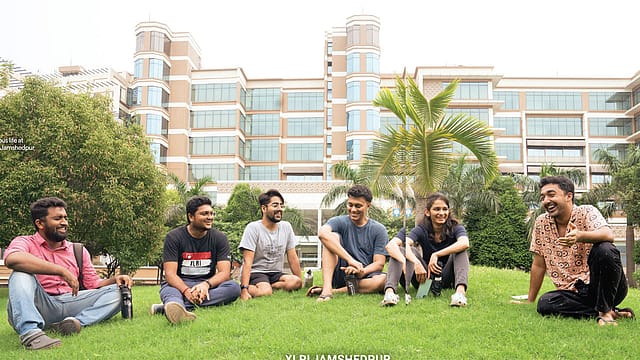
Unlike many non-residential institutions, XLRI’s fully residential environment fosters a vibrant culture where students learn not only from classrooms but from interactions, debates, events and community life.
Flagship events like Ensemble-Valhalla, industry conclaves, cultural festivals, sport tournaments such as X-FECT, and social impact initiatives create a rich developmental ecosystem. Students learn collaboration, leadership, resilience, cultural intelligence, and community engagement.
This holistic formation contributes significantly to XLRI graduates being well-rounded professionals prepared for leadership challenges across sectors.
THE FUTURE OF management will not be defined by traditional functional expertise alone. The emerging landscape is shaped by technological fluency. AI, analytics, automation and digital strategy will define managerial roles. XLRI integrates data-driven decision-making, digital transformation and tech-forward electives across programmes.
The most valued leaders will be able to navigate intersections of business, policy, technology, psychology and society thanks to interdisciplinary problem-solving. XLRI’s global specialisation tracks add multidisciplinary depth.
As tech advances, human roles will become more nuanced requiring negotiation, empathy, cultural sensitivity and ethical judgement. This is where XLRI’s traditional strength in OB, HRM and labour studies becomes future-critical.
The institution also fosters responsible and sustainable leadership. Climate change, inequality and ESG imperatives mean managers must lead with purpose. XLRI’s Jesuit legacy embeds social responsibility, ensuring graduates lead with conscience.
With cross-border roles rising, international exposure and global competencies will be indispensable. XLRI’s MoUs, exchange programmes, dual-degree pathways and visiting faculty strengthen global readiness.
What ultimately keeps XLRI at the top is not just its legacy but its willingness to adapt without losing identity. In an era where business schools compete on scale, global tie-ups, digital delivery and placement statistics, XLRI continues to stand out by focusing on what truly matters: forming leaders who excel, inspire and uplift society.
As management education evolves toward hybrid models, interdisciplinary learning and global value creation, XLRI is strategically positioned to lead with a mix of tradition and innovation. Its strong academic backbone, humanistic ethos, alumni network and industry trust ensure that it remains not only relevant but pioneering.
In the world of management education, volatile, competitive and ever-changing, XLRI remains what it has always been—a beacon of excellence and a home of leadership with integrity.