Work From Home Rule to Return Every Winter as Delhi Unveils Permanent Anti-Smog Plan
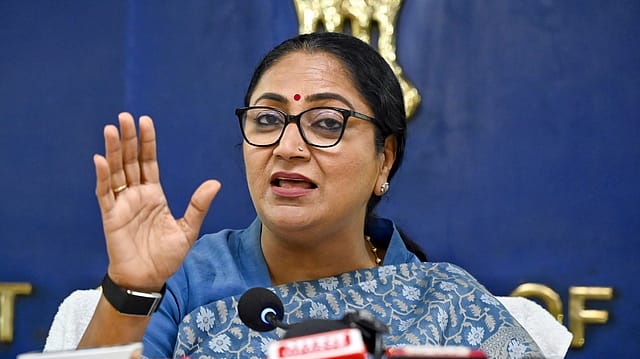
In a major shift aimed at tackling Delhi’s recurring winter smog crisis, the Delhi Government has notified a permanent winter pollution control framework that will automatically come into effect every year between November 1 and February 28. The policy brings together a range of measures targeting vehicular emissions, construction dust and open waste burning, while introducing stricter compliance mechanisms and institutional accountability.
Permanent Framework Replaces Annual Pollution Orders
According to the Department of Environment and Forest, the newly notified framework eliminates the need for separate winter pollution orders each year by establishing a predefined set of rules that will automatically come into force during the high-pollution season.
Chief Minister Rekha Gupta said the framework consolidates multiple existing orders into a single system to improve compliance and enforcement.

Losing Memory
16 Oct 2026 - Vol 05 | Issue 42
The making of a medical and social emergency
"The new framework consolidates various existing orders into a single, clear and stringent system, making compliance easier for all concerned departments, institutions and citizens while ensuring more effective enforcement."
She noted that Delhi’s air quality consistently deteriorates during winter, with average Air Quality Index (AQI) levels between November 1 and February 15 ranging from 312 to 342 over the last three winters. Maximum AQI levels during the period touched between 461 and 494.
"The Delhi Government has now put in place a permanent mechanism so that there will no longer be any need to issue separate orders every year and all agencies can take timely action under a predefined set of rules," Gupta said, adding that the notification is based on detailed analysis of air quality data and past experiences.
The framework also incorporates the revised Graded Response Action Plan (GRAP) issued by the Commission for Air Quality Management (CAQM) and directions from the Supreme Court.
Vehicle Curbs, Higher Parking Charges and Work-From-Home Mandate
Among the key measures, only vehicles carrying a valid Pollution Under Control (PUC) certificate will be supplied fuel at petrol pumps, diesel stations, CNG outlets and LPG stations across Delhi throughout the year. Compliance will be verified through electronic databases in addition to physical certificates.
From November 1 to January 31, non-BS VI vehicles registered outside Delhi will not be allowed to enter or operate in the city. Exemptions will apply to CNG and electric vehicles, ambulances, fire services, police vehicles and categories specifically exempted by the Environment Department.
To discourage private vehicle use, authorised parking facilities across the city will charge double parking fees from November 1 to February 28. However, Delhi Metro Rail Corporation (DMRC) parking facilities will remain exempt.
The government has also introduced staggered office timings to reduce peak-hour traffic congestion. Municipal Corporation of Delhi offices will function from 8:30 AM to 5:00 PM, while Delhi Government offices will operate from 10:00 AM to 6:30 PM during the winter pollution period.
A major feature of the policy is the work-from-home mandate.
"The Chief Minister said that from November 1 to January 31, only 50 per cent of employees in Delhi Government and private offices will attend the workplace at any given time, while the remaining employees will work from home."
Essential services, including hospitals, healthcare, fire services, prisons, public transport, electricity, water supply, sanitation, disaster management and pollution-control agencies, will remain exempt.
Private establishments have also been directed to implement staggered working hours, encourage work-from-home arrangements and promote carpooling, ride-sharing and public transport usage.
Construction Restrictions, Dust Control and Accountability for Open Burning
The government has introduced stringent measures targeting construction-related pollution, one of the major contributors to winter smog.
"We are not in favour of halting development, but maintaining a balance between development and environmental protection is equally important," Gupta said.
Under the new rules, demolition work and open civil construction activities generating dust will be prohibited every year from November 1 to January 31, although essential public infrastructure projects will be exempt. Interior finishing work, plumbing and electrical installations may continue if dust-control norms are followed.
During the most pollution-sensitive period, from December 10 to January 20, only indispensable government projects linked to public utility or emergencies will be permitted. Vehicles carrying construction materials such as sand, gravel, bricks, cement and debris will also be barred from entering Delhi during this period.
For the first time, large commercial buildings exceeding 3,000 square metres and structures above G+5 height, including malls, hotels and office complexes, will be required to install anti-smog guns or mist systems by August 15. Similar dust-control systems will be mandatory at construction sites spread across more than 1,000 square metres.
The policy also introduces institutional accountability for open burning of waste, leaves and biomass.
"Action will now be taken not only against the person responsible for setting the fire but also against the institution or management found negligent."
Resident Welfare Associations (RWAs), housing societies, government and private institutions, contractors and agencies will be held responsible for preventing open burning within areas under their control. Institutions will be required to establish monitoring systems and provide clean-fuel heating arrangements where necessary.
"If an incident of open burning occurs because of negligence or inadequate supervision by any institution, action will be taken against both the institution and the responsible individuals under the Environment (Protection) Act, 1986, the Air (Prevention and Control of Pollution) Act, 1981 and other applicable laws."
Drone-based surveillance, particularly during night hours, will be used to detect violations.
Emphasising collective responsibility, Gupta said, "Making Delhi cleaner and healthier is not the responsibility of the Government alone but of every citizen. The notification provides a clear, permanent and accountable framework for controlling pollution during the winter season."
(With inputs from ANI)