Why Millennial and Gen Z women invest deeply in their female friendships
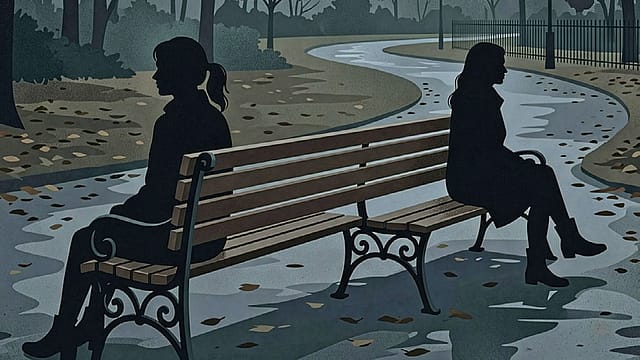
I BROKE UP WITH my best friend of over a decade the same year I broke up with my partner of 12 years. In one fell swoop (or one fell month), I had lost the two people I considered my foundation. My ex had been in my life for 12 years as my partner; and people validated my grief about that relationship ending. But, it was different when it came to my best friend.
Partners are considered foundational so their loss receives proper air supply. Friends, however, have always been seen as tertiary–especially in a society as family-oriented as India. Naturally a separation from them is considered auxiliary.
The depth of that cut became hard to explain to people, especially given its timing. The romantic breakup became the nexus of my grief in conversations because people ‘could understand’ that. Trying to describe how the break-up of incredibly important friendship had also left me unmoored was not as universally relatable. I had other friends, didn’t I?
It was only in conversation with a new friend I’d made last year that someone truly empathised. ‘I had the same thing happen to me!’ she exclaimed. She described the breakdown of a friendship she imagined lasting forever—and how scarred its ending had left her. It was cathartic to have someone understand how shaken it had left me. And it also led me to start talking about it again, with a difference. I started bringing it up specifically with women. The friendship breakup was turning out to be a heartbreakingly common experience.
In the course of gathering material for this article, I had a few dozen conversations with women about the women who broke their hearts. Their stories of friendship, why things ended and how it left them feeling were certainly varied. But they all had two things in common. First, their best friends were effectively like life partners, albeit platonic. Second, the end of that friendship devastated them as much as–or sometimes, more–than their romantic breakups had. There are a number of reasons women feel this way as their closest female friendship collapses. Women invest in their friendships with each other far more deeply than ever before. A 2020 study called ‘Sex Differences in Intimacy Levels in Best Friendships and Romantic Partnerships’ by Oxford researchers Eiluned Pearce, Anna Machin and Robin IM Dunbar, found that both men and women experienced higher levels of intimacy with their best friend over their romantic partner. An article in The Washington Post details why Gen Z is choosing to centre these friendships. These reasons range from an inability to find quality romantic relationships to not finding safety, respect and connection in those relationships as much as they’re found in close friendships.
There is an intimacy to these friendships–crying together, travelling together, knowing each other’s families, going to doctor’s appointments with one another. According to data from relationships platform Bumble, 84 per cent of Gen Z say their platonic friendships are just as (or even more) important than romantic relationships, with over half saying they completely believe you can be in love platonically. A fourth of those surveyed say their true soulmate isn’t a partner—it’s their best friend. A break-up with a best friend hurts just as much for young women today.
“The friendship that broke my heart spanned 21 years, and almost every single shared experience you can imagine,” says Lavanya, 30. “We met in the 3rd grade, and formed an instant connection. She’s been my first call after family (even when I’ve had significant others) for every event in life, big or small. She was the one who stayed with me overnight when I had to have emergency surgery, the one who accompanied me on countless Sunday brunches with my family. She was my safe space.”
For Srishti, 29, it was interning at a women’s magazine in 2019 that led her to her soulmate. “We got along like a house on fire–similar backgrounds, world views. We explored Delhi together, hung out all the time after work–and it took very little for her to become my closest confidant. I don’t introduce friends to my family, but she became a part of mine–they trusted her completely.” Her voice buckles as she continues. “I really thought she was the love of my life. I would’ve chosen her over any man in the world–no contest. I would’ve really done anything for her.”
I get more versions of such stories from other women—the meet-cutes, the spark that grew stronger, love and co-dependence built over the years, their introduction into social and family systems, shared intimacies that distinguished one friend from others. On paper, the checkpoints were akin to falling in love. So were the toxic patterns: gaslighting, neglect and emotional abuse that are often the reasons behind the end of a romantic relationship.
Keri, 31, Goa, believes she has a tendency to attract ‘energy vampires’. Cutting off her extremely draining best friend was a tough call because their lives were so enmeshed. “But conversations with a number of other people helped me realise how much bad behaviour I was tolerating,” she says. “Those toxic patterns of behaviour kept recurring; guilt-tripping, tantrums, disproportionate flare-ups to small situations…” It became clear that, as much as she would miss her, this friend needed to be cut out.
Malvika, 38, cut off a close childhood friend because it slowly dawned on her that the effort in their relationship only came from her. “I get that we’re all busy with our lives, but somewhere some effort needs to be made to maintain equations. It used to come from both of us, but somewhere, the effort stopped. We started to drift apart. I always made an effort when I was in town to message, say hi, that I would drop in to meet her kids; but got cold responses. I didn’t know then that she was trying to reconcile with her ex-husband; but she should’ve told me instead of stonewalling me. I finally stopped because I realised she never checked in on me; to see how my dad (who was very unwell) was doing. That was when I decided it’s not worth it and I stepped away.”
Some strong friendships die a slow death, and some die hard and fast trigged by incidents exposing deeper issues. In case of both Lavanya and Srishti, it was a fight. Lavanya had realised that she was always the one who did ‘more’ in the relationship. “I would be the one that was reaching out, making plans,” says Lavanya. “I decided to wait and see if she would reach out. I waited a few weeks, a month, two months. It was the longest we’d gone without speaking, and so eventually I reached out. Her response was a slap in the face; nonchalant, unbothered,” she recalls. Srishti’s moment of clarity came when her friend made her the scapegoat after cheating on a relationship.
The fallout of an intimate friendship can be deep. A study published in the Journal of Social and Personal Relationships found that the end of a friendship does trigger grief responses akin to breakups with a romantic partner. A 2025 piece by the platform Verywell Mind asked neurologists how our brains react to losing a close friend. Researcher Lisa Shulman answered that among the chief reactions is the activation of the amygdala (an area of the brain associated with emotional responses), which makes you feel threatened ‘triggering a cascade of neurotransmitters and hormones’. Board-certified psychiatrist Sharon Batista added that it creates a dysregulation of serotonin (linked to happiness), which causes mood disturbances, dopamine drops, and creation of anhedonia (or the loss of pleasure). Psychologically, the experience triggers the feeling of rejection, fear response and most deeply, grief.
Recovering from such a disruption is its own process. Srishti believes she’s in a much better place four years later, but adds that it has impaired her ability to trust. Lavanya found herself breaking down at random in the aftermath of losing her friend. “It still comes and goes in waves–losing someone who’s been a part of your everyday life for over 20 years doesn’t ever fully go away,” she says. “But having friends around me who didn’t make me beg for the bare minimum made me realise what healthy friendships look like.”
Ironically, I ran into my former friend during the week I was writing this story; an encounter I had dreaded for two years since the split. It was nothing short of seeing an ex with whom I had shared intimacies and my deepest vulnerabilities. In retrospect, the run-in made it clear that the comparison between the end of a pivotal friendship and a romantic relationship was incredibly valid. What makes the former worse, however, is that we still don’t really know how to grieve it.