Why counter-insurgency operations in upper reaches of Jammu and Kashmir require tactical adjustment
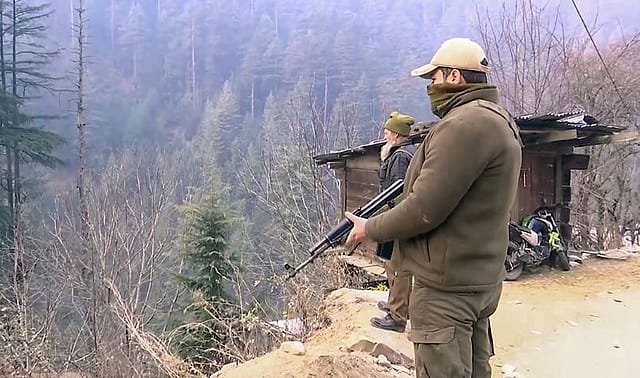
The army had launched the operation along with the police and the CRPF after receiving inputs about the presence of these terrorists. The operation, that has been named Trashi-1 by the army, was aimed at neutralising them. While officials have not revealed the identity or number of terrorists involved, sources in the police said that these were most likely highly-trained Jaish militants who have made their presence felt in the Jammu region in the last few years.
On Day 2, after heavy fog and other difficult conditions, the security forces have sealed several points from where the terrorists could make an escape, said sources. The local administration has asked residents in villages around the forest area to maintain vigil and be cautious and report any terrorist sighting to the security forces.
The encounter has also renewed attention within security circles on the army’s preparedness for prolonged jungle and mountain warfare in the Jammu region. Unlike urban or semi-urban counter-insurgency operations in the Kashmir Valley, districts such as Kishtwar present a vastly different operational environment. The security forces have not been much successful in eliminating terrorists in these areas, marked by dense forests, where mobility can be limited.
Officers familiar with the terrain say that future operations will require a sharper emphasis on small, highly mobile units, better integration of ground intelligence with real-time surveillance, and specialised training tailored to forest combat rather than conventional cordon-and-search tactics.

Travel Issue 2026
15 May 2026 - Vol 04 | Issue 71
The Cultural Traveller
It is clear that foreign terrorists such as the ones involved in this particular encounter are increasingly avoiding direct engagements, instead relying on terrain familiarity, pre-positioned hideouts, and maintaining minimal or no contact with civilian population. That is why operations like these now necessitate changes in operational patterns and enhanced coordination between the army and local police units who may have granular knowledge of movement corridors.
The Kishtwar operation underlines that counter-terrorism efforts in Jammu’s forested districts are evolving into a distinct theatre of operations where doctrinal and tactical adjustments are overdue.