Why Arrival Of Buddha’s Sacred Relics in Leh Is Being Called A Historic Moment
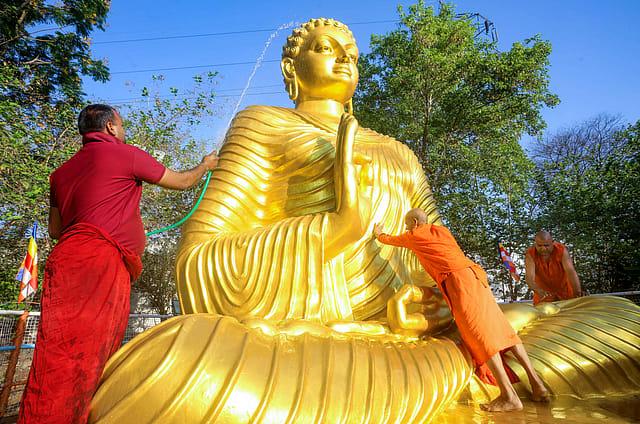
In a rare and deeply symbolic moment for the Buddhist world, sacred relics believed to be of Gautama Buddha have arrived in Leh for a public exposition timed with Buddha Purnima. The event is being described as historic not just for Ladakh, but for India’s cultural and spiritual landscape, drawing thousands of devotees and the attention of national and international leaders.
The sacred relics, known as the Piprahwa relics, are believed to be physical remains of Gautama Buddha, revered by Buddhists worldwide. These relics were originally discovered in Piprahwa in present-day Uttar Pradesh and are considered among the most significant archaeological finds linked to early Buddhism.
Their presence in Ladakh marks a rare and spiritually significant moment, as such relics are seldom moved and even more rarely displayed for public viewing.

Look Who's Talking Regime Change
23 Oct 2026 - Vol 05 | Issue 43
Why has their arrival in Leh generated such significance?
The relics arrived in Leh on April 29 and were received with ceremonial honours at Kushok Bakula Rinpoche Airport. The event included a guard of honour by police and prayers by monks, reflecting both state recognition and deep religious reverence.
Lieutenant Governor Vinai Kumar Saxena described the occasion as deeply significant, saying, "Today, the holy relics of Buddha were brought to Ladakh, and they received a grand welcome here. They are currently being taken from the technical area of the airport to the living quarters and will be kept in safe custody there."
When will the public be able to view the relics?
The exposition is timed to coincide with Buddha Purnima, one of the most important festivals in Buddhism.
Saxena confirmed the schedule, stating, "They will be opened to the public on May 1st, the day of Buddha Purnima. The Home Minister is visiting on that day, and this will be a major event in front of him."
Public viewing will begin on May 1 and continue across multiple locations in Ladakh over the following two weeks.
Where will the relics be displayed?
After their ceremonial arrival, the relics were taken in a grand procession to Jivetsal, where the main exposition will be held. Thousands of devotees lined the route, many dressed in traditional attire, underscoring the cultural and religious importance of the event.
Following their display in Leh, the relics will travel to Zanskar and then return to Leh’s Dharma Centre before being taken back to Delhi on May 15. This multi-location exposition ensures that a wider number of devotees can pay their respects.
Why is Ladakh an important location for this event?
Ladakh has long been a centre of Buddhist culture in India, with centuries-old monasteries, traditions, and a strong spiritual lineage. Hosting the relics here reinforces its status as a key Buddhist region.
Saxena highlighted this connection and expressed gratitude to Narendra Modi for selecting Ladakh, noting the region’s deep spiritual ties to Buddhism.
What is the broader national and global significance?
The exposition is expected to draw not only local devotees but also national leaders and international representatives. Among those expected is Amit Shah, along with ministers, ambassadors, and leaders from Buddhist-majority states.
The Piprahwa relics have also gained renewed international attention after being displayed in several countries. Their significance grew further when some associated artefacts were repatriated to India in 2025 after more than a century abroad.
This event, therefore, is not just a religious gathering but also a cultural and diplomatic moment, showcasing India’s Buddhist heritage on a global stage.
(With inputs from ANI)