War on Iran: India Steady In the Whirl
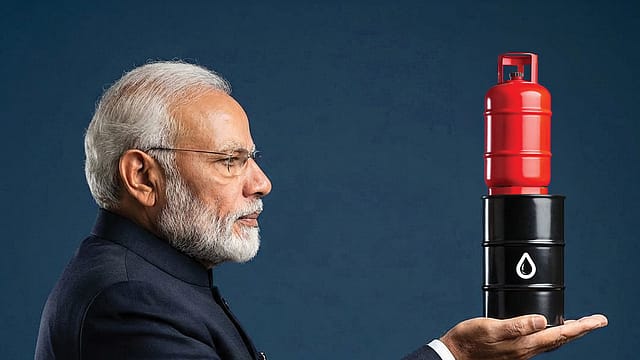
THE CABINET COMMITTEE ON SECURITY (CCS) HEADED by the prime minister comprises the defence, finance, home, and external affairs ministers and its meetings are attended by senior officials in the Prime Minister’s Office (PMO), the Cabinet Secretary, the National Security Advisor (NSA) and often by the chiefs of the armed forces. CCS meetings convened by Prime Minister Narendra Modi on the war in the Middle East have been attended by a diverse set of ministers responsible for civil aviation, petroleum and natural gas, railways, commerce, housing and urban affairs, and agriculture. The ‘special invitees’ to the meetings of the extended CCS indicate the widening impact of the war and an assessment that the conflagration in the Gulf is not likely to end anytime soon.
The contradictory signals from the White House, with US President Donald Trump alternating between bravado, bluster and claims that a truce is at hand, have deepened uncertainties. There is no clear assessment about what the Trump administration has in mind and observers wonder if the president’s statements reflect a sense of desperation rather than a coherent plan to end the war. Briefings by the Pentagon continue to indicate the US has not ruled out options, with Secretary of War Pete Hegseth saying Iran could be right in worrying that American “boots on the ground” could materialise at any of 15 different locations. The insistence of Hegseth and other senior members of the cabinet that Trump will not make the mistakes of previous administrations that were sucked into “endless wars” in Iraq and elsewhere is wearing thin as Iran’s Islamic Revolutionary Guard Corps (IRGC) imposes a complete chokehold on the Strait of Hormuz, bottling up millions of gallons of oil and gas.

Open Minds 2026
26 Jun 2026 - Vol 05 | Issue 26
The power of ideas and arguments in 50 portraits
The review of the global and domestic situation by the CCS complements Modi’s discussions with chief ministers wherein he urged a collective effort to deal with the challenge of managing oil and gas supplies and dealing with the impact of the war on various sectors of the economy. The upcoming Kharif season figured prominently in the discussion with the chief ministers and the emphasis on managing the supply of fertilisers points to a long haul ahead as neither America’s shifting war aims nor the belligerence of the Tehran regime offers any hope of early resolution. The CCS was briefed by the Cabinet Secretary on the supply of petroleum products, particularly LNG and LPG, and availability of power to keep the wheels of industry and commerce turning. Qatar alone supplies 40 per cent of India’s LNG requirement and the scramble to diversify sources is paying off but taking time as supplies are coming from as far afield as Argentina. LPG is also being imported in bulk while domestic production is at peak levels. The Cabinet Secretary informed the meeting that LPG prices for domestic consumers have remained unchanged and enforcement to curb hoarding and black marketing of cooking gas has been stepped up.
Commerce Minister Piyush Goyal, who spoke to the media on April 2 about the discussions at the World Trade Organization (WTO) ministerial he attended in Cameroon, also responded to questions on the CCS deliberations. “The prime minister has given strong directions with regard to seven sectors and decisions are being taken to lower import duties. Changes were announced today with regard to petro-chemicals and plastics,” he told the media. Goyal said India has shown resilience in the face of disruptions in the Gulf with stability in domestic gas and oil supplies.
An official statement said initiatives have also been taken to expand Piped Natural Gas (PNG) use with more than three lakh new connections in March as the daily rollout has gone up from 4,000-5,000 to more than 10,000. Measures like exempting the gas-based power plants with a capacity of 7-8 GW from gas pooling mechanism and increasing availability of railway rakes to deliver more coal at thermal power stations are being implemented. The early rise in temperatures has given way to predictions of a cooler April but the hot season will drive up power demands across most of the country. Interventions in agriculture, civil aviation, shipping and logistics were discussed by the CCS and are a matter of day-to-day inter-ministerial consultations. Linked to the urea demand—the consumption for 2022-23 and 2023-24 was 357.2 lakh metric tonnes (LMT) and 357.8 LMT and shot up to 385.5 LMT in 2024-25 till March end of the year—LNG supplies to production plants are being optimised. The Cabinet Secretariat is monitoring overseas supplies for DAP (diammonium phosphate) and NPKS (nitrogen, phosphorus and potassium) to maintain fertiliser availability. State governments are being urgently asked to curb black marketing, hoarding and diversion of fertilisers, and urged to conduct checks and take strict action against diversion and other malpractices.
Retail prices of food commodities were stable in March and the government has set up control rooms to monitor and analyse trends and interact with states and Union territories on prices and enforcement of the Essential Commodities Act (ESMA), the CCS was informed. Prices of agricultural products, vegetables and fruits are being scrutinised and while there are spikes in some vegetables, the reasons are seasonal variations rather than supply disruptions. “Efforts to globally diversify our sources for energy, fertilisers and other supply chains and international initiatives for securing safe passage of vessels through the Strait of Hormuz and ongoing diplomatic efforts are being taken,” the government said.
The Indian Navy is on standby near the Strait of Hormuz but getting vessels out of the passage depends on Iran’s actions. So far, the Ministry of External Affairs has negotiated a case-by-case pass for vessels bearing oil and gas. Indian refiners have aggressively bought Russian and Iranian oil that is on the high seas and is currently exempt from US sanctions. Modi’s interactions with chief ministers in the midst of a heated election season underlines the urgent need for enhanced coordination and real-time communication between the Centre and the states. There is a constant monitoring of fake news and attempts to create panic among the public are being nipped and queues and panic buying have subsided. The prime minister’s message to Union ministers was to make all efforts to safeguard common people from the hardships due to the war and he called on ministries to make sure authentic information was readily available and rumour-mongering was countered effectively.
AS THE GOVERNMENT RACES to take immediate and medium-term measures to make good energy shortages due to the American-Israeli attacks on Iran and the IRGC’s retaliation across the entire Gulf region, the developments have sharpened the discussion on India’s energy policies and the need to reduce dependence on fossil fuels that eat up a large amount of foreign exchange every year. In 2024-25, India spent $242.4 billion on crude oil imports but benefited by a dip in global prices. Current projections suggest the import bill may rise $6-7 billion this year. India spends close to $15 billion on LNG imports and another $12 billion on LPG. A committee headed by Defence Minister Rajnath Singh meets frequently to discuss the nitty-gritty of imports and domestic production of oil and gas but influential voices are calling for using the current crisis as a springboard for the future.
Former NITI Aayog CEO Amitabh Kant in a recent article argued that India needed to move from incrementalism to scale in its renewable energy ambitions, suggesting that the 2030 target of 500GW should be tripled. Kant feels mandated green energy purchases by the Centre and states will generate the momentum in domestic production and also power higher imports of components needed for renewable power production. He also calls for curtailing LPG use with larger adoption of electric induction cooking. Interestingly, NITI Aayog’s first vice chairperson, economist Arvind Panagariya, in a paper written 10 years ago, mooted speedy adoption of electric cooking ranges. The paper that Panagariya co-wrote with Anil Jain, then an adviser with NITI Aayog, argued that electric cooktops can transform kitchens in rural India where two-thirds households use solid bio-mass with resultant harmful effects on health.
The Union Budget 2016-17 extended LPG connections to five crore BPL families over three years and provided a major boost to reduce use of firewood and coal. But Panagariya and Jain noted there are a total of over 12 crore households without a clean cooking solution and a strategy based on LPG alone may take a long time to get there. “India already imports 50% of its domestic LPG requirement and international prices of oil and gas are volatile. Therefore, it makes good sense to include electricity in the overall clean-cooking strategy,” the paper said. LPG use has grown and, in 2024, 60 per cent of Indian houses used cooking gas. While 85 per cent of urban households use LPG, a substantial number of rural homes rely on firewood. There may be a case to strongly compliment LPG with electric cooktops.
Pointing out that the NITI paper was a decade old, Panagariya told Open that there is a case to permit freer import of cheap EVs and solar panels, including from China. “High trade barriers might hinder the goal of energy security,” he said. The discussion on whether EV and solar panel manufacturing needs the level of protection currently provided and if the “self-sufficiency” arguments require closer scrutiny is gaining traction. There is concern that yoking the self-sufficiency theme to energy security goals may make the wait for lower dependence on fossil fuels long and not particularly rewarding. Analysts have drawn attention to the deficiencies in India’s auto industry that are a burden on the consumer. A debate on these and other issues in government will likely gain greater salience. Meanwhile, India continues to look for bilateral trade arrangements to secure markets and supplies.
Goyal’s attendance at the WTO ministerial included several bilateral engagements. Talks with British ministers yielded the possibility of the trade deal with the UK coming into operation in May. Trade talks with Canada are gathering pace and a record-sized Indian delegation is due to travel to Ottawa soon. The interactions also saw a common ground on the need to end the Middle East conflict and return to dialogue and diplomacy. “The conflict is hurting the global economy and the death and destruction of property is a concern for all. There are difficulties in moving goods on the seas and everyone wants a quick resolution. India’s stand that it believes peace rather than war is the solution is widely welcomed,” Goyal said.
Modi has drawn comparison to the manner in which India responded to the challenge of the Covid pandemic on a war footing, working on various fronts such as vaccine development to managing oxygen supplies. The learning is providing effective as the creation of ministerial groups and small teams of officials to address specific sectors as well as take an overview is leading to quick administrative decisions like the customs notifications tabled by Finance Minister Nirmala Sitharaman in Parliament on the last day of the Budget Session.