Waiting for Dodo: Notes from an increasingly unquiet country
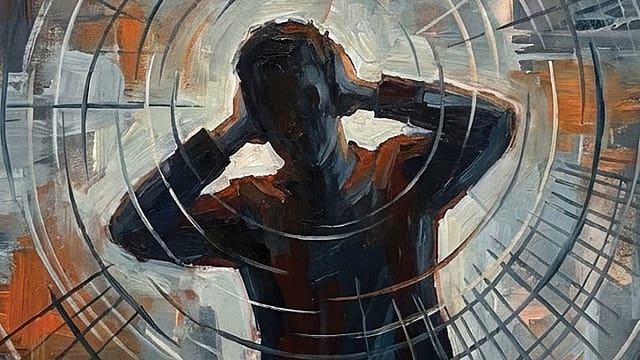
IN THE EMERGENCY room of a Gurugram hospital where my aunt has been admitted after a seizure, I suddenly crave coffee. I want it with cream and sugar; not any sugar, but a sugar cube; not one, but two, or perhaps three. I am calm; my resting heart rate is 52. Two doctors have come to see my aunt. I remember the day she got married—I was six and drank several glasses of lemon squash that was only meant to be served to the groom’s party. She is 65 now, and under a flickering light not responding to the doctor’s sharp taps on her chest.
In less than an hour, three men are wheeled in—separately— within minutes of each other. They have had too much alcohol and have fallen from terraces in their drunkenness. One of them, who is in his thirties, laughs, as an unfit doctor places his neck in a cervical collar. A lady doctor passes by. She is extremely exhausted; her eyelids flutter furiously as if she were completing her REM cycle like that. The wife of the man who was laughing arrives; his friends who brought him to the hospital begin to leave surreptitiously. After they are gone, the man begins to cry like a child. “Save me,” he pleads with his wife. From her looks, it feels as if she would want it otherwise.

Bengal Thriller 2026: The Plot Thickens
17 Apr 2026 - Vol 04 | Issue 67
Mamata Banerjee faces her toughest battle
I come out, thinking about the men. The man’s plea has come late. “Save me,” he says, and for the first time his voice is not competing with anything. The city, however, has already moved on. It does not learn. In the little hall outside, there is a pocket of silence as a buffer between the emergency room and the city outside.
I walk towards the little café in the corner, craving that sugar more than the coffee. As I approach it, the barista sneezes violently into his hands and then turns towards the machine without even pretending to sanitise his hands. I walk away from him, into the city that I know has entered a permanent state of being undone.
THE FIRST TIME I began to think seriously about how much noise and chaos our lives are surrounded by, I did it with the image of Willy Wonka’s world. In Roald Dahl’s acid-trip of ducts, whistles, and songs is a place where nothing is allowed to rest. Machines hum, sweets explode into colour, children sing themselves into oblivion. Wonder there is inseparable from excess. Silence would be fatal; it would expose the machinery. The factory must keep talking, singing, performing. The city around me now feels like such a place— an endlessly productive marvel in which sound has become proof of life, and quiet a kind of malfunction. To stop the noise, even briefly, is to risk seeing how much of the spectacle depends on never allowing the room to fall still.
Writing in the late 19th century, the engineer-philosopher James Nasmyth warned that the incessant noise of modern cities was not a byproduct of progress but a moral failure—an avoidable din that dulled the nerves and coarsened civic life. Wonder what he would say about the Indian city where noise turns into a long metallic scream without punctuation. One might hope to hear it even in its absence, the way sailors once heard the sea long after coming ashore. But there is no absence—the sound of the electric stone-cutting machine invariably tears through our day, through our day dreaming, like a dog’s howl predicting forthcoming doom.
“Most of us no longer live in a society,” writes ecological thinker Aseem Shrivastava in The Grammar of Greed. “We live in a network, which belongs to an economy, in turn run by the gargantuan global empires of finance in their own investor interest.”
What this network invariably gives rise to is a fine particulate matter of acceleration. Cities in India are now ruins filled with this acceleration that is airborne, and industrial, and impatient. It blurs the city into a kind of perpetual rehearsal, as if nothing were ever quite finished, or allowed to be. The gargantuan empires create universes in which trees stand half-buried, their roots exposed like bones. Birds retreat, or grow silent. The older soundscape of footsteps and the simplicity of human scale is steadily drowned out, replaced by Goya-like ugliness, which may not always come across as picturesque decay but a brutal exposure of appetite, cruelty, and fatigue.
No moral force stands up to it because it speaks the language of inevitability. How can one object to the sound of progress? To complain is to appear nostalgic, obstructive, vaguely unpatriotic. And so the drilling becomes a kind of civic chant, a liturgy of development in which rest is a form of dissent. Everything, including the moral work of listening, is outsourced to sheer force. Whoever is loudest wins.
The noise generated around us does not come without consequences. It has rewards to dole out only to impatience, which in turn trains us to interrupt, to assert, to occupy space without asking. Subtlety is seen as weakness, restraint loses its irrelevance. The city and its inhabitants increasingly grow indifferent to meaning.
Once I came out of a friend’s house in South Delhi and decided to walk a few miles to the nearest Metro station. As I began walking, I heard “sister f*****” said so many times that it made me think if most of what we say has become more of an exhaust than language.
THE BODY OF the dead man is hauled from the tempo by his relatives who carry him towards the river bank. I look at the sun—I know it will set in about 40 minutes. It is December in Rishikesh, and the walkway along the Ganges is filled with tourists. They are all over the place with their mobile cameras. A young woman asks her friend to click a photograph of hers in the backdrop of the Janki rope bridge; in her hands she holds a paper doily of momos. She looks at the corpse being carried to the banks, and for a moment her colour fades. But she recovers quickly and makes sure that death does not come in her frame.
The priest begins his rituals. A man who is accompanying the corpse is looking at his watch. The young woman is still posing as the departed is consigned to flames. Life goes on, but in that little frame of visuals is a sense of what we have lost. The deeper loss is ecological, though not in the way the word is usually deployed. Rishikesh has been recalibrated to the appetites of the arriving visitor, as if an unseen intelligence were constantly adjusting the dials. Each ghat competes like a flare in the night, loudspeakers heaped upon loudspeakers, devotion amplified into advertisement. What should draw you inward instead elbows for attention, a sonic arms race played out along the river’s ancient edge whose name meant ‘sage’s sand’ and which is now drowned in its own amplification.
I tried, more than once, to flee uphill, to the Sivananda Ashram, perched above the Ganges, where the seer Swami Sivananda entered Samadhi in 1963. The place carries the hush of an afterimage; you can almost feel the weight of years settling there, like dust motes in a shaft of light. And yet even here, inside the sanctum, the river’s banks roar back. Music arrives from both shores at once, collapsing distance, refusing refuge.
It is an invasion that feels bodily. The sound does not merely reach you; it occupies you, vibrating through bone and breath. The old waters, patient witness to centuries of renunciation, are reduced to a cascade of noise. The effect is disorienting, almost comic in its cruelty, as if one had stumbled not into a place of withdrawal but into a winter farmhouse wedding on the outskirts of Delhi, fairy lights blazing against the dark, celebration mistaking itself for transcendence. What is most unsettling is not the volume but the certainty behind it: the assumption that attention must be seized, that silence has no value unless curated, ticketed, and timed. The river keeps moving, as it always has, carrying with it memories of quieter rituals. But along its banks, the new order insists on its ways, leaving no space for unspoken intervals which Junichiro Tanizaki once alluded to while referring to cultures that he said once trusted half-light and which allowed beauty to dwell in corners, and in pauses. Tanizaki warned that the loss of shadow was not merely aesthetic but civilisational. In India’s cities and pilgrim towns alike, that loss now feels experiential. Disquiet announces itself not as crisis but as background radiation: the inability to be still, the suspicion of quiet, the fear that if sound and light were to stop, something intolerable might surface.
This is not a criticism of belief, or progress. It is an observation about form. Many spiritual traditions understand stillness as the gateway to attention. The Upanishads return again and again to the image of the Santatman, or the tranquil self, teaching that only when the senses are withdrawn, like horses reined in, does true knowing arise. But there is no space for it. What unfolds along the river now begins to resemble what historian Daniel J Boorstin once diagnosed as the age of the pseudo-event, by which he meant occurrences that are not spontaneous but manufactured, staged not to be experienced but to be noticed. The aarti becomes less a ritual than a performance calibrated for visibility; devotion is timed, amplified, and repeated nightly because it must be seen, recorded, circulated. The loudspeaker does not deepen faith; it guarantees an audience. What matters is not whether something is sacred, but whether it registers.
In the end, disquiet announces itself not as a crisis but as a condition of the sensorium. We have trained our senses to expect interruption, to remain alert even in spaces once designed for repose. The ear now waits for intrusion; the eye anticipates glare. This is not restlessness of the mind alone but a bodily vigilance, learned over years of living inside what Nasmyth called “intolerable din”, and rituals that refuse to dim themselves.
What happens when we briefly escape this din? Sometime ago, I was at a café near my house; it is where I go often to work or to meet friends. It was a hot summer afternoon, and the blinds in the café were drawn partially. But there was a dazzle of neon lights and music and a constant whirr of the coffee machine and bean grinders and mixers. It was all a part of the city’s atmospherics.
And then suddenly there was a power failure. The café plunged into semi-darkness. And the sounds died down. All you could hear was a few clinking of cups and spoons and a little chatter at tables. It made me realise what we have done to ourselves. My eyes felt rested and a fierce serenity began to fill me up. I began to see things, not with my eyes but with my heart.
It lasted for two minutes. The power came back and so did the blindness of heart. As the whirr returned, I was reminded of Thomas Merton, who warned that the rush and pressure of modern life amount to a quiet violence against the inner self. In New Seeds of Contemplation, he argued that when exterior activity overwhelms the interior life, attention thins out and the deeper self recedes. What is lost then is not silence alone, but the capacity to recognise presence when it appears.
MY AUNT CAME home after recovering from her illness. But I am told men still come to that emergency room after suffering falls. The men wheeled in drunk and laughing, the blaring ghats, the city streets that never dim—each is part of the same condition: an inability to recognise when restraint is required.
I have not craved since then for sugar cubes, but my desperation for a quiet moment continues. I find them occasionally, in transit, in early mornings, in the space between obligations. I no longer expect them to last. Like grace, they arrive unannounced and depart quickly.
This, then, is waiting for the dodo: not anticipation, but habit. We stand in cities engineered to prevent silence, in hills redesigned to repel it, in sanctuaries wired against stillness, and we listen anyway. Nothing arrives. The machines continue. The loudspeakers hum. The waiting does not end, because it no longer expects an ending. Like Beckett’s figures, we remain where we are—alert, exhausted, oddly faithful—keeping watch over an absence that has already settled in for good.