Uttarakhand: Divine Detours
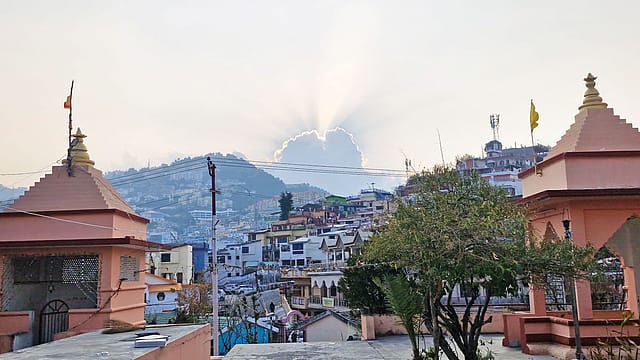
I STOOD BY THE SIDE of the highway leading into New Tehri, transfixed by the undulating layers of the Garhwal Himalayas unfolding before me. Amidst them rose the snow-clad peaks of Banderpoonch and Kalanag. In the valley below, the blue, glass-like waters of the Tehri reservoir lake lay silent in the afternoon light. I soon shook myself out of the reverie. My private taxi was parked somewhere ahead but I intended to explore the town on foot. My eyes fell on the rising shikharas of the Satyeswar Temple at the bend of the road ahead. The vantage point of this temple overlooking the beautiful view suggested it was probably an important one in this town. Though recently constructed, the deity inside the garbhagriha looked ancient. The stone of the shivling was weather-beaten. The metal adornments, water pots and other paraphernalia in the garbhagriha were old and used. There was a reason for it. “This shivling was at the bottom of the mountain in Old Tehri. When we had to shift the town, we would of course shift Him also here with us,” the pujari told me.
This was my introduction to New Tehri’s intriguing past, shaped by the relocation of the entire town from the valley to the mountain-top due to the construction of the Tehri dam. As I was leaving the temple, I saw the town rising above with its unique structure of layered residential buildings in concentric semi-circles. Unlike the typical Himalayan town with its crooked alleys and ad hoc houses, this was a planned one. There was a similarity in all the houses, the structure and placement. Many were splashes of bright colours bringing a smile to my face.
A little further down the road, I found myself at a small Swiss-style bakery run by a local family. I was pleasantly surprised to know that the food was pure vegetarian, reflecting the principles of its owner. The shelves at the back of the shop were filled with different biscuit packets. A packet of chocolate biscuits made with the local koda flour. Another one with jam-centred fillings. “Try this one, it is salty with jeera flavour. You will like it with your tea,” said the owner, handing me a pack with round biscuits.
Most Himalayan journeys begin with the rush of navigating winding mountain roads, eager to reach destinations much higher up. Along the way, we endure motion sickness, rapidly changing weather, and exhausting hours of travel. We pass countless breathtaking landscapes but are unable to stop and truly appreciate them. New Tehri provides an alternative.
Located barely two hours from Rishikesh, it is a town with stunning Himalayan views, local conversations and relaxed pace. Travellers looking to slow down can plan a one-night halt or even a longer stay before heading deeper into the mountains. New Tehri feels structured, even its bazaar road retains the character of a planned town rather than the ‘touristy’ mall road. But many locals still want better development. “Most of the activities happen at the Tehri lake, the government should develop a museum or a garden or something attractive for the tourists to do here in town,” Birendra Singh Mallaji, the owner of Hotel HimNivasa where I stayed, told me.

A short 30-minute drive away lies the Tehri dam and the vast reservoir which is Asia’s largest manmade lake. Against the dramatic backdrop of the Himalayas, visitors can experience speed boating, jet skiing and paragliding over the deep blue Ganga waters. Floating huts offer the unique experience of staying directly on the lake, while the log cabins of Garhwal Mandal Vikas Nigam sit higher up, overlooking the view. Walking trails, food courts and other upcoming facilities are steadily transforming the lakefront into a traveller-friendly recreational space.
Other local attractions include the Dobra-Chanti, India’s longest motorable suspension bridge. You can explore it on your way towards Chinyalisaur, where the highway forks towards Gangotri and Yamunotri. The road to Gangotri hugs the bank of the river Bhagirathi as it passes through towns like Uttarkashi, Harsil and Dharali. Gangotri is open only from April to late October depending on when the snowfall shuts it for winter, but you can still go to Uttarkashi’s Kashi Vishwanath temple. Stroll around in the area for ashrams and temples. The nearby Bhagirathi riverbank has well-made ghats with changing rooms and other facilities to take a holy dip.
Further ahead, Harsil and Dharali towns are also worth a visit being at altitudes over 9,000 feet. Small apple-tree orchards surrounded me as I crossed the bridge over the pristine Bhagirathi river and walked uphill to Mukhba. Perched quietly above the main road, it is a picturesque Himalayan village where the idol of Goddess Ganga from the Gangotri temple is ceremonially worshipped during the winter months. As I headed towards the temple, a pujari beckoned me: “Where are you from? Will you have tea? It is being made right now!”
Since I was visiting in late November, I was perhaps the only traveller in the area. I ended up having long conversations with the pujaris there over a hot cup of freshly made tea. Some of them stay in Gangotri during the winter shutdown. They described to me their life in that snow-laden ghost town. “It is tough, but our devotion to the deity keeps us there. It is, after all, our privilege to care for our devtas in this way.” After the tea break, I accompanied them to a quaint Shiva temple located on the pristine river bank below. They washed the main shrine with Ganga water and did their traditional puja and aarti. It was a beautiful experience. Later, I found out that the Garhwal Mandal Vikas Nigam hotel in Harsil was still operational during this season. Had I known earlier, I might have planned to stay there for a few extra days.
A little further towards Gangotri on this route, you will find Gartang Gali, a 136-metre-long wooden walkway built along a sheer cliff at an altitude of about 11,000 feet. Once part of an ancient Indo- Tibetan trade route, it meanders deep into the rugged Himalayan mountains over the roaring Jadh Ganga river. The route is also associated with Heinrich Harrer, whose daring escape journey into Tibet from British PoW camps in Dehradun inspired the Seven Years in Tibet movie. Like Gangotri, it also remains closed during the winter months.
If you don’t wish to do the six-hour drive to Gangotri, then you can get the experience of high altitudes with another popular pilgrimage spot, the Surkanda Devi temple. Perched at nearly 9,000 feet, this would be only an hour’s drive from New Tehri. The vehicle would drop you at the base point—from there you can choose a two-hour trek or the ropeway. Either way, the journey takes you to this revered temple with a panoramic view of the surrounding high Himalayan mountains. Check the local weather conditions, as the ropeway is closed when there are strong winds.
New Tehri sits at the junction of several fascinating journeys deeper into the Himalayas. About seven hours’ drive from this town leads up to Gaurikund from where the trek to Kedarnath begins. If you prefer a shorter trip, or if Kedarnath is closed during the winter months, you can still explore the many small, offbeat towns on this route. Guptkashi is known for its ancient Vishwanath and Ardhanareshwar temples. Agastmuni is a small town where Rishi Agastya is said to have meditated. The Kedarnath deity is worshipped at the Omkaresh temple in Ukhimath during winter months. This route passes right by the Mandakini river which merges into the Alaknanda at Rudraprayag.
When I expressed my love for offbeat routes, a local tour guide suggested, “You can go to Sem Mukhem; it will be a beautiful journey and you will get to see a different region away from the official highway route.” Located three-hours away, Sem Mukhem turned out to be an ancient Nagaraja temple revered by the Garhwali locals. To visit this sacred shrine, we had to trek three kilometres and it was worth it.
New Tehri is more than a simple transit or roadside chai break. It is a launchpad for deeper journeys. Or a slow pause as you reset for sacred realms.