Union Budget 2026: SHE Marts, Women’s Hostels in Every District
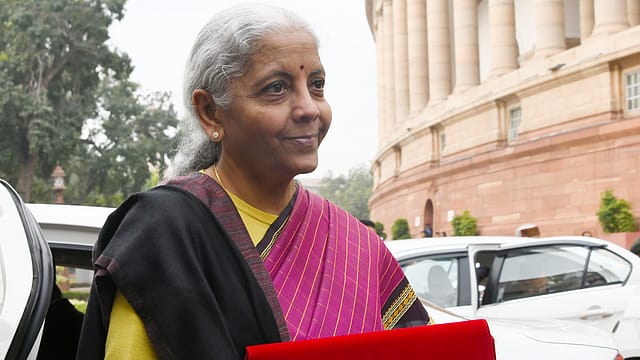
In a push to empower women, the union budget has made two major proposals— setting up of Self-Help Entrepreneur (SHE) Marts and women’s hostels in every district of the country.
SHE Marts will target grassroot level women-led enterprises by Self-Help Groups (SHGs), enabling them to run local retail networks, while establishing hostels for women aim to focus on promoting girls’ education, bringing down their dropout rates.
Spurred by the earlier scheme of Lakhpati Didi, a SHG member with an annual income of 1,00,000, SHE Marts are aimed at making way for sustainable livelihood opportunities at the community level, increasing their annual income. As per the budget proposals, the SHE Marts are to be set up as community-owned retail outlets within cluster level federations.
"Building on the success of the Lakhpati Didi programme, I propose to help women take the next step from credit-linked livelihoods to being owners of enterprises. Self-help entrepreneurs will be set up as community-owned retail outlets within the cluster-level federations through enhanced and innovative financing instruments,” finance minister Nirmala Sitharaman said in her budget speech.
While outlining proposals for increased investment in higher education, she said the government plans to set up new institutes, university townships, girls’ hostels, and telescope infrastructure.
On the women’s education front, she said girls’ hostels would improve enrollment in advanced fields and remove barriers in the way for their higher education, by making it safe and accessible for them.
“In higher education, STEM (Science, technology, Engineering and Mathematics) institutes' prolonged hours of studying and laboratory work pose some challenges for girl students. Through VGF (Viability Gap Funding) or capital support, one girls' hostel will be established in every district," she announced.
There are 700 districts in the country. The budget proposal, aligning with other schemes for women like skill development, and sanitation, comes amid low enrollment rate for women’s education and their high dropout rates. The Economic Survey, tabled in Parliament recently, had flagged that women’s workforce participation was rising, but remained constrained by mobility, safety, and care responsibilities.
“Our aim is to transform aspiration into achievement and potential into performance, as we ensure that the dividends of growth reach every farmer, the scheduled caste, the scheduled tribes, the nomads, the youth, the poor, and the women," the finance minister said.