UNESCO nod to taste of Lucknow
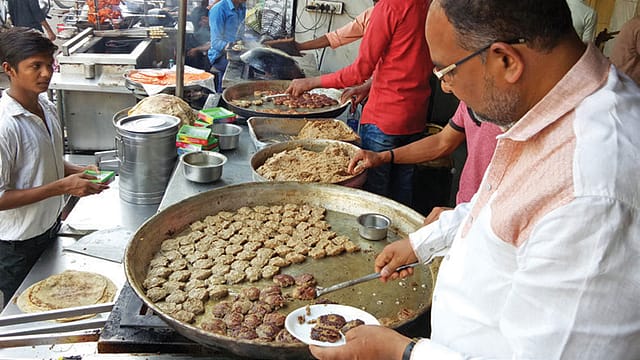
It is only fitting and an overdue honour that Lucknow has been declared a UNESCO ‘Creative City of Gastronomy’. The decision taken at the 43rd Session of the UNESCO General Conference in Uzbekistan recognises not only the city’s famous Awadhi cuisine but also its latter-day renditions as newer restaurants and hotels cater to a more gentrified clientele.
Any city’s food traditions can be judged by its street offerings and the preparations served in traditional quarters. Lucknow’s famous ‘kababchis’ and snack vendors have gained deserved fame. The city’s food is infused with a sense of history and the turbulence of the period when the power of the Nawabs waned. Alongside fragrant pulaos, nihari, and biryanis sit the city’s famous khasta kachori, varieties of chaat, golgappe filled with tangy water flavoured by hing, green chilli, ginger, mint, lime and jeera. Sweet dishes like makhan malai and shahi tukda add to the mix. The newer eating experiences rely on traditional recipes but add a twist with the spice and flavour combinations.
The heart of Awadhi cooking, however, resides in dishes like Mutton Halwa, Lassan ki Kheer, Moong Gosht, Bund Gosht, Mutanjan, Dal Sultani, Dum ki Chaap, Nazakati Botiya and Murgh Rezala, a report in the Hindustan Times notes. The street food at Aminabagh, Chowk, Hazratganj and Akbari Gate attracts devotees in droves, and most evenings the vendors have their hands full. Traditional thalis, thandai and kulfis add to the gastronomic delights on offer in a city which is famous for a range of food that goes far beyond being tagged as a meat-eater’s delight. “Lucknow is the second Indian city, after Hyderabad (designated in 2019), to earn a spot on the coveted list. The honour is particularly special as it comes at a time when Lucknow is celebrating 250 years as the capital of Awadh,” wrote The Times of India. “From mouth-watering Galouti kabab to Awadh biryani, delectable Chaat to Golgappe, desserts like malai makhan and more, Lucknow is now recognised by @UNESCO as a creative city of gastronomy”, posted the UN in India. (By Rajeev Deshpande)
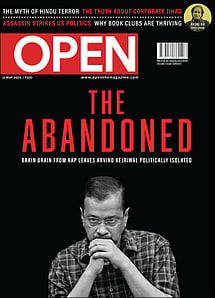
The Abandoned Kejriwal
01 May 2026 - Vol 04 | Issue 69
Brain drain from AAP leaves Arvind Kejriwal politically isolated

Noisemaker
Revanth Reddy: Blatantly Communal
Political parties do pursue vote banks but few leaders can match Telangana Chief Minister Revanth Reddy in brazen appeals without any gloss at all. “The Congress government provided many opportunities to minorities. It was only Congress that gave big posts to the minorities. Congress means Muslims and Muslims means Congress,” the chief minister said at a rally.
Reddy’s comments seeking to counter BJP’s criticism of the induction of former cricketer Mohammad Azharuddin have snowballed into a major controversy with the saffron party accusing the leader of blatant communal appeals. Reddy might choose not to repeat his statement and consider other means of conveying that Congress will take care of Muslim interests.
Idea
Apology
Telangana minister Konda Surekha has apologised to actor Nagarjuna after her earlier claim that Bharat Rashtra Samithi (BRS) leader KT Rama Rao was responsible for actor Naga Chaitanya’s divorce from Samantha Ruth Prabhu—remarks that angered the Akkineni family and led Nagarjuna to file a defamation case. Surekha was forced to issue an apology in the following days, and now, in the light of the legal proceedings, she has reprised it, declaring on X: “I want to clarify that my earlier statement regarding @ iamnagarjuna Garu was not meant to offend Nagarjuna Garu or his family. I had no intention of causing harm or defaming Akkineni Nagarjuna Garu or his relatives. I regret any unintended impression created by my comments about them and hereby retract those statements.”
Apologies depend on timing and tone. Too fast, and they sound rehearsed; too late, and they reek of damage control. A good apology is an act of moral housekeeping. If an apology is scripted to evade accountability, the sincerity crumbles. Surekha’s “heartfelt” apology comes more than a year after the remark and amid a defamation case. Is this apology a corrective gesture or damage control? Perhaps Surekha hopes the middle ground between remorse and public relations is easy to slip through, but apologies that live in this space rarely find safe landing. They neither heal the hurt nor convince the public, serving only as reminders that saying sorry is easy; meaning it is hard.
Money Mantra
Navigating the Maze
How to choose the best insurance policy
IN THE BUSTLING financial landscape of India, securing the right insurance policy is no longer a luxury. Yet, with a plethora of companies and complex products vying for your attention, how do you cut through the noise and make an informed choice? The key lies in a strategic, step-by-step approach tailored to your unique life stage and needs.
The first rule is to avoid a one-size-fits-all solution. Begin by conducting a thorough financial health check. Ask yourself: What am I protecting? For a young professional, this might mean a robust health insurance plan and a pure-term life cover. For a family person, it expands to children’s education and a secure retirement. Clearly define your “why” before you even look at a policy brochure. Once you know what you need, it’s time to vet the insurers. Don’t just fall for catchy advertisements. The Claim Settlement Ratio (CSR) is your most critical metric—it reveals the percentage of claims an insurer has honoured. A ratio above 95 per cent is a strong indicator of reliability. Equally important is the solvency ratio, a measure of the company’s financial health and its ability to meet long-term debt obligations. Regulated by IRDAI, it must be above 1.5. A higher ratio signifies greater stability. Again, reading the fine print is non-negotiable, but ends up often becoming a skipped step. Scrutinise the policy document for exclusions, sub-limits on room rent, and specific disease-wise caps. In health insurance, check the network of cashless hospitals. For life insurance, understand the premium payment term, policy duration, and the exact terms for maturity or surrender benefits.
Also, prioritise protection over investment. Especially with life insurance, remember its primary purpose: to provide a financial safety net. Opt for a pure-term insurance plan for the highest coverage at the lowest premium. Avoid complex endowment or ULIP plans if your goal is pure protection; they often combine insurance with underwhelming investment returns. Let your insurance protect your life and your investments build your wealth. In the world of insurance, an informed decision isn’t just smart—it’s your ultimate security. (By Moinak Mitra)
Paper Tiger
The Maharashtra Forest Department has debunked a viral clip that appeared to show a tiger mauling a man inside a rest house in Chandrapur’s Brahmapuri forest range, calling it an AI-generated fabrication. The video, timestamped October 31 at 6:42PM, had raced across social media before forest officials clarified that no such attack had taken place. Research revealed the video was very likely AI-generated. Reverse image searches and official CCTV records confirmed there was no real incident. This incident follows another bizarre fake video of a drunken man “petting” a tiger near Pench Tiger Reserve, which too was debunked as an elaborate manipulation. Chandrapur Circle Chief Conservator of Forests, RM Ramanujam, said such “digitally mischievous content” is meant to stoke panic amid genuine human-wildlife conflicts in Maharashtra. Police have since filed a cyber-crime case against a Mumbai-based user who circulated the clip. The department has warned that spreading doctored wildlife videos can invite prosecution.