Travel Issue 2026: Cultural Traveller
GREENWICH VILLAGE IN MANHATTAN USED TO BE THE PLACE FOR struggling artists but now location and property have turned it into an enclave for the wealthy. Walk around and you can see galleries, but they hold artwork that costs hundreds of thousands of dollars. There are also quaint eateries and among them is Café Reggio with an awning in green that has huge letters sticking out in white: Original Cappuccino. The interior is dim, somewhat rundown with crowded tables. At one end of the wall is a huge contraption of chrome and bronze, like a big cylinder turned upside down with outsized taps crossing each other. This, the café claims, was the first cappuccino machine in the US. One among the waves of Italians who came to settle in the US decided to serve from this in 1927, a contribution to the coffee culture ubiquitous among Americans. It eventually led to chains like Starbucks. When an Indian drinks a cappuccino, some of it is the filtering of this phenomenon beyond its shores, driven by a mix of commerce, taste, and what it means to be cool. A walk down a street can tell you all that.
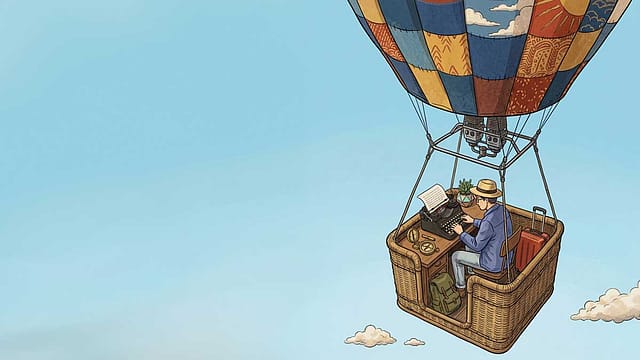
If travel is accompanied by curiosity, that is. You can go to a place, take a selfie and come back. Or you can be part of its story. It is what the travelogues in this issue do. The travellers may be in different countries and continents, discovering facets without connections, but what they have in common is the experience of something beyond the surface. For instance, in Seattle, like Café Reggio in New York, when our writer finds the first Starbucks, it is not the end but the beginning of a long journey through towns that reinvented themselves to survive, a signalling of human ambition relentlessly able to meet change. In another story, the cuisine of Vietnam is told through two eyes—that of Anthony Bourdain, the great chronicler of food, and that of the writer himself following in the footsteps of Bourdain to the same places, discovering how some of it has been corrupted by fame.
Or take Anini, a village right on the border with China in Arunachal Pradesh. So remote that once upon a time military helicopters had to drop supplies. Today, a road leads to it. Farmers cultivate kiwis and oranges sold in other parts of the country. It has bakeries and wine shops. India has come calling and embraced Anini in the 30 years since the writer first visited and then returned.
Far away in Mexico, there is the Mayan pyramid of Chichén Itzá, one of the Seven Wonders of the World, that stands sentinel to a continuity that goes back thousands of years. The pyramid, a temple, saw annual festivals thronged by commoners who made long pilgrimages to partake in psychedelics and witness human sacrifices. Chichén Itzá witnessed the depredations of conquest by modern colonials and survived. And in contrast to it, 200km away, is the wedding destination of Cancún, where, in luxurious resorts with beaches and water parks, Indians from America come to get married. Both now thrive in the Yucatán Peninsula, a thread of revelry running through the past to the present. In Lisbon, a hotel lobby surprises the traveller with oversized insects made using discarded material from construction sites. The artwork is not an exception. The city has consciously made its common spaces into galleries to say something about itself. It chose this medium as a form of communication with the world. Cities and countries like to express themselves. But can they ever be fully known?
The culture of a place can be seen, felt and heard, but it still eludes definition because a destination is more than the sum of its presentations. Yet, whatever slice one is able to get is worth it. Even parts of a story can be illuminating.