How an alert beat constable helped unmask an ISI module that was live streaming footage of sensitive Indian locations
CONSTABLE VINESH WAS on a routine beat ‘patrol’ moving through the area in his charge, stopping and chatting with people along the way when he took a break at a mechanic’s shop. As he took in the surroundings, he began talking to a few young men, asking about how they were managing. Some of them told him that they were earning some money installing CCTV and that the devices seemed to be in demand. As the group dispersed and the constable prepared to leave, an onlooker listening to the conversation offered that the videos on the mobiles of the group that had just left were “odd” and featured arms and unusual clips. The informer offered to share the videos which he said could be got from the “boys” whom he knew.
The videos that Vinesh procured and which he promptly shared with his superiors set off alarm bells. The clips did not match the claims that the men in question were merely engaged in installing CCTV and were semi-skilled workers capable of connecting wires and fixing nuts and bolts. They were quickly brought in for questioning and soon revealed that they were working on the directions of a “Sardar” who conveyed instructions about where CCTV cameras were to be installed. They had a local boss, Sohail, who directed them to a vendor supplying the cameras, procured SIM cards and helped set up digital payment apps to receive money for work done. The amounts did not exceed ` 10,000 and were often in the range of `4,000-5,000.
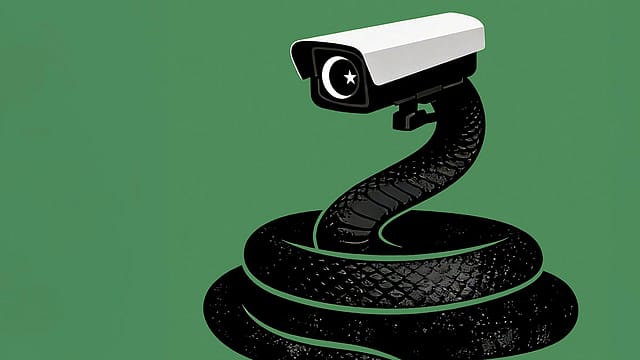
The men picked up by the Ghaziabad police were a mixed bunch of Hindus and Muslims from very ordinary backgrounds. There were juveniles too among the 20-odd people arrested last month. Sohail himself, however, was a different kettle of fish. A radicalised individual, he was in direct touch with a handler in Pakistan and was in Pune before receiving “instructions” to relocate to Ghaziabad, not far from his native Bijnor. He set up a chowmein and momo cart as an innocuous cover and began to scout for recruits among acquaintances and formed WhatsApp groups to coordinate the tasks he gave them. The job was to put up solar powered CCTV cameras at the Delhi Cantonment and Sonipat railway stations and near armed forces establishments. The cameras, powered by self-sustaining solar power units, provided a direct live feed to suspected Inter-Services Intelligence (ISI) agents as per instructions received through a Pakistani mobile number. This was clearly a step up from sending videos and pictures through encrypted channels and the CCTV cameras were relatively inexpensive, low-tech options and commonplace.
“The module had been operating using WhatsApp to communicate and its handler had placed a remote software on their phones that gave him access to almost all their daily activities and conversations. Some of the persons picked up did not seem aware of the full implications of their actions,” Ghaziabad Police Commissioner J Ravindra Gaur told Open. The foot soldiers that Sohail recruited were in awe of the Pakistan-based mastermind, who would surprise them with his knowledge of their routines. He would even refer to members of their households and tell the men what they had been up to on a particular day. The software installed on their mobiles, the police discovered, was programmed to self-destruct and render the instrument unusable. The investigators proceeded with caution, ensuring the phones were switched to flight mode and mirroring was carried out to secure the necessary forensic evidence. The investigations are believed to have established the Pakistan connection and are focused on financial transactions involved in the payments to the terror cell and routing of money by Sohail who planned the nitty-gritty of operations, including using juveniles to steal mobiles used by the module.

The chain of events that led to an alert beat constable who kept his eyes and ears open and picked up a telltale lead began earlier with the reorganisation of Ghaziabad’s policing as a “commissionerate” in early 2023. This led to a much-needed addition of staff strength and infrastructure that included a new and well-equipped office for the police commissioner and senior officers. The police upgrades reflect Uttar Pradesh (UP) Chief Minister Yogi Adityanath’s continued focus on law and order. It has been a while that the incidence of organised crime—once the bane of western Uttar Pradesh—has been under check and the Ghaziabad police turned its attention to snatchings, theft and lootings that had proved difficult to curb. Tackling offences sometimes described as ‘petty crime’ was felt to be integral to gaining public trust as incidences like mobile snatchings and street violence directly affected citizens. A change of strategy was called for and this involved using provisions of the new Bharatiya Nagarik Suraksha Sanhita (BNSS) along with a return to the basics of beat policing. Section 129 of BNSS gives executive magistrates power to “bind down” habitual offenders involved in cases such as theft and public disorder to a specified location for three years unless they are able to produce guarantors to underwrite their good behaviour. These powers could be exercised by police officials after Ghaziabad became a commissionerate.
“Notices were issued to 5,500 individuals and this meant they knew they were under scrutiny. In a related action we set up 2,132 beats that cover the area under our jurisdiction and personnel were asked to generate intelligence on criminal activities and anything that could lead to communal tensions. The breakthrough in the CCTV module is the result of old-fashioned, classic policing,” said Gaur. The effects of the tough measures were immediate as the next few months saw a 43 per cent decline in street crime in the closing weeks of 2025 and early 2026 as compared to a similar period in 2024-25. As the case relating to the Pakistan-controlled terror group unravelled, the role of a Mumbai-based woman called Meera also came to light. Meera was involved in arms cases and might have passed on tip-offs to the police in the shooting incidence at the residence of Bollywood star Salman Khan. Her questioning is understood to have revealed that she was aware of Sohail’s actions had a Pakistan connection and had no answers when asked why she had failed to pass on such information with serious implications for national security. Another woman from Sambhal has also been held for her role in the terror ring.
This is not the first time that Pakistan’s ISI has collected information on military depots, cantonments and troop movements, though the use of CCTV to access a live feed is new and innovative. There might be a fresh effort on ISI’s part to update information with more precise coordinates after Indian missile strikes during the May 7-10 Operation Sindoor last year saw very precise attacks on select targets in crowded and busy areas, such as the Lashkar-e-Taiba and Jaish-e-Mohammed headquarters at Muridke and Bahawalpur. The CCTV cameras were typically installed on electric poles between 1AM and 2AM. In the case of railway stations, these were placed on poles near where the platforms ended. Somehow the actions of the module failed to attract the attention of authorities, with local officials offering weak excuses that “many agencies” were often at work at railway stations.
Although not directly related, there have been other arrests of terror-linked modules in March and April which, taken together, support the view that there are fresh efforts by ISI to step up subversive activities and plan attacks after the November 2025 Red Fort bombing in New Delhi led to the discovery of “white coat” terrorists working at the Al-Falah medical college in Faridabad district. An Islamic State (IS)-inspired group that was being directed by a Pakistan-based Jaish member was planning to use the remote-controlled mechanisms of “toy cars” to set off improvised explosive devices (IEDs). Their handler shared videos over a Telegram channel that carried instructions on assembling such bombs.
In early April, the UP anti-terrorist squad (ATS) arrested four people who were part of a terror cell planning to target the Lucknow railway station. Railway boxes and vehicles in crowded areas were also on their radar. Like the Ghaziabad module, the members of this gang were also Hindus and Muslims and led by one Saqib. In an operation carried out around the same time, Telangana Police picked up members of an IS-motivated plot to set up a khawateen, or women’s wing, to carry out terrorist attacks. A man and a woman arrested during investigations were found to be heavily radicalised and sought to influence other recruits by sharing speeches of cleric Zakir Naik, currently evading arrest in Malaysia, and jihadist figures like Osama bin Laden and Anwar al-Awlaki.
Delhi Police’s special cell arrested a senior Lashkar commander, Shabbir Lone, who had been based in Bangladesh and was responsible for putting up “anti-national” posters at Metro stations in New Delhi during the AI summit. The recruits were mostly Bangladeshi and Lone’s presence in Bangladesh seems to have been aided by the permissive tenure of Muhammad Yunus as interim administrator of the country. The Bangladeshis involved in Lone’s activities are understood to have been based in Kolkata.
The use of low-skilled young men, Bangladeshis living in India, and even juveniles is indicative of a shift in ISI’s tactics, influenced by tougher scrutiny of suspects linked to radical organisations who have fallen foul of the law and by the tightening of security in Jammu & Kashmir and along the Line of Control (LoC) following the April 26, 2025 Pahalgam massacre. However, it also underlines ISI’s preparedness to use Indian collaborators to enlist recruits who are susceptible to being paid small amounts to be the foot soldiers in a terror plot. The strategy comes with risks as was evident with the CCTV gang. Some of the arrested individuals were far from secretive agents and were indiscreet enough to share incriminating videos that led to their downfall.