The Soul of the Republic: India’s Constitutional Promise Still Demands Vigilance, Faith and Renewal
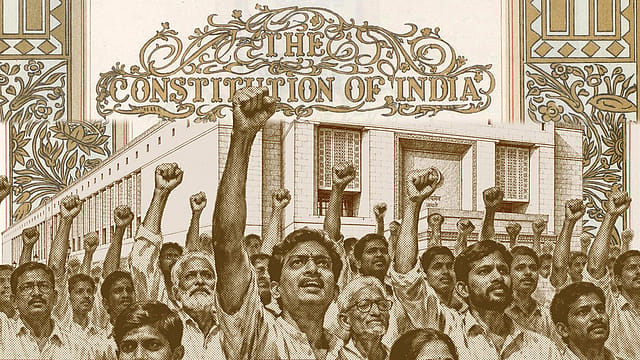
AS INDIA NEARS the end of the eighth decade of its independence, we are living through a period in which democracies across the world are confronting searching questions about their institutions, their values, and, indeed, their very future. Across continents, we see polarisation replacing dialogue, majoritarian impulses challenging constitutional restraints, and public trust in democratic institutions steadily eroding. Even some of the world’s oldest democracies are discovering that constitutional governments cannot be sustained by laws alone; it depends equally upon habits of restraint, institutional respect, and a shared commitment to democratic values.
India, as the world’s largest democracy, cannot imagine itself insulated from these global currents. But our constitutional journey has always been distinctive. Ours was never merely an exercise in designing institutions of government. It was the far more ambitious endeavour of transforming an ancient, immensely diverse civilisation into a modern democratic republic. To understand this, we must first appreciate the remarkable constitutional vision that made our Republic possible. We must ask ourselves not merely how our Constitution governs us, but why it has endured; not merely what powers it creates, but what ideals it seeks to preserve; and not merely what India has become under its guidance, but what India still aspires to be.
When the Constitution of India came into force on January 26, 1950, having been adopted in the name of “We, the People of India,” many commentators dismissed it out of hand, as overly ambitious, a post-colonial fantasy that could never be translated into reality, by adopting which India’s founders were setting themselves up for failure. After all, how could India, an immensely poor and vastly illiterate land, be so audacious as to embrace universal adult franchise and parliamentary democracy in a land riven with religious antagonism and caste oppression?
Undeterred, our founders laid the groundwork for our first General Election, steadfast in their belief that if democracy were to succeed in India, it must be launched from a platform of absolute equality and fraternity. Intertwined with these, as Dr BR Ambedkar, the principal architect of this Constitution, explained in his last address to the Constituent Assembly, was a social liberalism that strove to free both body and mind, hacking away at our colonial shackles and emancipating those who had for far too long been subjected to one of the most degrading and iniquitous forms of discrimination known to humanity: the caste system and untouchability.
Wildly audacious though our tryst with constitutional democracy was, it succeeded, and India today is the world’s largest democracy. After spending much of my adult life celebrating, questioning and examining how far we have lived up to our founding fathers’ ideals, and having authored biographies of two of the towering figures who shaped the Republic, Jawaharlal Nehru and Babasaheb Ambedkar, I have often found myself reflecting on what made this constitutional experiment so extraordinary. It was not simply that it created democratic institutions where none had existed before. It was that it dared to imagine a form of democracy uniquely suited to India’s own circumstances.

The Constitution that emerged from the Constituent Assembly was not a lazy exercise in borrowing foreign models or transplanting Western institutions onto Indian soil. It was a profoundly Indian document, reformist in ambition, pragmatic in design, and carefully crafted to manage the tensions inherent in an unequal, multilingual, multi-religious, and deeply diverse society. Its genius lay not in choosing one value over another, but in balancing values that are often seen as competing. It sought to protect individual liberty while recognising that liberty means little to those denied the basic conditions of human dignity. It safeguarded the identities and rights of minorities while empowering the individual citizen and nurturing a common national citizenship that transcended narrower loyalties. It encouraged private initiative while affirming that the state bears a moral responsibility for collective welfare and distributive justice.
In other words, our founders understood that a truly liberal Constitution is not one that abandons society to the strongest or merely restrains government from acting. It is one that creates the legal and social conditions in which every citizen can genuinely enjoy freedom. They recognised that liberty without equality can become privilege; equality without liberty can become oppression; and neither can endure without a sense of common purpose. It was this delicate constitutional balance that transformed India’s extraordinary diversity from a potential source of fragmentation into the very foundation of our democratic experiment.
But if that was the Constitution our founders created, what kind of nation did they hope it would produce? The answer lies in what has often been described as (in Tagore’s phrase) the Idea of India.
Unlike many nation-states whose identity rests upon a shared ethnicity, a common language, or a single religion, India’s nationhood was conceived differently. The Constitution envisioned a Republic whose unity would arise from the equal citizenship of its people rather than the accidents of their birth. It was an idea that asked Indians to discover common purpose without surrendering their diversity; to recognise that our shared political identity could coexist with our many cultural, linguistic, and religious identities.
For that reason, our founders believed that citizenship had to stand above every narrower allegiance. They wanted Indians to participate in public life not as representatives of inherited identities but as free citizens exercising independent judgement. Democracy, in their imagination, required individuals to think, deliberate, choose, and vote as citizens first. The Constitution therefore sought to create a political community in which every Indian possessed equal agency, equal dignity, and an equal stake in the Republic. That aspiration found perhaps its most eloquent expression in the words of Ambedkar: “I do not want that our loyalty as Indians should be in the slightest way affected by any competitive loyalty, whether that loyalty arises out of our religion, out of our culture or out of our language. I want all people to be Indians first, Indians last and nothing else but Indians.”
Those words remain as relevant today as they were when they were first spoken. The Constitution rejected the notion that religion should determine citizenship or political participation. Instead, it treated every citizen as an individual before the law, entitled to equal rights, equal protection, and an equal voice in shaping the nation’s future. It was through the exercise of democratic choice, not inherited identity, that citizenship acquired its fullest meaning. This understanding of India is neither accidental nor incidental. It lies at the very heart of our constitutional order.
OLDER CONCEPTIONS OF India drew their inspiration from mythology and theology; but the Idea of India as a democratic nation based on a certain conception of human rights and citizenship, vigorously backed by the due process of law and equality before law, is a relatively recent and strikingly modern idea. This was no mean feat in a nation and society as diverse and heterogeneous as ours, with its numberless socio-religious identities and groups. India’s national motto, emblazoned on its governmental crest, is “Satyameva Jayate: Truth Alone Triumphs.” The question remains, however: whose truth? It is a question to which, in the world’s most populous nation, there are over 1.4 billion answers.
But that sort of an answer is no answer at all, and so another answer to those questions has to be sought. And this may lie in a simple insight: the singular thing about India, as I have written and repeated for three decades, is that you can only speak of it in the plural. There are, in the hackneyed phrase, many Indias. Everything exists in countless variants. There is no single standard, no fixed stereotype, no “one way. This pluralism is acknowledged in the way India arranges its own affairs: all groups, faiths, tastes, and ideologies survive and contend for their place in the Indian sun. At a time when most developing countries opted for authoritarian models of government to promote nation-building and drive socio-economic development, India chose to be a multi-party democracy. And despite countless stresses and strains, including during the Emergency, when even habeas corpus was suspended; and also, during the difficulties of the past decade, with widespread concerns about the depletion of India’s democratic verve and vigour, a multi-party democracy, rambunctious, freewheeling (corrupt and inefficient, perhaps, but nonetheless flourishing!), India has remained.
The essence of the Indian Constitution is pluralism, but this pluralism that is increasingly under strain. Article 1 of our Constitution proclaims India to be a Union of States, and nowhere, our founding fathers seemed to say, in this Union is there space for an exclusionary, extremist, and ethnonationalist state. They created a pluralist, multi-party democracy where religion was not the determinant of nationhood and citizenship; all Indians were free to be themselves and dream their own dreams. For these dreams they often strove together, as comrades in a common cause, and when they succeeded, India triumphed.
Is India still the same country in which, as I have written, it does not matter what differences of caste, creed, colour, culture, costume, cuisine, and custom we may have, so long as we rally around a basic consensus—on the democratic principle that in a big, diverse democracy, you really do not need to agree all the time, so long as you agree on the ground rules of how you will disagree? We managed for over seven decades on how to manage without consensus. That was our great strength. We kept India going as a country where we could and would disagree. But disagreements were settled at the ballot box, and, if necessary, in the courtrooms, or through debates in the mass media. They were not settled through mob lynchings or riots. They were not settled outside the boundaries of the law and the political system.
That, to my mind, is the soul of the Republic. And it is precisely because that soul is so precious that it demands our constant vigilance. Yet every generation must confront an uncomfortable question: have we remained faithful to that constitutional vision?
The Constitution was never intended to create a perfect society overnight. Indeed, Ambedkar himself warned us that on January 26, 1950, we would enter “a life of contradictions.” In politics, we would have equality, one person, one vote, one vote, one value. But in our social and economic life, inequality would persist. He reminded us that liberty, equality, and fraternity were not independent ideals to be pursued in isolation. Each depended upon the others. Remove one, and the entire constitutional edifice would be weakened.
How successful, then, have we been in fulfilling those constitutional promises?
Equality has undoubtedly advanced. The abolition of untouchability was accompanied by one of the world’s oldest and most far-reaching affirmative action programmes through reservations for Scheduled Castes and, later, Other Backward Classes. What were originally conceived as temporary measures have become deeply embedded within our constitutional and political framework. Yet the larger project of achieving genuine social and economic equality remains unfinished. Demands for greater representation, debates surrounding a caste census, and continuing disparities in opportunity remind us that equality remains an aspiration as much as an achievement.
Fraternity presents an equally complex picture. The mobilisation of votes in our contentious democracy in the name of caste, creed, region, and language has meant that the social and psychological sense of common belonging that Ambedkar regarded as indispensable remains, at best, a work in progress. And yet, there can be little doubt that the broader sense of Indian nationhood, whose absence he lamented in 1949, has today become firmly embedded across the country.
The condition of Indian democracy, therefore, is best understood as a paradox. The Constitution has unquestionably succeeded in institutionalising democracy and enabling historically marginalised communities to claim political representation, dignity, and rights. At the same time, the social conditions necessary for the complete realisation of liberty, equality, and fraternity remain unevenly distributed. Indian constitutional democracy has endured not because these tensions have disappeared, but because the Constitution continues to provide legitimate democratic means through which they can be debated, contested, and resolved.
The Constitution was never intended to produce merely an electoral democracy. Elections are indispensable, but they are not sufficient. Democracy is not measured solely by the frequency with which citizens cast their ballots. It is measured
equally by the freedom with which they speak, the confidence with which they dissent, the fairness with which institutions function, and the assurance that every citizen, whether in the majority or the minority, enjoys equal protection under the law.
That is why the framers of our Constitution never confused majority rule with democratic legitimacy. They understood that governments are elected by majorities, but democracies are sustained by institutions. Elections determine who exercises power; constitutions determine how that power may be exercised. One without the other leaves us with either paralysis or arbitrary authority. The genius of the Indian Republic lies in marrying democratic choice with constitutional restraint.
The future of Indian democracy will therefore not be secured merely by producing larger electoral mandates or higher voter turnouts. It will depend upon whether our institutions continue to command public confidence, whether Parliament remains a forum for genuine deliberation, whether the judiciary retains its independence, whether the press is free to scrutinise authority, and whether citizens continue to believe that constitutional methods are always preferable to extra-constitutional passions.
OUR FOUNDERS POSSESSED an extraordinary faith in the Indian voter. They entrusted universal adult franchise to a nation that was poor, largely illiterate, and emerging from the trauma of Partition because they believed that democracy itself would educate citizenship. But they also understood that every generation would have to renew that faith. Democracies do not decline in a single dramatic moment; they are gradually weakened whenever institutions lose credibility, whenever constitutional conventions become dispensable, and whenever disagreement ceases to be regarded as legitimate.
The question before us, therefore, is not simply whether Indian democracy survives. It undoubtedly does. The more searching question is whether it continues to flourish in the constitutional spirit in which it was conceived. For the democratic future of India will ultimately depend not only on the governments we elect, but on the constitutional values we collectively choose to defend.
That, however, is precisely why the health of our democratic institutions matters so profoundly. The Constitution places Parliament at the centre of democratic accountability. It is meant to be, in Ambedkar’s phrase, the place where the people speak. Yet over the past decade, Parliament has increasingly been reduced from a vigorous forum of deliberation and dialogue into little more than a notice-board for executive decisions. Bills that restructure entire sectors of the economy, reorganise states, or amend significant aspects of public policy have been enacted without adequate debate, without detailed committee scrutiny, and sometimes amid unprecedented procedural controversy. The number of parliamentary sitting days has steadily declined. The Rajya Sabha’s role as a revising chamber has been progressively diminished. The institution through which the Constitution channels democratic will cannot function effectively if deliberation itself becomes an inconvenience.
Nor were our founders concerned merely with conducting elections. They understood that democracy is sustained between elections by institutions, conventions, and constitutional restraint. They worried that an electoral majority, however overwhelming, should never be mistaken for unlimited authority. Their constitutional design therefore sought to ensure that governments remained accountable not only to the electorate, but also to the law, to institutions, and to the constitutional values they had sworn to uphold.
The Constitution does not merely empower governments; it also restrains them. Its purpose is not simply to authorise the exercise of power, but to ensure that power is exercised within clearly defined constitutional limits. That distinction lies at the very heart of liberal constitutional democracy.
Whenever governments begin to confuse electoral legitimacy with constitutional infallibility, democracies enter dangerous territory. Temporary majorities must never be allowed to become permanent claims to unquestionable authority. The Constitution was designed precisely to ensure that no government, however popular, could place itself above the constitutional framework from which it derives its legitimacy.
These concerns are not abstract. They compel us to ask whether our disagreements continue to be resolved through constitutional institutions, or whether we are increasingly permitting passions outside the constitutional framework to dictate our public life. The strength of Indian democracy has never lain in the absence of disagreement. It has lain in our collective commitment to resolving disagreement through Parliament, through the courts, through the ballot box, and always within the rule of law.
That commitment remains the true measure of our fidelity to the constitutional vision bequeathed to us by our founders. The Constitution is not merely the document with which our Republic began. It is the promise by which our Republic must continue to live.
The Idea of India was, is, and forever shall be a labour of love. It demands toil, it demands incessant striving, it demands resolve and moral commitment, and, above all, it demands that we never forget a simple fact: it was only after enduring over a century of unimaginable horrors and brutalities, trials and tribulations, that we gained our freedom and began scripting our nation’s destiny with our own hands. The Constitution has never promised us perfection. It has promised us something infinitely more precious: a peaceful means of pursuing it. It has given us the institutions through which we may disagree without hatred, compete without violence, change governments without changing the Republic, and dream different dreams while remaining one people.
As we look toward 2047, we should neither succumb to complacency nor surrender to despair. Democracies are never finished projects. They are acts of perpetual renewal. Every generation inherits the Republic in trust, and every generation must decide whether it will leave that Republic stronger, freer, more just, and more inclusive than it found it. The aspiration for a more complete democracy may forever remain just beyond our reach. But the pursuit itself inspires our people, and gives enduring meaning to our Constitution.
For nations, like individuals, are judged not only by where they stand, but by the ideals toward which they continually strive. The founders of modern India did not bequeath this Constitution to governments, nor this Republic to politicians. They entrusted both to the citizens of India, to you, dear reader, and to me. They made each of us a custodian of this robust, resilient, and rollicking Republic.
The future of Indian democracy will therefore not be written by any single Parliament, any single government, any single political party, or indeed any single generation. It will be written by citizens who remain faithful to the constitutional compact forged in our name, “We, the People of India.”
May we prove worthy of that trust.