The silent divide in India’s entrepreneurship story
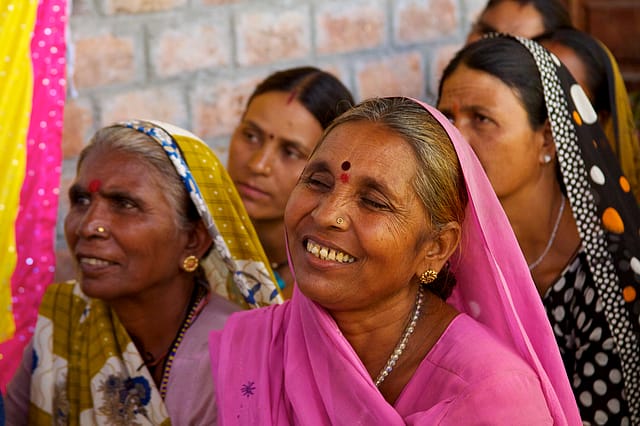
In a bustling corner of Chennai, 38-year-old Muthulakshmi runs a small tailoring unit from her home. Her workspace is modest: a sewing machine by the window, a few shelves of fabric and a notebook filled with orders from neighbours. “I started this to support my children’s education”, she says. “It is not a big enterprise, but it is mine”. Her story is one of quiet resilience, but also a reminder of the narrow economic space within which many women in India operate.
Women entrepreneurs in India are often seen as symbols of progress. More women now run enterprises and participate in economic activity. This trend shows up in national surveys. The Periodic Labour Force Survey shows a clear rise in women working as "own account" workers or employers. Among rural women, the share increased from 19 percent in 2017-18 to 31.2 percent in 2023-24. Urban women also registered an increase from 23.7 percent to 28.5 percent during this six-year period. The Annual Survey of Unincorporated Sector Enterprises reports a similar rise. Women-owned proprietary establishments accounted for 17.4 per cent in 2010–11 and climbed to 26.2 per cent by 2023-24. Put simply, about one in four informal sector establishments is now owned by a woman, up from roughly one in six a decade ago.
These numbers look encouraging. Yet women contribute only about 17 percent to India’s GDP, which remains far below the global average. The contrast between rising participation and limited economic contribution points to the persistent constraints that continue to hold women-led enterprises back.
Most women operate in the informal economy. Their businesses are home based, unregistered and run without hired workers. More than 80 percent operate from homes, and over 96 percent are units without hired workers. The contrast with male-owned firms is stark. These units remain small not only because women prefer home based work, but also because business and household roles overlap in ways that restrict mobility, risk taking and investment. In such settings, growth is rarely the primary consideration. What matters most is whether the work can be managed alongside the demands of the household.
Our recent study, Breaking the Glass Ceiling: Unveiling Gender Inequality among India’s Informal Sector Firms, helps explain why this disconnect persists. Using nationally representative data, we find that firms owned by women are on average far less productive than those owned by men, a pattern that is common across developing economies. The gap is substantial, with women-owned firms about 56 percent less productive.
Part of this difference is linked to visible structural factors. Women-owned firms tend to be smaller, older and more likely to operate from homes or temporary structures. They are concentrated in low-capital, low-technology sectors such as textiles, tobacco, retail and personal services. These patterns are consistent across states and over time.
However, even after accounting for these differences, a large gap remains. Our findings show that if women-run firms had similar characteristics as those run by men, their productivity would rise sharply, by nearly 70 percent. Yet the difference does not disappear completely. This indicates that deeper, less visible influences are at work: limited mobility, entrenched social expectations, restricted access to networks and continued discrimination in markets. These factors determine where women can work, the scale at which they operate and the risks they can take. The issue is not only that women-owned firms look different from male-owned firms but also that these differences point to underlying constraints rather than preferences alone.
One of the most striking insights from our study is that women are less likely than men to report business constraints, even when they operate with fewer resources. At first glance, this seems surprising. Why would smaller, more vulnerable firms report fewer obstacles? The answer lies in how women experience work in the informal economy.
For many women, enterprise is a way to earn an income while managing domestic duties or a route to gain autonomy in environments where mobility and decision making are restricted. Working from home or close to it becomes an advantage, even if it limits expansion. A woman like Muthulakshmi may not view limited credit, weak market access or lack of networks as constraints to be confronted. They form the boundaries within which she must function. What seems like underreporting signals internalised norms, restricted choices and a narrower sense of what is possible.
This calls into question the common belief that entrepreneurship alone brings empowerment. Credit, training and skill development programmes have helped women establish businesses, but they do not create equal conditions. A woman who faces mobility restrictions, heavy unpaid care work or bias from suppliers and officials remains at a disadvantage even when she receives the same support as a man.
Government initiatives such as Mudra, Stand-Up India and various incubation schemes have helped many women take their first step. Yet most of these ventures remain in segments with limited growth. The more fundamental challenge lies in the broader environment in which women work.
This environment varies widely across states. Karnataka, West Bengal, Telangana, Tamil Nadu, Maharashtra and Gujarat see higher participation of women in enterprise. States such as Uttar Pradesh, Bihar, Haryana and Assam show far lower levels. These variations reflect not only economic conditions but also education, infrastructure, safety and social norms that influence how easily women can engage with markets. In many rural areas, weak connectivity, limited networks and social scrutiny continue to limit participation.
The productivity gap between male- and female-owned firms brings attention to deeper social realities: who controls assets, who takes decisions and whose labour receives recognition. In the informal economy, where more than 80 percent of India’s workforce is employed, these disparities are especially visible. Women-run enterprises often draw on family support but rarely receive institutional backing. They depend on unpaid labour, yet they remain invisible, unrecognised and unprotected.
Closing this divide calls for rethinking entrepreneurship itself. Supporting women entrepreneurs cannot be reduced to extending credit or conducting training programmes. It requires an ecosystem that recognises unpaid work, addresses time and mobility constraints and questions the norms that keep women-led enterprises at the margins.
It also calls for a broader understanding of what success means. Growth matters, but so does autonomy. For many women, the ability to earn independently while ensuring safety and managing household responsibilities is itself a form of empowerment. Policies must be flexible enough to support high-growth ventures and those that offer stability and dignity through small-scale enterprise.
The World Bank estimates that India could witness a GDP rise of 1.5 percentage points if half of its women participated in the workforce. Achieving this requires more than incremental policy shifts. It calls for a structural reassessment of women’s work, both paid and unpaid.
The women running small shops, tailoring units and food stalls across India are more than business owners. They are participants in an economy that continues to undervalue their contribution. Their experiences reveal as much about the barriers within homes as those within markets. Acknowledging that link is the first step toward building an economy where women’s enterprise is not an exception but a norm. The measure of an economy is how it values the work of its women.