The India We Miss
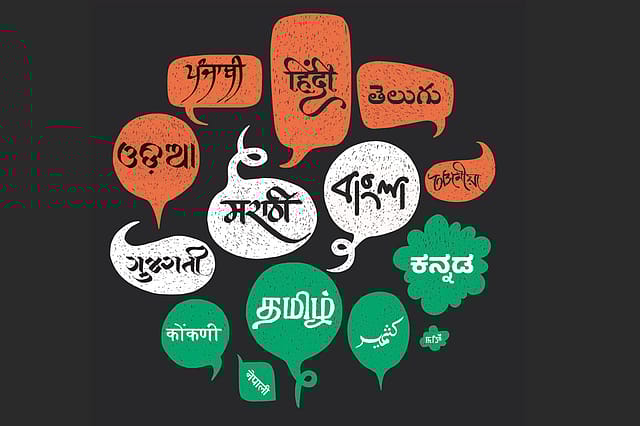
SO MUCH OF INDIA around us goes unknown and unnoticed—almost every day. What is unknown is easy to misunderstand. Add polarisation to this and you have a near-perfect setting for arguments that are more emotional than factual. Blaming social media or universal internet access mixes up cause and effect. The real cause, almost always, is the unknown that shouldn’t be unknown.
Ironically, facts on India are more plentiful today than ever. They pour out of government surveys, academic reports, private studies, and international databases almost every day. But being available isn’t the same as being accessible—not even with free, fast internet or with GPTs and Geminis as most people’s entry gate to AI. Try glancing at Bihar’s caste census or the Periodic Labour Force Survey—two reports dealing with India’s most urgent problems, caste and jobs. You’ll quickly see why so much of knowable India remains unknown.
Never before have we had so much data— and such urgent need to make sense of it. That is what 100 Ways to See India—Stats, Stories, And Surprises attempts to address. The book tries to transform the raw, the dull, and the overlooked into what we call “Idea Graphs”— charts that don’t just inform but make you pause, think, and say, “I didn’t know that.”

Here are two of nearly 100 chapters that show how delayering facts—drawn entirely from official databases—can make you rethink how well you know what you think you know about India.
INDIA’S VEGETARIAN PERCEPTION— AND NON-VEGETARIAN REALITY
Nowhere does India’s famed—and confusing— diversity show up as starkly as it does on the dinner plate. That explains the ignorance, sometimes willful, about how many Indians eat meat. According to the National Family Health Survey, 87% of men and 75% of women are non-vegetarian. And yet, 67% of Jains and 21% of Hindus avoid even root vegetables, while 60% of Buddhists say they wouldn’t eat at places serving both veg and non-veg food.
In India, meat is not just a diet—it’s also a cultural code, a religious boundary, and, sometimes, a political identity. Unlike most meat-eating countries, non-vegetarianism in India doesn’t mean daily meat consumption. Many eat meat only once a week—or even once a month. Religious festivals, caste customs, and fasting days influence what’s eaten and when. Even among non-vegetarians, many avoid beef or pork, creating an intricate pattern of preferences. Geographical variation is just as stark. In states like Nagaland and Kerala, nearly everyone eats meat. In Rajasthan and Punjab, vegetarians dominate. Within religions too, patterns vary: most Hindus eat meat but avoid beef; most Muslims eat meat but not pork; Christians tend to consume meat more frequently. These regional, religious, and personal variations defy easy categorisation.
Affordability plays a role too. In some regions, a daily vegetarian diet is more expensive and less accessible than a non-vegetarian one—a reason why India’s richest households report the highest share of vegetarians. The gender gap, however, is shaped less by affordability than by norms and household choices—especially in rural homes. In India, food is far more than nourishment. Like faith, it is deeply personal—and widely political.
NOBODY’S MOTHER TONGUE, EVERYBODY’S LANGUAGE
It is India’s oldest, quietest, largest—and fastest-growing—import. Except that it isn’t an import anymore. English may have arrived with colonial rule, but it now belongs to India as much as cricket does. The country is home to the world’s second-largest population of English speakers, and is on track to become the largest in under a decade.
That this can happen in a country with 2,843 officially recorded dialects is nothing short of a linguistic miracle. According to the 2011 Census—whose detailed language data was released only in 2018—English was the second most spoken language in India, ahead of Bengali. More than 99% of its users spoke it as a second or third language—not their first. Nearly 2 crore more Indians knew English than Bengali in 2011. That gap has likely doubled since. Tamil speakers made up the largest group of those who also knew English (19%), followed by Hindi speakers. English is India’s most-popular third language by a wide margin. And in 2011, it ranked just behind Hindias the second language—a position it has likely tied or even overtaken by now.
In a country where language is identity, it is remarkable that a ‘foreign’ tongue is quietly winning over more minds and mouths than any other local language. It has done so by becoming a practical passport to jobs, migration, digital access, and social mobility. And in some form, English has done this in much of the world.
(This is an edited excerpt from Rohit Saran's book 100 Ways to See India: Stats, Stories, and Surprises | HarperCollins India)