The Ides of August: The idea of freedom
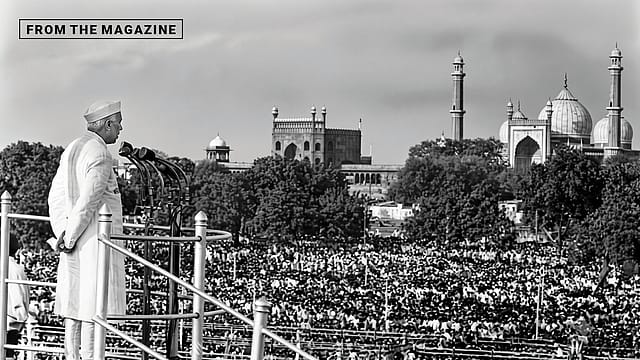
THE LAST PHASE OF MY CAREER IN diplomacy consisted of tenures in Singapore and Pakistan. The latter was well known to me since I had spent over four years there less than a decade earlier. Singapore was new and so was the experience of being in Southeast Asia and in the tropics. The contrast with South Asia and especially with Pakistan stood out in many different ways. There was obviously a visual difference between first and third world but also in more subtle ways, beginning with the precise, planned and manicured feel to everything in Singapore compared to the near-anarchy and chaos that underwrite most of Pakistan except its cantonments and some parts of the capital city Islamabad.
But there is one common point between Pakistan and Singapore (and in fact India too) and that lies in the diplomatic calendar—both have their national days in August and freedom came much at the same time of year in both places but through different processes.
In Islamabad
Mid-August is always a slightly awkward time—for reasons that are never stated of course—for Indian diplomats in Pakistan. What for all Pakistanis is a day of freedom and deliverance—the closest we can come to a secular ritual of thanksgiving as in the US—is for Indians a tragedy and a reminder of how an earlier generation of its leaders failed to keep a going federal structure intact. This tragedy versus liberation trope runs through like a rich seam in the India-Pakistan interface, largely subterranean but popping up unexpectedly from time to time. Around the time the ides of August—the 13th of August in English—approaches every year, it definitely surfaces.
Across the Radcliffe Line, especially so on the western side of the subcontinent, the debate is rejoined: Deliverance or Tragedy? This India-Pakistan debate apart, August 14 itself has multiple connotations for most Pakistanis—the difference depending on which part of the political spectrum they locate themselves.
For Pakistani liberals, August 14 is the day to evoke and invoke MA Jinnah’s democratic, even secular, ideals. For others it is a reminder of the struggle of how an Islamic state, or at least a state for the subcontinent’s Muslims, came into being. To some others the foundation of Pakistan was the culmination of a long linear trend that began with the entry of Islam into South Asia in Sindh in the 8th century. To yet others it represented no more than the struggle to maintain a separate identity in a Hindu-majority country. These multiple, often contradictory, ideas of freedom appeared strongly to be a factor in Pakistan’s current malaise through all the years I lived there. In some years the erosion in the internal security situation had meant the moving of all national day observances to tightly controlled indoor events to reduce the risk of terrorist attacks. Pakistan’s malaises were and are multiple but at their root also lies the issue of its identity and what precisely August 14 meant—a separate homeland for a religious minority, an Islamic state, or, as some have argued, an unexpected outcome of a negotiation that failed.
In the past, and now less so, to some in Pakistan August 14 was a time for introspection as to why the idea of Pakistan had been unable to keep its east and west wings together. Decades after the drama and trauma of 1971, many in Pakistan rationalise the emergence of Bangladesh as a separate nation as having an retrospective inevitability to it: two largely self-contained units separated by a thousand miles were hardly a workable arrangement for long. But these were rationalisations. They overlook, for instance, the case of Indonesia: 14,000-15,000 islands, one of which—Java— had half the country’s population. But the country itself was more than Java with numerous, even hundreds of dialects and languages. The point is that it has stayed together and managed its centrifugal pressures much better than Pakistan. Most large developing countries, in fact, have managed their federal issues better than Pakistan. The East Pakistan story and the current narratives surrounding Baluchistan certainly underscore that point.
In much of this debate India inevitably crops up and when it does, it inevitably sucks a great deal of oxygen out of the room. This is what always surprised me about August 14 in Pakistan. So much about ideas of freedom in Pakistan is actually ideas and conversations about India. Perhaps this is inevitable, since the idea of freedom in Pakistan essentially celebrates freedom from India.
In many ways then the familiar tropes of Liberation vs Tragedy on August 14-15 are mutually reinforcing. The greater the feeling of tragedy in India when August 1947 is recalled, the stronger the sense of fulfilment or freedom in Pakistan.
In Singapore
Singapore’s national day falls on August 9—the day it was formally ejected by Malaysia from the federal structure that had existed post-decolonisation in September 1963. Did Singapore leave or was it ejected?
In 2010, when I attended Singapore’s 45th National Day, this seemed to matter very little. History—whether contemporary, modern or medieval—did not appear as a factor in the city state, so entirely focused was the country on its present and its future. What appeared vital to its amazing transformation to first world and global metropolis status was this pragmatic, clinical view of itself and from this the imperative of moving on and not dwelling on the past. In any event, whether Singapore separated or was expelled from Malaysia, we do know that the process was largely peaceful, even orderly in a way that the India-Pakistan Partition or the civil war-cum-genocide that led to Bangladesh certainly was not.

The traditionalist, dominant narrative was of “ejection”—that the Malay political leadership of Malaysia came to the conclusion that having Singapore inside the federation was a greater liability than expelling it. For the mainstream Malay politician, predominantly Chinese Singapore’s inclusion in Malaysia upset the political demographics of the country. There would be, in brief, too many ethnic Chinese in a united Malaysia for Malay dominance to be unquestioned. To this line of thinking, Singapore out of Malaysia was therefore the best option.
This traditionalist narrative of expulsion was the dominant ideology in Singapore and carried a great deal of conviction. What gave it extra credibility was the televised picture of Prime Minister Lee Kuan Yew breaking down in tears as he announced the news on August 9, 1965 as a cherished experiment that failed. It engendered a deep sense of vulnerability and of being abandoned—a small island without resources in a hostile environment. This acute sense of vulnerability thereafter underpinned much of Singapore’s governance model and strengthened the social contract between the government and the people that was to become a significant force in the Singapore story.
Two factors are unusual in this narrative. The first is of freedom being forced on an unwilling Singapore. This is unusual of course in an era when we take centrifugal trajectories in multiethnic societies for granted. The second unusual feature—and this is really unusual—is of Malaysia actively sacrificing a significant and valuable chunk of territory in favour of an ethnically more homogeneous nation. This is a rare, perhaps unique, example of a state voluntarily giving up or ceding its own territory.
The Albatross File
In December 2025, I was astonished to hear the former prime minister (2004-24) of Singapore, Lee Hsien Loong, Lee Kuan Yew’s oldest son, knock this prevalent narrative off the pedestal. Far from Singapore being ‘kicked out’ by Malaysia, the actual story was much more nuanced and was influenced by Singapore politicians also wanting a clean break. The separation was therefore just that—a consensual divorce, a relatively amicable parting of ways, in which both sides had exercised agency.
This is the story that emerges from ‘The Albatross File’, a collection of documents and official papers kept by Goh Keng Swee, a close associate of Lee Kuan Yew and the person who actually did most of the negotiations with the Malaysian leadership in 1965. What this declassified file revealed is that Goh, to an extent not known even to Lee Kuan Yew then, pushed for a clean break with Malaysia thus mirroring what the main Malay leadership had also wanted. Although Lee Kuan Yew himself may have been in favour of a looser Malaysian federation, others in the Singapore leadership thought that the arrangement had become unworkable. Persisting with it risked bringing Malay-Chinese ethnic tensions to boiling point. The two-year-old merger with Malaysia was in effect ‘an albatross” round their necks, hence the name of the file.
The details are perhaps of no great interest to us. Many Singaporeans had a great deal of appetite for it and found it endlessly fascinating since it was in such contrast to the narrative they had been bought up on—of ejection or being kicked out and which had become part of Singapore’s founding mythology.
What I found interesting is that in an era when separatism led to violent intra and interstate conflict—and the 1960s were just that era—the Singapore-Malaysia separation followed a different trajectory. Both sides consciously chose a path of secret negotiations to achieve a clinical and orderly separation while maintaining public narratives that were quite different. If nothing else it certainly vindicates one’s faith in smart politicians who prioritised stability and order over any overblown and sentimental notions of territorial nationalism or patriotism.
What I also find interesting is how little impact this discarding of an older mythology has had on Singaporeans, or on Malaysians for that matter. Yes, people are interested and history buffs have a lot to chew on, but for most it was just something that happened a long time ago and the present and the future seem much more important than interpretations of the past. So, across both sides of the Straits of Johor that separates Singapore and Malaysia the issue gathered no traction except for a certain curiosity and keenness to know more about the past.
History at Arm’s Length
Malaysia’s approach to detaching Singapore and in effect reducing its own territory, and working with likeminded Singaporeans to achieve this end, seems exceptional, almost unique. But we can find a converging, even if not similar, case from South Asia itself. I am reminded of the July 1947 referendum in Sylhet to decide whether the district would choose to remain in the state of Assam, that is, in India or join East Bengal, that is, Pakistan. A referendum was decided upon because Sylhet was a Muslim-majority district in a state (Assam) that was Hindu majority. The outcome was not a surprise and most of Sylhet voted for Pakistan and was transferred to it except one subdivision which was incorporated into India.
The Hindu-Muslim binary cloaked other fault lines in Sylhet and what was also an operational factor was the Assamese versus Bengali ethnic divide. The similarity with Malaysia in 1965 lies in the fact that in July 1947 the Assamese political elite were on the whole relieved that Sylhet would largely go to East Pakistan—it had too many Bengalis for their liking. This was no doubt the outcome they had actively sought to engineer once it became clear that a united India was no longer feasible. Clearly, this too is a case where ethnic homogeneity trumped territorial possessiveness.
To return to the point I began with, the idea of freedom is a moveable feast and people choose to celebrate the aspect that suits them best. In India the successful anti-colonial struggle is the leitmotif of freedom—the British were oppressors and we evicted them. In Pakistan it is the triumphant birth of a new nation that is the cause of rejoicing—the freedom from having to be two nations in one space. The British, in this story, were not the only oppressors, if they were oppressors at all. Some quarters in Singapore and Malaysia saw their separation as a positive outcome, whatever the official narrative at the time.
Freedom in the subcontinent on August 14 and on August 15 meant different things to the nations celebrating their independence, but it was incontrovertibly freedom nonetheless. But it does seem to me that August 14-15 or the liberation-tragedy binary reinvigorates itself even more strongly each passing decade. The farther we move from the actual events chronologically, the more immediacy they seem to acquire.
This is hardly true just for South Asia. National Day anniversaries are usually charged and solemn events everywhere. This is not least because they are occasions for the ritual reinforcement of a country’s founding ideas and ideology, and equally a platform to question these ideas and express dissent from them. The US recently went through its Semiquincentennial—the 250th anniversary of its 1776 revolution and freedom from colonial British rule—with all the well-known debates on American democracy and values and the contrarian voices on slavery, indigenous people, etc. Perhaps its debate about history was even more intense this time round on account of the forces unleashed by the Trump presidency.
But in South Asia, in country after country, history and contemporary politics appear to be intersecting more strongly and with greater salience than in the past. I wonder whether this is so because we view history in normative terms. Perhaps accepting what has happened as a settled fact and not as good or bad would be easier. Related to this is the fact that it is problematic to see and read history as a missed opportunity, or as something on which we can turn the clock back and achieve a course correction. Moving on, not forgetting but knowing that what is past is past, is the key. But the fatal flaw is in believing that history has only one takeaway or even one conclusion when, from its earliest rendering, it has always been only one interpretation among many.