The Dawn of a New Strategic Era: India has begun to absorb the lessons from the Iran war
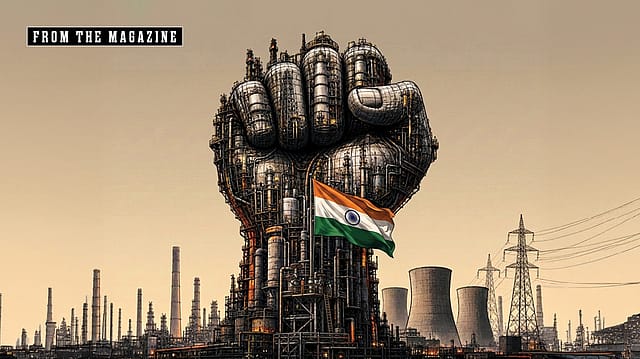
THE US AND ISRAEL WON the opening battles of the war they launched against Iran. They may yet lose the larger strategic contest. More significantly, the conflict continues to hold the global economy hostage. It has turned into an asymmetric war of attrition with mounting strategic, economic and geopolitical costs, with India one of the worst affected countries.
The war, now in its sixth month, has become a textbook example of how overwhelming military superiority does not necessarily translate into political success. Early strikes inflicted devastating damage on Iran’s military infrastructure and decapitated much of its senior leadership. Yet the Islamic Republic did not collapse. Instead, it adapted. Its leadership was rapidly reconstituted, its security apparatus remained intact, and it shifted to an asymmetric strategy that has imposed growing costs on the US and its regional allies.
Despite sustained strikes against Iranian assets, US President Donald Trump’s administration has failed to achieve one of its principal objectives: restoring secure commercial navigation through the Strait of Hormuz. Iran continues to wield its ability to disrupt one of the world’s most important energy chokepoints, keeping global energy markets under constant pressure and prolonging a worldwide economic shock. The war has destabilised the entire Persian Gulf region.
More fundamentally, the war has exposed a central flaw in the way Trump approached the conflict. No military campaign should begin without a clearly defined political end-state, a realistic strategy for achieving it, an assessment of how the adversary is likely to respond, and measurable criteria for success. Absent these, tactical victories can accumulate without producing strategic gains. That increasingly appears to describe America’s campaign against Iran—“a bombing campaign in search of a strategy,” as Joe Kent, a former top US counterterrorism official, put it.
The conflict has also expanded well beyond a bilateral confrontation. Hezbollah, Iraqi militias, the Houthis and US-aligned Gulf states have all been drawn into the fighting at various stages. Repeated ceasefires have merely paused, rather than resolved, the violence, even as the financial, military and human costs continue to mount.
Trump’s war has revealed the limits of US power. Iran remains defiant, the Strait of Hormuz remains contested, and Washington’s objectives have become increasingly difficult to define. The longer the conflict continues without a coherent US political strategy, the greater the risk that Trump’s brazen military attack will be remembered not for its spectacular opening, but as a strategic liability that defined his second presidency.
Understanding how the world’s most powerful military arrived at this point—and what it means for American strategy, the Middle East, India and the global balance of power—is essential to understanding the conflict itself.
INDIA’S VULNERABILITIES
While the US risks turning military success into strategic failure, India risks becoming one of the Iran war’s biggest collateral casualties.
For more than two decades, India has carefully cultivated a policy of multi-alignment in the Middle East, maintaining close ties simultaneously with the US, Israel, the United Arab Emirates (UAE), Saudi Arabia, and Iran. That balancing act has served India remarkably well, securing energy supplies, protecting its large diaspora, expanding trade and opening new strategic partnerships.
A prolonged US-Iran conflict, however, threatens to unravel this equilibrium.
India’s greatest vulnerability is energy. More than 80 per cent of its crude oil is imported, with roughly half originating in or transiting the Persian Gulf. Even more critically, most of India’s imported Liquefied Natural Gas (LNG) and Liquefied Petroleum Gas (LPG) also pass through the Strait of Hormuz.

As long as Iran retains the ability to threaten this maritime chokepoint, India remains exposed to higher energy prices, imported inflation, a widening current account deficit and greater fiscal pressure. Every sustained increase in oil prices ripples through the Indian economy—from transport costs and manufacturing to household cooking fuel and fertiliser production.
The costs do not end there. Higher war-risk insurance premiums and disruptions across the Gulf and Red Sea have sharply increased freight costs, eroding the competitiveness of Indian exports to Europe and North America.
At the same time, the conflict threatens the livelihoods of about nine million Indians living and working in the Gulf. Any largescale escalation could force New Delhi to undertake a massive evacuation while further reducing remittances that sustain millions of households across states such as Kerala, Tamil Nadu, and Bihar.
The strategic consequences may prove even more enduring. The war strikes at the heart of India’s long-term connectivity ambitions.
Iran’s Chabahar Port—in which India invested heavily to obtain direct access to Afghanistan and Central Asia while bypassing Pakistan and offering a counterweight to China’s Gwadar Port—has been crippled by renewed American sanctions, US airstrikes and the reluctance of private shipping, insurance and logistics firms to operate there. Chabahar is a crucial feeder port for the broader International North-South Transport Corridor (INSTC) connecting Mumbai to Moscow. The Iran war has effectively frozen development on missing rail links and dry-run corridors.
Consequently, Afghanistan and the landlocked Central Asian states have been pushed back towards reliance on Pakistani routes or Chinese Belt and Road Initiative (BRI) infrastructure, undermining India’s regional influence.
Simultaneously, the India-Middle East-Europe Economic Corridor (IMEC), unveiled with great fanfare at the G20 summit in 2023 in New Delhi as a flagship alternative to China’s BRI, has effectively been frozen. Aimed at connecting India to Europe via a sea-and-rail network passing through the UAE, Saudi Arabia, Jordan, and Israel, IMEC’s viability depends upon a stable Middle East and continued Arab-Israeli normalisation—two assumptions that the war has shattered.
The result is more than the temporary suspension of three infrastructure projects. Together, Chabahar, INSTC and IMEC formed the key pillars of India’s westward strategic outreach, intended to integrate the country more deeply with Central Asia, the Persian Gulf and Europe while reducing dependence on vulnerable maritime routes. Their suspension narrows India’s geopolitical options just as China is expanding its economic and diplomatic footprint across West Asia.
Trump’s Iran war, illustrating how he has turned America’s unrivalled power into an instrument of unilateral coercion, is imposing mounting costs on India. The conflict threatens India’s energy security, strains its economic resilience, endangers millions of overseas citizens and undermines years of painstaking geopolitical investment. Indeed, the conflict has imposed a broad inflationary tax on the Indian economy.
In a war fought far from its borders, India may emerge as one of its principal strategic losers.
NEW ENERGY REALISM
The Iran war is forcing India to rethink not merely where it buys its energy, but the very foundations of its energy security strategy.
For decades, India’s overriding concern was ensuring that sufficient energy supplies reached its shores at affordable prices. That objective has become considerably more complicated.
The prolonged disruption of Persian Gulf supplies has demonstrated that energy security can no longer be measured simply in barrels purchased or contracts signed. It now encompasses the resilience of maritime supply routes, the political reliability of suppliers, the financial infrastructure through which payments are made, and the strategic leverage that accompanies dependence on any single power.
New Delhi’s response has therefore evolved into a multi-layered strategy designed to reduce vulnerability without sacrificing strategic autonomy.
The first line of defence is physical resilience. India has significantly strengthened its Strategic Petroleum Reserve (SPR), maintained by Indian Strategic Petroleum Reserves Limited. Underground caverns at Visakhapatnam, Mangaluru and Padur provide an emergency buffer against sudden oil-supply disruptions, while commercial inventories maintained by public-sector refiners substantially extend national cover. The government is also expanding storage capacity at Chandikhol and Padur under Phase II of the SPR programme.
These reserves cannot insulate India indefinitely from a prolonged conflict, but they buy policymakers precious time during the opening stages of a supply shock, reducing the likelihood of panic buying or abrupt economic disruption.
Natural gas presents a much greater challenge. Unlike crude oil, LNG cannot easily be stockpiled for extended periods. India’s LNG storage infrastructure was designed for operational efficiency rather than strategic resilience, leaving the country with only a limited emergency cushion.
Because a majority of India’s imported LNG originates in the Gulf and transits the Strait of Hormuz, any prolonged disruption immediately exposes the country to shortages. The government has consequently begun encouraging additional cryogenic storage capacity while developing protocols for emergency allocation of scarce supplies. In a severe crisis, household cooking gas, city gas distribution, and fertiliser production receive priority, while industrial users, power stations and energy-intensive manufacturers are required to curtail consumption or switch to alternative fuels.
The second pillar of India’s strategy is diversification. Russia’s invasion of Ukraine transformed India’s crude procurement strategy as refiners took advantage of discounted Russian oil. Although Washington subsequently pressured New Delhi to reduce those purchases, the outbreak of the Iran war demonstrated the strategic value of maintaining multiple suppliers. Russian crude has provided an important economic hedge against volatility in Middle Eastern markets.
At the same time, India expanded purchases from Brazil, Guyana, Nigeria, Angola, Venezuela, and the US, reducing the danger that instability in any single producing region could paralyse its economy.
Diversification, however, is not simply about geography. Different crude grades possess different refining characteristics. Indian refineries have spent decades optimising operations around heavier Middle Eastern and Russian grades. Maintaining a balanced crude basket, therefore, improves both energy security and refinery efficiency, reducing dependence on any one supplier while preserving operational flexibility.
Diversifying suppliers does not eliminate another critical vulnerability: geography. Oil purchased from widely separated producers still converges upon a limited number of maritime chokepoints. The Strait of Hormuz, the Bab el-Mandeb, and the Red Sea remain indispensable arteries for global commerce. Even when cargoes are rerouted around the Cape of Good Hope to avoid conflict zones, transit times lengthen, freight costs increase and insurance premiums soar.
Recognising this reality, India has quietly expanded the role of its navy. Through Operation Sankalp, Indian warships now provide escorts for merchant vessels, conduct maritime surveillance across the Arabian Sea and Gulf of Aden, and protect sea lines of communication vital to India’s economy. Importantly, New Delhi has deliberately maintained these operations under independent national command rather than integrating them into US-led naval coalitions.
That distinction is more than symbolic. American-led maritime coalitions pursue broader geopolitical objectives, including deterrence and, when necessary, offensive strikes against hostile launch sites. India’s mission is fundamentally different. Operation Sankalp is narrowly focused on protecting Indian shipping, preserving freedom of navigation for India’s own commerce and avoiding entanglement in regional conflicts. By remaining outside formal coalition structures, New Delhi retains complete freedom to determine when, where and how its forces operate while continuing to exchange maritime information with international partners.
This approach preserves India’s longstanding policy of strategic autonomy while minimising the risk that it will be perceived by Arab states or Iran as an active participant in the conflict.
Yet the most consequential debate in New Delhi concerns not naval deployments or strategic reserves but the changing composition of India’s energy imports.
As American sanctions on Russia intensified and Washington pressed India to diversify away from both Russian and Iranian supplies, the US has emerged since May as India’s largest supplier of LNG and LPG.
Furthermore, India, nudged by Washington, has become the largest export destination for Venezuelan oil, payments for which flow to the US Treasury rather than Caracas. The arrangement increasingly resembles a colonial relationship, with Washington controlling Venezuela’s principal source of national income.
The US-origin or US-controlled energy supplies to India undoubtedly enhance diversification, but they also introduce major vulnerabilities. More importantly, replacing one dependency with another carries its own strategic risks.
Europe offers a cautionary example. Following Russia’s invasion of Ukraine, European governments rapidly reduced their dependence on cheap Russian pipeline gas by dramatically increasing imports of American LNG. While this strengthened energy security in one respect, it also exposed Europe to higher transportation and liquefaction costs, volatile US pricing and growing political dependence upon decisions made in Washington. Energy relationships that appear commercially attractive during one geopolitical crisis can become strategic liabilities during the next.
Indian policymakers are keenly aware of this lesson. Dependence upon US-origin or US-controlled energy sources exposes India to risks extending well beyond ordinary market fluctuations. American energy exports remain subject to executive authority and domestic political priorities. Export licences can be modified, delayed or conditioned in response to changing geopolitical circumstances. Even more significant is Washington’s demonstrated willingness to employ sanctions, financial regulations and the dollar-based international payments system as instruments of statecraft.
India experienced this firsthand as Washington repeatedly targeted Russian energy exports with sanctions. Although China remained Russia’s largest energy customer and Europe continued purchasing significant quantities, Washington focused its pressure largely on India to curtail imports and shift towards alternative suppliers, especially the US. The broader message was unmistakable: access to energy could become contingent upon alignment with American foreign policy objectives.
Such dependence sits uneasily alongside India’s longstanding commitment to strategic autonomy. For decades, successive Indian governments have sought to avoid excessive dependence upon any single great power. That principle applies as much to energy as it does to defence or diplomacy. Heavy reliance upon US-origin or US-controlled energy supplies could gradually reduce New Delhi’s diplomatic flexibility towards Russia, Iran and other non-Western partners, complicating its` ability to pursue an independent foreign policy.
There are also commercial considerations. American LNG generally carries higher transportation and liquefaction costs than supplies from the Gulf, while US crude differs significantly from the heavier grades for which many Indian refineries were designed. Processing large quantities of lighter American crude requires operational adjustments that can reduce the production of diesel and other middle distillates essential to India’s transport economy.
Such import dependence introduces another layer of vulnerability. American energy transactions are denominated in US dollars, reinforcing dependence upon American financial infrastructure precisely when India has sought to diversify payment mechanisms. New Delhi’s growing interest in local-currency settlement reflects not ideological opposition to the dollar but a desire for redundancy.
The successful Rupee-Dirham framework with the UAE demonstrates how local-currency arrangements can reduce exposure to external financial shocks while facilitating bilateral trade. By contrast, the Rupee-Rouble mechanism revealed the practical difficulties created by large trade imbalances and India’s partially convertible currency. The rupee is fully convertible on the current account (for trade, services and remittances), but it has partial and restricted convertibility on the capital account to prevent sudden massive capital flight during global financial crises and to protect the currency from extreme speculative attacks by foreign entities.
The lesson is not that de-dollarisation is imminent, but that financial diversification is becoming an essential component of energy security.
Ultimately, India is attempting to avoid exchanging one structural dependency for another.
Its long-term strategy, therefore, extends beyond diversification towards reducing hydrocarbon dependence altogether.
Electrification of transport, accelerated adoption of electric vehicles (EVs), nationwide railway electrification, expanded ethanol blending, compressed biogas, green hydrogen for fertiliser and steel production, largescale renewable energy deployment, grid-scale storage and expanded nuclear generation all serve a common strategic objective: reducing India’s exposure to external energy coercion.
The same logic underpins India’s search for overseas equity oil, investments in critical minerals, and efforts to develop domestic manufacturing across emerging clean-energy supply chains.
Energy security in the 21st century is no longer measured solely by oil wells and tanker routes. It increasingly depends upon batteries, transmission networks, hydrogen technologies, nuclear reactors and secure access to lithium, cobalt, nickel, and rare earth elements.
The Iran war has accelerated this transformation. It has demonstrated that energy dependence is not simply an economic vulnerability but a geopolitical one.
For India, the lesson is clear: strategic autonomy ultimately requires energy autonomy. Complete self-sufficiency may remain unattainable for a rapidly growing major economy, but reducing dependence on any single supplier, transport corridor or financial system has become a national security imperative. The conflict has therefore reinforced a doctrine likely to shape Indian strategy for decades to come—one that seeks resilience through diversification today while pursuing genuine energy independence tomorrow.
STRATEGIC AWAKENING
The Iran war is set to leave a lasting imprint on India’s strategic thinking long after the guns fall silent.
It represents a critical defining moment, just like the 1991 Indian financial crisis, which was driven by a rapid depletion of foreign exchange reserves and external shocks like the US-led Gulf War and which compelled India to pledge gold to the International Monetary Fund (IMF) and abandon the “licence raj” for market liberalisation.
Wars often force changes to help plug vulnerabilities. The current conflict in the Persian Gulf has done precisely that for India. It has exposed vulnerabilities that many Indian policymakers understood in theory but had never experienced on such a scale: the fragility of maritime energy lifelines, the limits of multi-alignment during great-power confrontation, the vulnerability of ambitious connectivity projects to geopolitical shocks, and the revolutionary impact of low-cost autonomous weapons on modern warfare.
The most important lesson concerns energy itself. For decades, Indian policymakers viewed energy security largely through the lens of supplier diversification. The assumption was straightforward: purchasing oil from a wider range of countries would reduce strategic vulnerability.
The Iran war has exposed the limitations of that approach. Diversifying suppliers dsoes little if much of the country’s oil and gas imports must still pass through vulnerable maritime chokepoints. A tanker carrying American, Russian, or Gulf crude offers little comfort if it cannot safely transit the Strait of Hormuz.
The lesson is that energy security is no longer simply about suppliers. It is about resilience. That requires larger strategic reserves—not only for crude oil but also for natural gas—greater redundancy in shipping routes, stronger naval protection for sea lines of communication, and a faster transition towards domestically produced energy.
India’s long-term energy strategy is, therefore, becoming inseparable from its national security strategy.
The conflict has also exposed the hard limits of multi-alignment. India has spent the past two decades cultivating close Relationships simultaneously with Washington, Riyadh, AbuDhabi, Tel Aviv, and Tehran. That strategy worked because those relationships could largely be compartmentalised. The Iran war demonstrates what happens when those compartments collapse.
The US and Israel expect partners to tighten sanctions and isolate Tehran. Iran expects countries benefiting from access to Chabahar and the Strait of Hormuz to remain politically neutral. Gulf monarchies are simultaneously deepening ties with Asia while hedging between Washington and Beijing. In such an environment, maintaining cordial relations with all sides becomes progressively more difficult.
This does not mean India’s policy of strategic autonomy has failed. On the contrary, it makes strategic autonomy even more valuable. But autonomy will increasingly require active diplomacy rather than passive balancing. India can no longer assume that staying equidistant from competing blocs will automatically protect its interests. It will have to become more proactive in crisis diplomacy, regional mediation and coalition-building while preserving freedom of action.
The war also delivers a sobering verdict on infrastructure strategy.
The suspension of the IMEC and INSTC corridors illustrates how quickly geopolitical assumptions can collapse. Multinational corridors crossing politically unstable regions may appear commercially attractive during peacetime but can become financially and strategically untenable almost overnight.
Future connectivity strategies will thus likely place greater emphasis on redundancy rather than efficiency alone. Direct maritime access, diversified shipping routes, protected port investments and multiple transport corridors are likely to receive greater priority than ambitious but politically fragile mega-projects.
Perhaps nowhere are the lessons more striking than on the battlefield. Like the war in Ukraine, the Iran conflict demonstrates that the economics of warfare are changing. Militaries can no longer afford to intercept $20,000 drones with multi-million-dollar missiles. Drone swarms, loitering munitions, precision missiles and electronic warfare increasingly allow relatively inexpensive systems to impose disproportionate costs on technologically superior adversaries.
For India, this is not an argument against acquiring sophisticated aircraft such as the French Rafale. High-end fighters remain indispensable for establishing air superiority, conducting deep precision strikes and deterring peer competitors such as China. But the conflict demonstrates that quality alone is insufficient.
The future lies in integrating crewed aircraft with large numbers of inexpensive autonomous systems capable of saturating enemy air defences, conducting reconnaissance and absorbing attrition before high-value platforms enter contested airspace.
India’s emerging Combat Air Teaming System (CATS), indigenous stealth drones and loyal-wingman concepts point in precisely this direction. Equally important will be mass-producing low-cost interceptors, directed-energy weapons and electronic warfare systems capable of defeating drone swarms without exhausting expensive missile inventories.
The central challenge is no longer simply technological sophistication. It is achieving technological sophistication at industrial scale.
The conflict also exposes another dimension of national resilience that has often received insufficient attention: India’s overseas citizens.
About nine million Indians live and work across the Gulf. Previous crises allowed New Delhi to organise limited evacuation operations. A prolonged regional war would present an entirely different challenge. Airspace closures, damaged infrastructure and maritime disruptions could make evacuating millions of people impossible. Protecting the diaspora therefore requires a shift from emergency evacuation towards pre-crisis planning, civil-defence cooperation with Gulf sheikhdoms, resilient communications networks and stronger domestic mechanisms for absorbing returning workers without severe economic and social disruption.
Taken together, these lessons point towards a broader transformation.
The Iran war demonstrates that 21st-century national security can no longer be compartmentalised into separate military, economic, technological, and diplomatic domains. Energy policy affects foreign policy. Financial infrastructure influences strategic autonomy. Maritime security shapes economic resilience. Industrial capacity determines military effectiveness. Critical technologies increasingly matter as much as traditional weapons systems.
For India, strategic autonomy is thus acquiring a new meaning. It is no longer simply the freedom to avoid choosing sides in great-power competition. Increasingly, it is the ability to withstand external coercion regardless of where it originates—whether through disrupted energy supplies, sanctions, financial pressure, supply-chain shocks or military intimidation.
The broader significance of the Iran war lies precisely here. The conflict, by exposing India’s vulnerabilities, has helped clarify its strategic priorities. Building larger energy reserves, diversifying supply chains, strengthening maritime power, accelerating indigenous defence production, investing in new military technologies and reducing structural dependence on imported hydrocarbons are no longer separate policy initiatives. They are becoming components of a single national strategy.
The war may ultimately be remembered not only for reshaping the Middle East but also for accelerating India’s evolution from a country managing external crises to one systematically preparing for an era in which geopolitical disruption is no longer the exception but the norm.
The Iran war marks more than a turning point for India or any other important state. It marks the emergence of a new strategic era in which resilience has become the defining currency of national strength. Countries that can secure their energy, protect their supply chains, manufacture critical technologies and withstand economic coercion will enjoy far greater strategic freedom than those that remain dependent on vulnerable external systems.
India has begun to absorb that lesson. Whether it can translate it into policy may prove one of the defining strategic questions of the coming decade.