The Battle for Command: Will the CAPF Bill Compromise Internal Security By Dividing the Uniform?
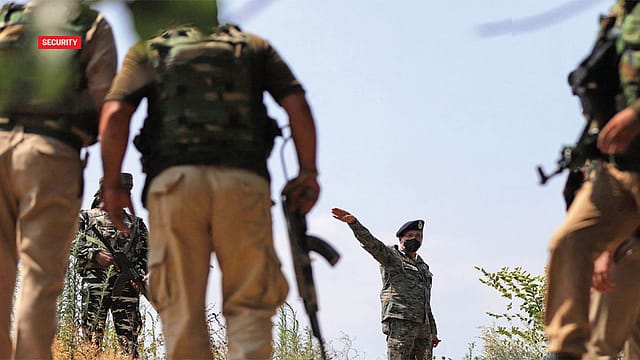
IN JUNE OF 2017, somewhere in Jharkhand, Central Reserve Police Force (CRPF) officer Raj Sheoran and his men were just getting down a hill formation when they established contact with a group of Maoists. Heavy firing ensued. Sheoran, who had opted for the CRPF’s elite anti- Maoist force, COBRA, and had been trained for a situation like this, took charge, and was successful in neutralising the Maoists with no casualty on his side. After completing his four-year tenure, it was time, as per rules, for his transfer or deputation. He volunteered for the National Security Guard (NSG), cleared his probation, and became part of the security detail first of Union Defence Minister Rajnath Singh and later of Uttar Pradesh Chief Minister Yogi Adityanath. Afterwards, he got posted to NSG’s training centre as an instructor.
In 2023, however, Sheoran chose to quit the force. A major factor in his decision, he says, was the realisation that there was hardly any chance of growth in the force whose uniform he donned proudly. “I was 26 when I joined COBRA. At 36, I’d have to go back and would have been expected to do the same duty,” he says. He has now established his own venture for security consultancy with clear plans for diversification.
The government has just pushed a Bill that will force scores of men like Sheoran to reassess their future in uniform. If men like Sheoran, battle-hardened and highly specialised, find limited avenues for progression, the incentive to stay diminishes sharply. Over time, this could create a steady outward flow of precisely those officers the forces can least afford to lose. This is a consequential conflict that has now burst into the open. At its core lies a fundamental question, or maybe two: Who gets to command the country’s paramilitary forces, and perhaps more importantly, what kind of institutions are they meant to be?
On paper, the Central Armed Police Forces (General Administration) Bill, 2026 (or CAPF Bill) is an exercise in administrative tidiness which promises to unify a patchwork of service rules governing five forces—CRPF, Border Security Force (BSF), Indo-Tibetan Border Police (ITBP), Central Industrial Security Force (CISF), and Sahastra Seema Bal (SSB)—replacing decades of ad hoc arrangements with statutory clarity. In practice, however, the Bill, which was introduced on April 1 in Rajya Sabha after overriding a Supreme Court judgment, has triggered a worrying schism in India’s security establishment, pitting career paramilitary officers against members of the elite Indian Police Service (IPS).
The Bill’s controversial provision lies in its seeking to institutionalise the deputation of IPS officers to senior leadership positions within CAPFs, reserving a substantial share of top posts for them. Under the proposed framework, IPS officers would occupy 50 per cent of Inspector-General (IG), at least 67 per cent of Additional Director-General (ADG), and all Special DG and DG positions. What was once an administrative convention would now become law. For many in the forces, this is something closer to dispossession.
“This is not a reform but the formalisation of a ceiling we have been hitting for decades,” says Sarvesh Tripathi, a 2013-batch CRPF officer who took voluntary retirement in 2022. “This is not a healthy architecture,” says NND Dubey, a veteran BSF officer who killed Parliament attack mastermind Ghazi Baba in Kashmir in 2003. “It is a service matter, not political, and its repercussions are catastrophic,” he adds.
The resentment among cadre officers is not merely about promotions but also about identity. CAPFs have, over the decades, evolved into highly specialised forces. CRPF is the backbone of counter-insurgency operations. BSF guards some of the world’s most volatile borders. ITBP operates in extreme conditions as well. Yet, when it comes to leading these forces (and making decisions), IPS officers continue to dominate the upper echelons, often arriving mid-career, rotating through short tenures, and departing just as familiarity begins to take root.

Tripathi points out the hypocrisy of this arrangement. His first posting after he passed in 2014 was in the Maoist-affected area of Gadchiroli in Maharashtra. From there, he was transferred to Kashmir at a time when the Valley was facing extreme turmoil in the aftermath of the death of the militant commander Burhan Wani. “It was a time when 50-55 of my men would manage big crowds of stone-pelters whose numbers ran in thousands,” he says. Later, he looked after intelligence in South Kashmir, after which he did stints in Manipur, Punjab and then at the CRPF Directorate as well. “Look at the spectrum of my experience. And then imagine how I’d feel when someone comes and says I cannot lead my own men and that an IPS officer will do a better job,” he says.
Cadre officers also point out how within the force, because of their limited power, their stature ends up being diminished before the soldiers they are supposed to command. “In a company of 135 men, some I always need to spare for work at the houses of senior officers. Then, officially, I need to maintain an operational strength of 76 personnel. And between all this I also need to be able to approve leaves of my soldiers because they have emergencies at home. If I don’t approve leaves, I become a villain in the eyes of my own men,” says a CRPF officer posted currently in Chhattisgarh. “Since I have limited powers, my men keep talking among themselves that cadre officers are good for nothing,” says another, also serving in Chhattisgarh. “An IPS officer comes for a few years and then leaves. We take both bread and bullets with our men,” says Tripathi.
The numbers underscore the scale of the grievance. There are roughly 13,000 officers from the cadre who now see their upward mobility curtailed. Worse, critics argue, the Bill risks entrenching career stagnation, with some opposition leaders warning of promotion bottlenecks stretching over a decade or more. In a profession where rank is both recognition and reward, such stagnation carries a corrosive effect on morale. As Congress leader Ajay Maken pointed out in Parliament, between 2021 and 2025, 749 jawans of CAPFs have committed suicide, about 10,000 of them have resigned, while a staggering 46,000 personnel have taken voluntary retirement.
What is fuelling the controversy is the awkward timing of the legislation. In 2025, the Supreme Court delivered a landmark judgment granting CAPF officers Organised Group A Service (OGAS) status, effectively placing them on a par with elite civil services such as IAS and IPS. Crucially, the court also directed the government to progressively reduce IPS deputation in CAPFs, especially up to the level of IG. The ruling was widely seen as a long-awaited victory for cadre officers, a step towards professional autonomy and internal leadership development. The new Bill appears to move in the opposite direction.
To critics, it is not just policy choice but circumvention of judicial intent. Retired cadre officers have warned that the legislation risks undoing years of legal struggle aimed at securing parity and dignity within the forces. This tension between court-mandated reform and executive-driven restructuring has transformed a bureaucratic issue into a constitutional one.
Beneath the legal and administrative arguments lies a deeper clash of institutional philosophy. Proponents of the Bill argue that IPS deputation ensures interoperability across India’s security apparatus. IPS officers, trained to operate across states and institutions, bring a broader administrative perspective. Their presence at the top, supporters say, fosters coordination among Central forces, state police, and intelligence agencies—an increasingly vital requirement in an era of hybrid security threats.
Cadre officers see things differently. They argue that modern CAPFs are no longer fledgling forces in need of external leadership. With decades of operational experience and a mature officer corps, they believe the time has come for homegrown leadership rooted in institutional knowledge and field experience. Dubey gives an example of the time in the early 1990s when his battalion was sent to Kashmir to fight insurgency. “We went to the Railways to coordinate our train journey till Samba in Jammu. From there, we coordinated with Traffic Police in Kashmir and got ourselves 70 trucks to reach Kashmir. Once we got settled, we got in touch with SP and DC and local Army formations. If we killed a terrorist, we coordinated with the local police station for a post-mortem. No one asked us to bring an IPS officer for coordination,” he says.
IF INSTITUTIONS RUN on rules, they are sustained by morale. And here, the Bill’s impact may be most profound. Security forces operate in extreme conditions—remote deployments, high-risk operations, prolonged separation from families. In such environments, the belief that one’s career has a ceiling imposed from outside can be deeply demoralising. Currently, an officer who joins as assistant commandant in CRPF does not get promotion even after 16 years. Around the same time, his counterpart in the IPS gets three to four promotions. “The level of stagnation is so much that in CISF it takes 30 years to become an ADG, 20 years to become a DIG, 15 years to become a Commandant, whereas an IPS officer becomes an SP and DIG in seven years,” Maken said.
According to cadre representatives, the Bill has stalled careers of 60 officers in IG rank with a cascading effect on the ranks below. “If a constable takes 20 years to become a head constable, it means the character of the force has been damaged,” says Sheoran. There is also worry now that the government may take a similar route in overriding the Delhi High Court’s order in which it ruled that CAPFs are the Union’s armed forces, and are hence entitled to the benefits of the Old Pension Scheme. (The high court’s order is currently under stay in the Supreme Court.)
Out of 13,200 CAPF officers, only 3.5 per cent reach DIG level. For IG level, this dips further to 1.06 per cent. Currently, there are 213 IPS posts in CAPFs, of which 35 are vacant. CAPF sources point out that these are vacant because these are at DIG level. “They are vacant because these are not based out of headquarters but in distant places where IPS officers prefer not to go,” says a BSF officer.
Many cadre officers repeatedly insist their fight is not against the IPS. “Any IPS officer on deputation will contribute. But cadre aspirations for higher posts cannot be denied by simply claiming them,” says a retired CAPF officer.
Retired officers have warned that the Bill could affect motivation, cohesion and long-term retention. “A soldier can fight on an empty stomach, but he cannot fight on low morale. And that is what this Bill has done,” says Kamal Kant Sharma, who retired in 2016 as IG, CRPF in 2016. The concern is not abstract. Military and paramilitary organisations rely heavily on internal legitimacy; they rely on the sense that leadership emerges from merit and shared experience.
If the current controversy feels sudden, the record suggests otherwise. For over half-a-century, official committees, senior administrators, and even the founding leaders of India’s paramilitary forces have warned repeatedly and with striking consistency against precisely the structure the new law seeks to entrench. A recently compiled dossier prepared by CAPF officers traces this continuity across decades. The earliest warning came as far back as 1970, when LP Singh, then home secretary, had cautioned against allowing IPS career progression to dictate the structure of the forces. The priority, he argued, must remain operational efficiency and, crucially, the morale of officers within the force. Denying promotions to experienced cadre officers in favour of deputation, he warned, would be “very harmful to the morale of the Force.” That concern was echoed even more forcefully by the founding generation of CAPFs themselves. KF Rustamji, who raised BSF from scratch, argued against fixing any quota for external officers, insisting that leadership should emerge organically from within. Officers “born and brought up” in the force, he believed, would ultimately provide both continuity and effectiveness. VG Kanetkar, the first DG of CRPF, made a similar case. By the mid-1960s, he noted, the force had already developed a pool of officers with the experience and seniority to take on higher roles. To overlook them in favour of deputed officers was not merely inefficient but unjust as well.
Decades later, official bodies continued to arrive at the same conclusion. The 7th Pay Commission recommended opening senior posts, including DG, to CAPF cadre officers. Parliamentary committees went further, highlighting the “demoralising effect” of excluding officers recruited through the same UPSC process as the IPS from leading their own organisations.
By 2018, the parliamentary standing committee on home affairs concluded that the CAPFs had “come of age” and that they no longer lacked either experience or numbers to justify continued dependence on deputation. Its recommendation was precise: deputation should be capped at a quarter of posts, with no reservation at the top rank. Even independent academic work pointed in the same direction. A study conducted for the 6th Pay Commission found that prolonged stagnation among CAPF officers was not only demoralising individuals but also depriving the organisation of experienced leadership.
The culmination came in 2025 when the Supreme Court, ruling on petitions filed by cadre officers, effectively constitutionalised this long-running argument. Recognising CAPFs as organised Group A services, the court ordered a time-bound cadre review and called for a progressive reduction in IPS deputation at senior levels. Seen in this light, the current Bill is not merely a policy shift. It is a break with a remarkably consistent institutional memory.
In the end, the CAPF Bill is about more than postings and promotions. It exposes a deeper fault line within the Indian state, between Central oversight and institutional self-respect. For decades, this tension was managed through informal arrangements. The Bill brings it into the open and, in doing so, it forces a reckoning.
For now, the uniforms remain the same. But within them, the lines have been drawn. The sense of grievance has, in some quarters, taken on a sharper political edge. “This feels like Shah Bano 2.0,” says Sharma, invoking the famous case to suggest that a hard-won institutional position is being rolled back through legislation.
“If the paramilitary officers are there just for ceremonial purposes, then there is no point in having them,” says Sheoran. “We cannot just be there to lose our limbs in IED blasts.”