Tamil Nadu: Nine Policemen Awarded Capital Punishment in Sathankulam Custodial Death Case
The judgment delivered on April 6 in Madurai, sentencing nine policemen to death for the custodial torture and killing of P Jeyaraj and his son J Beniks, arrives as a rare rupture in a system where such cases seldom travel this far. Jeyaraj, 59, ran a small mobile phone and woodwork shop in Sathankulam market, beside a statue of K Kamaraj. On the evening of June 19, 2020, in the midst of pandemic restrictions, he was picked up by the police for allegedly keeping his shop open beyond permitted hours. What followed was, at least initially, unremarkable: a minor infraction, a late-night detention. But it soon turned into a night of unimaginable violence and brutality.
When his son Beniks, 31, arrived at the police station to question the arrest, he too was taken into custody. FIRs were filed under a cluster of provisions—disobedience of public orders, acts likely to spread infection, assault on a public servant, criminal intimidation—sections that, during the pandemic, were used widely to discipline everyday life. They were remanded to 14 days in prison and transported to the Kovilpatti sub-jail.
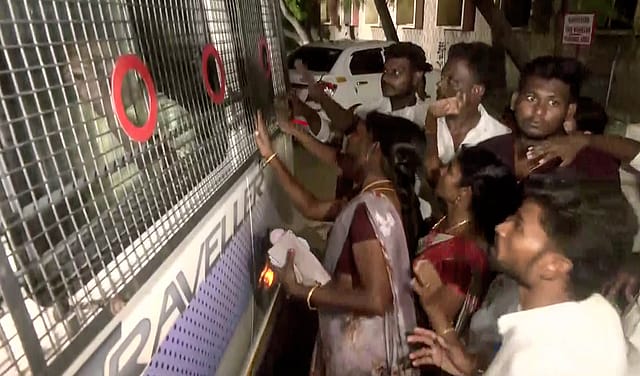
As their condition deteriorated, both men were admitted to a government hospital with severe injuries. Accounts that later surfaced through medical records, testimonies, and the insistence of the family spoke of sustained torture, with rectal bleeding and bodies bearing marks that could not be reconciled with any narrative of routine custody. Beniks died on June 22. His father followed the next morning. The family, at first, refused to receive the bodies. They said the evidence of violence was unmistakable.

Open Minds 2026
26 Jun 2026 - Vol 05 | Issue 26
The power of ideas and arguments in 50 portraits
The brutality of the deaths altered the trajectory of the case. What might otherwise have remained a local episode became a national story. It surfaced in a moment already charged with anxiety about state power during the lockdown and spread across television and social media. The investigation was transferred to the Central Bureau of Investigation. Charges were framed. Nearly six years later, a trial court has concluded that what occurred in Sathankulam was in fact violence carried out in custody, where the state exercises unchallenged authority.
Indian courts reserve capital punishment for what they term the “rarest of rare” cases—those where the nature of the crime and the breach of trust are considered exceptional. In this instance, the elements are stark: two unarmed civilians, in custody, subjected to prolonged assault by those legally responsible for their safety.
Custodial deaths in India are not rare events. NCRB-linked analyses show that 1,888 deaths were recorded in police custody between 2000 and 2020, but convictions were secured in only 26 cases. What stands out, however, is not just the frequency of such deaths but the rarity of accountability.
Sathankulam disrupts that pattern because the violence was unusually visible, because the victims’ family protested the injustice, and because the judiciary intervened early. Most cases dissolve in procedural delay, compromised evidence and the everyday negotiations between police, local administration and community power. The judgment closes a case. It does not change the system that produced it.