QUICK TAKE | Delhi-NCR’s 50% Work-From-Home Order: Seven Things to Know
1. Who has to work from home?
The Commission for Air Quality Management (CAQM) has directed state government and private offices in the covered areas to allow no more than 50% of staff to attend physically. The remaining employees must work from home.
2. Does this cover all of NCR?
The office rule covers Delhi and five districts: Gurugram, Faridabad, Sonipat, Ghaziabad and Gautam Buddha Nagar. The construction restrictions apply across the entire National Capital Region.
3. When do the restrictions kick in?
Both measures run from November 5 to 20, under an order dated October 30. They are preventive steps timed around a historically pollution-prone period.
4. Will essential services also halve attendance?
The office arrangement exempts industrial establishments and essential services where working from home is not feasible. The direction specifically names state government and private offices.
5. Which construction projects face curbs?
Dust-generating demolition and outdoor construction face restrictions. These also cover highways, roads, flyovers, overbridges, power transmission lines, pipelines and telecommunications works.

Look Who's Talking Regime Change
23 Oct 2026 - Vol 05 | Issue 43
6. Which projects can continue?
Exemptions include Railways, Metro services, airports, inter-state bus terminals, hospitals, water supply and sanitation. National security, defence and projects of national importance are also exempt.
7. Why act before pollution peaks?
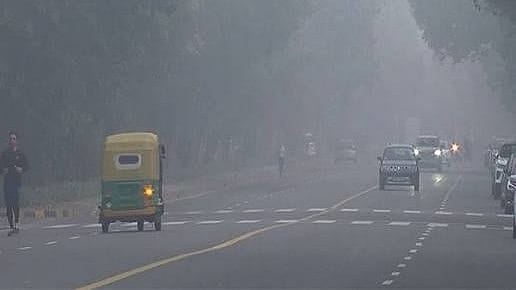
CAQM examined November AQI data from 2018 to 2025 and found recurring pollution spikes, including days in the Severe and Severe+ categories. Local emissions, crop-residue and biomass burning add pollutants, while weak winds and limited vertical air movement trap them near the ground. The aim is to cut emissions before they accumulate.