Parliament Becomes an Oil Slick
The cost and supply of oil has always been a matter of politics but it would be hard to match the expediency of INDIA bloc leaders who on Monday sought to junk their own notice seeking a no-confidence motion against Lok Sabha Speaker Om Birla to instead discuss the impact of the war in West Asia on oil prices. After weeks of demanding a discussion on a resolution based on their notice, the matter was no suddenly longer priority when the House met for the second half of the Budget session.
Congress MPs and others from Dravida Munnetra Kazhagham (DMK), Trinamool Congress and Samajwadi Party (SP) entered the well of the House carrying placards on oil prices. The listed business was of no interest to them even as Bharatiya Janata Party (BJP) MP Jagdambika Pal, who was in the chair, reminded them of the notice and time set for a vote on the matter. Birla has kept away from the House since the submission of the notice and the resolution seeking his removal listed in the names of Mohammad Jawed, K Suresh and Mallu Ravi, all Congress MPs.
India’s strategy
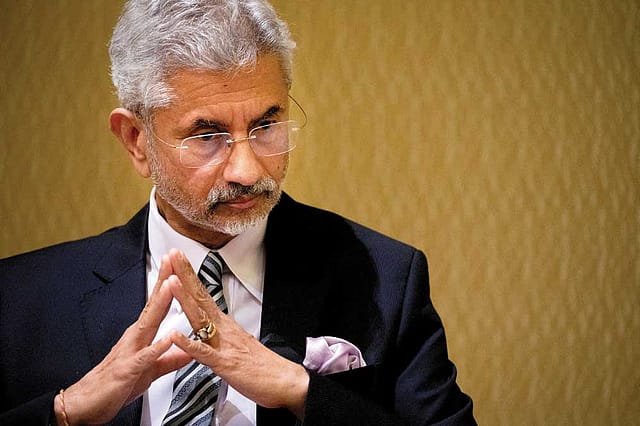
The protests continued as external affairs minister S Jaishankar read out a detailed statement on the situation in Iran and the Gulf and India’s response both diplomatically and in terms of assistance to Indian nationals in the region. The stage for the protests had been set before hand as Congress communications in-charge Jairam Ramesh had tweeted that the minister’s statement was bound to be a collation of known facts and that no questions would be allowed. The rules of Lok Sabha do not permit questions after a ministerial statement but the Opposition has the right to demand a discussion when the business advisory committee meets to consider the Lok Sabha agenda.
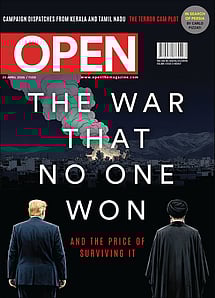
War on Iran: The War That No One Won
10 Apr 2026 - Vol 04 | Issue 66
And the price of surviving it
The House was predictably adjourned to meet again on Tuesday after two brief intervals marred by noisy protests. Yet, if the MPs had chosen to listen to the minister, they would have got an idea of how the Indian government sees the crisis in West Asia. Jaishankar did not mince words, saying “The conflict has continued to intensify and the security situation in the region has deteriorated significantly. We have noted that, in fact, the conflict spread to other nations with mounting destruction and deaths. Normal life and economic activities in the entire region are visibly affected and, in some cases, had come to a halt,” he said.
India’s approach to the war and the consequent disruption was guided by three points, the minister said. “India is in favour of peace and urges a return to dialogue and diplomacy. We advocate de-escalation, restraint and ensuring the safety of civilians. The well-being and security of the Indian community in the region is our priority. We will continue to work with the governments in the region towards that end. And our national interest, including energy security and trade flows, will always be paramount,” Jaishankar said.
The interests at play
The minister made it plain that India is significantly impacted by the developments. “…tbis conflict is an issue of particular concern for India. We are a neighbouring region and understandably, have obvious stakes that West Asia remain stable and peaceful. There are almost one crore Indian citizens who live and work in the Gulf nations…there have been significant investments from the region into the Indian economy. Therefore, serious supply chain disruptions and a climate of instability that we perceive are serious issues,” he said. The statement made it plain that the macro risks to the Indian economy have increased at a time when India could have hoped for a period stability following the resolution of the trade deadlock with the United States.
Jaishankar also made it clear that India has been pro-active, with Prime Minister Narendra Modi speaking to the President of the United Arab Emirates, the Amir of Qatar, the Crown Prince of Saudi Arabia, the Crown Prince of Kuwait, the King of Bahrain, the Sultan of Oman, the King of Jordan and the Prime Minister of Israel. As far as the US is concerned, India has maintained regular contacts through diplomatic channels. In a Wodehousian understatement, Jaishankar wryly noted that the Iranian leadership has not been easy to contact. “While attempts have been made, contacts with Iran at the leadership level are obviously difficult at this time.” He said he had spoken to Iranian Foreign Minister Araghchi on February 28 and March 5.
Safe harbour for Iran ship
The minister also spoke of the assistance provided to an Iranian naval ship currently berthed at Kochi. “The House will also be interested in the issue of an Iranian vessel that is currently docked in Kochi. Iranian side requested permission on 28 February for three ships in the region to dock at our ports. This was accorded on March 1. IRIS LAVAN actually docked on March 4 in Kochi. The crew is currently in Indian naval facilities. We believe that this was the right thing to do and the Iranian Foreign Minister has expressed his country’s thanks for this humane gesture,” he said.
Travel advisories advising avoidance of travel to Iran have been issued by the government since January 5 and repeated in stronger terms till mid-February. The government has worked for the re-location of Indian students in Iran and the Indian embassy is fully operational. “Our diplomats have also worked hard to assist stranded transit passengers in hubs like Dubai, Doha and Abu Dhabi. They have facilitated international border crossings for Indian nationals, including from UAE to Oman and from Qatar, Kuwait and Bahrain to Saudi Arabia. Wherever there has been a partial opening of air space, we have approved and undertaken commercial flights including non-scheduled flights to enable the return of Indian passengers. Our estimate is that as of yesterday almost 67,000 of our nationals have done so,” he said.
It is apparent that the government is working to remove stranded Indian nationals from the region and see their safety by speaking to all states in the region. Above all, India wants a swift cessation to hostilities. These and other questions should be subject to a detailed discussion in Parliament. But for that to happen, substance must prevail over noise.