Open Minds 2026: Soft Power
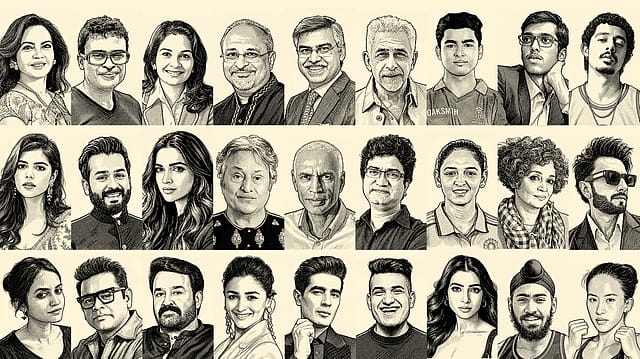
Stories shape histories and cultures. A good story can transcend time and space, geographical borders and popular notions. It can create myths and dispel them; it can forge emotional connections and inspire action. Storytelling is the building block of soft power.
In a hyper-connected, digital-first world, artists, entrepreneurs, musicians, intellectuals and athletes transform into cultural ambassadors and influence the national image. They wield their talents, skills and ambitions as tools of diplomacy. Think of how Hollywood hits created a blueprint of the American dream or how the Hallyu of K-pop and K-dramas has transformed South Korean pop culture into a global phenomenon.
Contemporary India is harnessing its own brand of soft power, drawn from a multitude of disciplines and creative pursuits. Take cinema. Indian films and star power are seeing a global resurgence. This success is not just a Bollywood plot. Blockbuster hits and megastars now resonate with audiences irrespective of language and geography. Indian music is also echoing on the world stage—not only classical and film music but also genres like hip-hop.
Art is one of the newest areas of India’s cultural expansion as attention turns towards both old masters as well as contemporary practitioners. The art market in India is booming with the rise of new institutions and interventions. Even as Indian artists are being exhibited across the world, superlative institutions and public arts initiatives are growing in India. Fashion is another recent cultural export, with Indian artisanal design traditions being re-imagined for global runways, red carpets and retail. India is also making its own moves in sport—beyond cricket, bright, young champions are making their mark in disciplines as diverse as chess and mixed martial arts.
India abounds in centuries’ worth of ideas, artistry and cultural heritage. A new vanguard of leaders and role models is now bringing the country’s stories to the global stage. Soft power, after all, lies in the ability to make a lasting impression.
Nita Ambani, 62, Philanthropist: The Lady of Deliverance

Her single greatest contribution to Mumbai is the space for cultural events she has created at the Nita Mukesh Ambani Cultural Centre (NMACC) , a place where music, dance, theatre and fashion can combine to create magic for Mumbaikars; but that is not Nita Ambani’s only claim to fame. She has become the unofficial leader of Mumbai, filling gaps with world-class institutions wherever she sees them, whether it is the Dhirubhai Ambani School where she remains an engaged administrator, NMACC where she brings the best of the performative world to Mumbai, or the forthcoming Reliance University, a 410-acre multidisciplinary institution being built by the Reliance Foundation at Dronagiri, near Mumbai, now cleared by the Maharashtra government. Add to this her other announcements at the recent Reliance Industries Annual General Meeting: a new green heart in Mumbai with the 130-acre Coastal Road Gardens, and the development of a 1,500-bed integrated medical city at Seven Hills Hospital, which are not the usual philanthropist’s word salad but a new vision for Mumbai.
Aditya Dhar, 43, Filmmaker: Nation’s Director
Dhurandhar and its sequel had a big star in Ranveer Singh, and Aditya Dhar had proven his filmmaking skills with Uri earlier in 2019. But no one could have foreseen the extraordinary success of the two-part movie that has raked in more than ₹3,100 crore. And yet, the box office wasn’t the only counter ringing. Dhar used the movie to tap into a nationalist vein that is a genre by itself now. But it was never wedded with such astute commercial storytelling until this moment. Even those who didn’t agree with the politics of the movie couldn’t but grudgingly admit how entertaining it was. As a Kashmiri Pandit, Dhar has never been coy about his nationalism, which is a highlight in Dhurandhar but without overshadowing the movie itself. The mega blockbusters in recent times had all been from South Indian film industries. Dhar has shown Bollywood what it takes to create one. He is now the preeminent director of the Hindi film industry, and his brand of filmmaking is here to stay.
Ranveer Singh, 40, Actor: Man on Fire
HOW MANY ACTORS can walk out of a big franchise three weeks before production without any consequences, apart from a perfunctory slap on the wrist by a film industry organisation with little bite? You can if you’re Ranveer Singh and have delivered a two-part movie that has made ₹3,100 crore at the box office and shaken the confidence of other filmmakers in the industry. Singh has chosen silence over showboating and has spent much of his free time doing court-ordered penance at the Chamundeshwari Temple in Mysuru to seek forgiveness for laughing at Rishab Shetty’s Kantara sequel, and meeting RSS Sarsanghchalak Mohan Bhagwat in Nagpur. Now absorbed in prepping for sci-fi film ‘Pralay’, which will also launch his own production house, while also preparing to be daddy the second time round, Singh’s brand value, at ₹1,800 crore, is second only to that of cricketer Virat Kohli. The actor doesn’t merely endorse products but invests in startups and builds businesses as well, most recently his protein snacking brand, SuperYou. And the chatter about his excessive entourage? Well, you won’t be hearing about that anytime soon.
Mohanlal, 66, Actor: The Power of One
A recipient of the prestigious Dadasaheb Phalke Award, Mohanlal is the first actor from his home state of Kerala to secure this highest recognition in Indian cinema. In a career spanning almost five decades, he has long earned a reputation as one of the country’s best actors, winning awards as well as ranking high among bankable stars. With his crime-thriller sequel Drishyam 3 attracting praise from film aficionados and the masses alike and L2: Empuraan turning out to be a huge hit, Mohanlal has proved once again, thanks to the success of a few other movies too, that he is nowhere close to bowing out. For instance, the movie Thudarum won critical acclaim as well as commercial success. The man who started acting at 18 and has over time become a people’s actor with his stellar performances in films such as Bharatham, Kilukkam, Aaraam Thampuran, and Kireedam still approaches new projects with the curiosity and devotion of a newcomer, making him a versatile artist who continues to excel in conveying subtle feelings through expression and body language rather than dramatic dialogue. His work serves as a living textbook for actors seeking to understand the nuances of his craft.
Samantha Ruth Prabhu, 39, Actor: Action Queen
SHE HAS EMERGED stronger, more visible and more successful from a highly publicised divorce with Naga Chaitanya, from one of Telugu cinema’s most powerful families. Even as she announces she is expecting her first baby with her new husband, the influential Raj Nidimoru (half of the well-known director duo of Raj and DK), she has become the undisputed action queen, following her roles in streaming shows The Family Man (second season) and Citadel: Honey Bunny with recently released quirky Telugu film Maa Inti Bangaaram. Prabhu has become a byword for quiet luxury and uplifting spirituality with her appearances and her Instagram posts. With over 36 million followers on Instagram, she also endorses big brands such as Pepsi and Samsung. She is also a sharp businesswoman, having launched a luxury fragrance, a clothing line, and an activewear line, with investments in the superfood company, Nourish You, and the early childhood education brand, Ekam. If there is one woman who can claim reinvention as her USP, she would be it.
AR Rahman, 59, Musician: Global Raga
India’s global musical ambassador since the world came to know of him because of Slumdog Millionaire (2008), there is nothing AR Rahman cannot do. From creating this year’s best soundtrack so far for Imtiaz Ali’s Main Vaapas Aaunga featuring 12 new voices to performing at the Royal Albert Hall in London, the Chennai-based wizard has been fine-tuning the Western ear to appreciate Indian beats. He has been expanding his oeuvre especially this year, having collaborated on the Tulah Clinical Wellness in Calicut, a pioneering integrative healing sanctuary, and creating a song as a tribute to Asha Bhosle, featuring vocals from both Rahman and Bhosle, mixed with classical musicians from London’s prestigious Trinity Laban Conservatoire of Music and Dance. When he speaks his mind, it is to great effect, whether it is on the Hindi film industry’s shifting power dynamics denying him work or on performing in Varanasi. His collaboration with Hollywood’s legendary Hans Zimmer on the score of Nitesh Tiwari’s ‘Ramayana’, blending Western orchestral sounds with his own spiritual depth, is already sounding like the stuff of legends.
Alia Bhatt, 33, Actor: Alpha Woman
FROM BEING IN the headlines for her Cannes film festival appearances to making news for her interviews, to promoting her new spy film, ‘Alpha’, on comedy shows, Alia Bhatt is everywhere all at once. The actor is using her clout to produce entertainment she believes in through her company, Eternal Sunshine of the Spotless Mind, with movies such as Difficult Daughters, directed by her mother Soni Razdan, and Don’t Be Shy for Prime Video. The young mother has also invested in a series of ventures she believes in, such as Ed-a-Mama, a clothing brand for children that was acquired by Reliance. With a brand value of ₹1,600 crore, Bhatt exemplifies the new woman who believes in living life on her own terms, ignoring social media chatter. Currently shooting the epic ‘Love & War’ for Sanjay Leela Bhansali, she is also stepping into ‘Kalki 2’, Nag Ashwin’s dystopian fantasy film, which Deepika Padukone had to leave. Gucci’s first international ambassador from India, Bhatt is active on social media with over 85 million followers.
Kalyani Priyadarshan, 33, Actor: Fairy Princess
SHE IS NOT your garden-variety ingénue. Nine years into the acting profession and Kalyani Priyadarshan has already powered, almost singlehandedly, Malayalam cinema’s greatest hit Lokah Chapter 1: Chandra, setting the stage for a fascinating franchise. Daughter of legendary director Priyadarshan and actor Lissy, she has nonetheless carved her own path, graduating in architecture from Parsons School of Design, before segueing into movies. She can move comfortably between Tamil, Telugu and Malayalam cinema and is very much part of the Dulquer Salmaan generation of actors who grew up together across industries. She is a popular face among celebrity brand endorsements, bringing credibility and freshness to the products. The future looks bright, with the big-budget fantasy-drama ‘Genie’ (co-starring Jayam Ravi), the Tamil action-drama ‘Marshal’, and an untitled Tamil thriller directed by Thiraviyam SN. She will also headline the Lokah sequel with Tovino Thomas. But it would probably be ‘Pralay’, Ranveer Singh’s next, a dystopian thriller, that will make her a national name to reckon with. Add to it a svelte appearance at the Cannes film festival red carpet, which has solidified her reputation as a fashionista, and Baby Priyadarshan looks all set to soar.
Naseeruddin Shah, 75, Actor: Lightness of Greatness
As he straightens his beard on the hospital bed, moments before he sees his long-lost love’s painting in an old Sargodha home in Main Vaapas Aaunga or puts a reassuring hand on his troubled manager’s knee in Made in India: The Titan Story, two searing and inspiring performances within the span of two weeks, Naseeruddin Shah reminds us why he is one of the greats of Indian cinema. In 51 years of acting on stage, in cinema and on TV as well as streaming, Shah has played absent fathers, guilty lovers, angry workers, and even benign idiots. He has tutored generations of theatre actors in the art of acting, sharing with them the exactness of rehearsal and home-cooked food in equal measure, and spoken his mind on society and politics. Arunima Singh, who has been shadowing him for a documentary on his life to be released next year, says: “We see the final performance, we don’t see the prep, the decades of approaching every new script with the enthusiasm of a newbie. In his plays, even in the 100th show when he discovers a new layer or angle, you have to see that childlike excitement to believe it.” With 51 years of performance behind him, that in itself would have been an achievement, but it is equally true that he carries his greatness lightly, all too ready to brush off the praise.
Prasoon Joshi, 54, Actor: Lyrical Range
HE HAS been the establishment’s go-to cultural professional, moving from chairperson of the Central Board for Film Certification (CBFC) to chairperson of Prasar Bharati this year, helping it navigate rapid technological transformation and evolving audience expectations. One of the trustees of Indira Gandhi National Centre for Arts since 2016, Prasoon Joshi was also CEO of advertising giant McCann Worldgroup India and chairman APAC (Asia Pacific). He is an accomplished poet, using accessible Hindi to engage people. His ads and film songs have become classics, getting him a Lifetime Achievement Award from the Advertising Agencies Association of India in 2025. In a world where everything is becoming increasingly transactional, where the noisy drums of the here and now are capable of drowning out the murmurs, he says he hopes to preserve the gentler cultural notes. There must be genuine efforts, he says, to preserve the cultural legacy and bring dynamism to our collective endeavour. “I am cognisant of the fact that we are living in distracted times. There is content indigestion—an overconsumption of content. Plus, the meaning of creation due to AI’s intervention is changing.” He is an eternal optimist and believes that with a formidable legacy and unparalleled diversity, there is so much more that is yet to be said, yet to be expressed.
Amjad Ali Khan, 80, Sarod Maestro: Classical Élan
To win a Grammy at 80 is no small feat, especially if it is in collaboration with your sons and the Dalai Lama. That’s exactly what Amjad Ali Khan did earlier this year, winning in the Best Audio Book, Narration, and Storytelling Recording category for their album Meditations: The Reflections of His Holiness The Dalai Lama. It is the shining jewel in Khan’s crown. Much like the sitar great Pandit Ravi Shankar, Khan, who traces his lineage to Akbar’s musical genius Tansen, has taken the sarod to the world, first performing in the US in 1963, until well into the 2000s. Awarded the Fukuoka Asian Culture Prize in 2004, he has been the recipient of many global honours such as Massachusetts proclaiming April 20 as Amjad Ali Khan Day in 1984, and being made an honorary citizen of Houston, Texas; Nashville, Tennessee; and Tulsa, Oklahoma. Not for nothing is he known as one of the last legends of Hindustani classical music who has practised total surrender to his art.
Sunil Kant Munjal, 68, Businessman and Impresario: Cultural Capitalist
IF HIS POSITION as chairman of Hero Enterprise defines one aspect of Sunil Kant Munjal’s personality, his passion for art reveals another. The clearest expression of his commitment and passion for the arts is the Serendipity Arts Festival, which he founded in 2016. The multidisciplinary festival in Goa, which marked its 10th anniversary in 2025, has grown into a major annual event, assembling artists and creative performances from visual arts, music, theatre, dance, design and crafts, and culinary traditions. As the festival’s reputation in India has grown, Serendipity Arts is now expanding its global footprint—hosting an event in London recently to mark 175 years of the Great Exhibition of 1851. Next, Munjal is turning his attention to another area of institution building with The BRIJ in New Delhi—a sprawling, multidisciplinary cultural space that will be dedicated to exhibitions, performances, incubation programmes and creative collaborations. Its opening will see an exhibition hosted by Serendipity Arts in collaboration with The Centre National des Arts Plastiques (Cnap) and the Embassy of France in India.
Arundhati Roy, 64, Author: Mother’s Daughter
Almost three decades after The God of Small Things earned her the Booker and catapulted her to international fame, Arundhati Roy can still convert people from doomscrolling to turning the pages of a book. Take the headline-grabbing launch of Mother Mary Comes to Me last year, Roy’s first memoir, recounting her complex relationship with her mother —the mother who has loomed over her life and work, and whose story drove the plot of The God of Small Things. It won the 2025 National Book Critics Circle Award for Memoir and Autobiography and reminded readers yet again why Roy remains one of India’s most distinguished writers. Her sumptuous prose has made her an A-list literary star whose books almost instantly make bestseller lists. But her significance is not only limited to fiction, and now her memoir. It extends to her political work and interrogations of power and nationalism, civil liberties and democracy. Her ability to move from fictional landscapes to current affairs, weaving the personal with the political, makes her a writer who continues to impact India’s intellectual discourse.
Payal Kapadia, 40, Filmmaker: Independent Spirit
THE GRAND PRIX winner at the 2024 Cannes Film Festival for her debut feature film, All We Imagine As Light, Payal Kapadia has become the patron saint of independent cinema in India, lending her considerable heft to new filmmakers in India and elsewhere. Tribeny Rai’s Shape of Momo, Sanju Surendran’s If on a Winter’s Night and Kunjila Mascillamani’s The Last of Them Plagues have benefitted from her championing in an exhibition market where big money squeezes out the small and beautiful. She is now at the highest table of global filmmakers, with a stint at the Cannes main jury in 2025 followed by her being the Jury Chair this year for the Critics’ Week, a parallel section at the Cannes Film Festival, organised by the French Syndicate of Cinema Critics, which recognises the first and second works of directors. Kapadia is also working on two new films on Mumbai to complete the trilogy she began with All We Imagine As Light.
Deepika Padukone, 40, Actor: The Day of the Diva
She has played everything from the girl-next-door to the guilty adulterer, from a Bundelkhandi princess to a Pakistani spy, from daddy’s long-suffering attendant to a helicopter pilot, and it seems she is only getting started. The soon-to-be mother of two is in two of the biggest forthcoming films: with Shah Rukh Khan in ‘King’ to Allu Arjun in ‘Raaka’. She has been the catalyst for several uncomfortable conversations, from mental health to eight-hour work days. Singlehandedly responsible for introducing a new kind of athleticism in the Indian film heroine, she has shown the possibility of having it all, all the time, taking care of motherhood duties and building her already impressive filmography. With almost 20 years of movie work behind her, she is also a shoo-in for global luxury firms looking for an Indian ambassador. She represents both Louis Vuitton and Cartier, has a brand value of ₹1,500 crore, and several high-profile endorsements from Nykaa, which is in talks to acquire her skincare brand 82°E, to Tanishq.
Shashwat Sachdev, 39, Musician: High Score
From showcasing Jasmine Sandlas’ powerhouse vocals to Reble’s staccato rap to Ramana Balachandran’s veena interlude, Shashwat Sachdev has a unique way of constructing a soundtrack. Trained in both Hindustani classical music as well as Western classical piano, the Jaipur-born musician and sound designer went to Los Angeles to begin his career in music. Sachdev’s score for Dhurandhar and Dhurandhar: The Revenge was a stunning success, blending original tunes with carefully selected old songs. With soundtracks for Uri: The Surgical Strike (2019), Netflix’s The Ba***ds of Bollywood (2025) and the forthcoming Ram Charan production, ‘The India House’, Sachdev has made his music part of the national cultural soundscape, not as a Temu version of AR Rahman, but as his very own signature. And he has every intention of taking his music to the word, collaborating with Oscar-winner Hans Zimmer, co-composing the title theme for the British crime series Virdee.
Hanumankind aka Sooraj Cherukat, 33, Rapper and Singer-Songwriter: Rap and Rage
AS THE HIP-HOP movement in India keeps growing, Hanumankind stands out among its brightest stars. The rapper, singer-songwriter, and occasional actor resonates with a global audience for blending multicultural influences— being born in Kerala and raised across different countries— beginning with his debut EP Kalari in 2019 and followed by singles such as ‘Genghis’ and ‘DAMNSON’, which made their mark in the independent hip-hop scene. In 2024, Hanumankind got his big break with ‘Big Dawgs’, which found its way into the Billboard Hot 100 and several other Billboard charts. His distinction lies in integrating regional instruments and influences into the repertoire of hip-hop, as seen in ‘Run It Up’, which was released in 2025—the year he also became the first Indian hip-hop artist to perform at Coachella Valley Music and Arts Festival. He brought an ensemble playing Kerala’s traditional chenda drums on stage with him. Besides enthralling live acts, the artist’s music also finds place in a variety of creative projects—from Thums Up campaigns to Arsenal FC promotions during the Premier League, and from the Bollywood blockbuster Dhurandhar to the hit animated series Devil May Cry in which he performed with American band Papa Roach this year.
Manil Suri, 67, Author and Mathematician: Breaking the Formula
Before he authored his first novel, Manil Suri wrote diary entries, stories that were never published, and letters to his mother which—over a period of three decades—came to a total of 2,711 letters. Anecdotes from these letters and other poignant chapters of Suri’s life are the subject of his new book A Room in Bombay. It is Suri’s first memoir—an account of living with his parents in a one-room home in Bombay (now Mumbai) before he moved to the US, teaching mathematics and building a writing career.
His debut novel, The Death of Vishnu (2001), was longlisted for the Booker Prize and became the first of a trilogy of novels: The Age of Shiva (2008) and The City of Devi (2013), named after Hindu deities and set in Mumbai. Since then, Suri has expanded his range. He is regarded as an influential voice on queerness and identity, exploring the subject in his fiction, memoir and other writings. He has also written The Big Bang of Numbers (2022), drawing on his passion for mathematics. For everyone who perceives humanities and mathematics as subjects at loggerheads, Suri shows that loving both disciplines is possible, as is excelling at them.
Jitish Kallat, 51, Artist and Curator: Master of the Medium
COUNTED AMONG INDIA’S most influential contemporary artists, Jitish Kallat’s canvas has always drawn on larger-than-life themes—as diverse and deep as time, historical memory, existentialism, mortality, the cosmos and humanity’s place in a vast, chaotic world. The Mumbai-based artist, an alumni of the city’s Sir JJ School of Art, Architecture and Design, has built a body of work that is as multi-pronged as his subjects—ranging from painting and sculpture to photography, video and installation—and often equally ambitious in scale. His range was on display at Conjectures on a Paper Sky, an exhibition of Kallat’s works curated by Alexandra Munroe and hosted in February at New Delhi’s Bikaner House; followed by Point of Time, an exhibition in Paris. This has been an important year for Kallat, not only for his artistic practice but also his curatorial and institutional-building initiatives. In March, the Kochi Biennale Foundation (KBF) appointed him president of the Kochi-Muziris Biennale, marking a full circle moment for Kallat who had served as curator of the second edition of the Biennale in 2014.
Manish Malhotra, 59, Designer: Dressing Up the World
FROM MOVIE COSTUMING and outfitting Bollywood’s biggest stars to building one of India’s biggest couture houses, Manish Malhotra could rest easy on his laurels. Instead, he is still marching ahead towards new and increasingly ambitious goals. This year, Malhotra will make his debut on the official calendar of Paris Haute Couture Week.
It is a new phase for the House of Manish Malhotra which is now setting its sights on international expansion. As his designs have come to be spotted on an increasing number of Hollywood A-listers, musicians and supermodels, the designer has also tapped into the global ecosystem with shows at Dubai Fashion Week, attending red-carpet events such as the MET Gala and the Golden Globes, hosting retail events in London and undertaking collaborations with the likes of Golden Goose. As his brand finds a global footing, he is working to establish strong independent verticals and blending Indian artisanal traditions with global parameters of luxury branding.
Dinesh Vazirani, 59 and Minal Vazirani, 55: Cultural Entrepreneurs
Earlier this year, Raja Ravi Varma’s painting, Yashoda and Krishna, made headlines when it went under the hammer for ₹167.2 crore (approximately $18 million)—the highest-value work of modern Indian art ever sold at auction. Behind the newsmaking sale was Saffronart, founded by Minal and Dinesh Vazirani. At the turn of the millennium, Minal—a management consultant—and her businessman husband, Dinesh, founded Saffronart, a first-of-its-kind auction house aimed at shining a spotlight on Indian art. It was a time long before the contemporary boom in the Indian market and global attention was still at a nascent stage. Yet, the Vaziranis’ leap of faith paid off—over 26 years, Saffronart has grown into India’s premier auction house, setting new benchmarks for the market, with high-value and record-breaking sales of works by masters such as MF Husain, SH Raza, FN Souza and Manjit Bawa. Along with art, Saffronart has also offered Indian antiquities, collectibles and fine jewellery, and expanded to set up offices in New York and London, taking Indian art and aesthetics to a larger audience.
R Praggnanandhaa 20: Chess Player: King’s Gambit
THE ARRIVAL OF India’s golden chess generation has already delivered some iconic moments for the game in India. R Praggnanandhaa gave one of its biggest a few months ago when he won the Norway Chess tournament. The moment was historic not just because it is one of the most prestigious titles in chess but because of how he had won it. Praggnanandhaa was languishing in last place at the end of the sixth round of the 10-round tournament featuring six of the world’s most elite players, including Magnus Carlsen. He then turned it around. Praggnanandhaa would win four games in a row, something quite rare for a player to achieve in the classical format, let alone one where no player had a classical ELO rating below 2730. He even beat Carlsen twice, something nobody has managed to do in a classical chess tournament since 2008. Unsurprisingly, he would call it the most special win of his career so far.
Gurindervir Singh, 25, Athlete: Speed Demon
For decades Indian sprinting was stuck in a morass of institutional apathy. Even as the world moved into the sub-10s in 100m runs, India lay frozen embarrassingly in the 10:30s, with even timings in the 10.40s and 10.50s capable of securing podium finishes at national meets. The first hints of a change brewing came in 2016 when Amiya Kumar Mallick brought the national record down from 10.30s to 10.26s. Since then a new generation of sprinters has been improving that timing. Earlier this year, however, Gurindervir Singh blew apart this timing at the Federation Cup final by completing the 100m race in just 10.09s. It was a huge moment, not just because it set a new record but because it had breached a mental barrier. A critical factor behind this has been the rivalry building with Animesh Kujur, with the two hot on each other’s heels for the last couple of years. The other is the improvement in facilities and support, and a growing self-belief. After the race, Singh held up a note saying he wasn’t done yet. Could he take India to the sub-10s? There is no reason he can’t.
In the Arena: India At Play
Vaibhav Sooryavanshi, 15, Cricketer: Whiz Kid
HE HAD ARGUABLY the greatest season anyone has ever had in the IPL. Vaibhav Sooryavanshi hit more sixes than anyone in the history of the tournament, and struck more runs and at a faster clip than anyone else this season (776 runs at a strike rate of 237.30). No one was this consistent and this devastating at the same time. And he did it all at the age of 15. Then there have been other signs of his greatness. The 175 off 80 balls he made in the Under-19 World Cup final this year helped India win the title, and his recent 11-ball 50 for India A was the fastest half-century ever in List A 50-over cricket. Having received a call-up to the senior side, it seems likely he will soon be making his international debut. No cricketer since Sachin Tendulkar has captured the country’s attention quite like this 15-year-old.
Harmanpreet Kaur, 37, Cricketer: World Beater
She recently played her 200th T20I match in the ongoing World Cup, something no other cricketer, male or female, has managed so far. It is a remarkable milestone, one that speaks not just of Harmanpreet Kaur’s longevity and fitness level but also the kind of impact her career has had on the women’s game in India. When she made her debut in 2009, contracts for the Indian women’s team were still years away, and matches were rarely if ever broadcast. Kaur kept at it though, breaking records as a batter and captain, and shattering perceptions about the women’s game. Last year in November, Indian women’s cricket had its finest hour when she led the team to its first World Cup title. Now she is gunning for the T20 World Cup.
Sonam Zomba, 27, MMA Fighter: Fighting to Win
HER CAREER NEARLY ended just about a minute into her first mixed martial arts (MMA) bout. Originally from Tawang in Arunachal Pradesh, Sonam Zomba took to MMA when she was pursuing a college degree in Guwahati. Her first match would end horribly when the referee noticed Zomba’s left elbow had popped out of its place. For Zomba, the defeat was a bitter pill to swallow. But the aftermath was worse. The injury kept her out of the sport for a long time. And back home in Tawang, her parents failed to understand why someone would want to pursue such a career. Zomba persevered and is today counted among the top female MMA fighters. She has been undefeated since her return, and even won the popular fight promotion Matrix Fight Night’s Strawweight Championship.