“No Longer Pocket-friendly”: Delhi Drivers React To Fresh CNG Price Hike
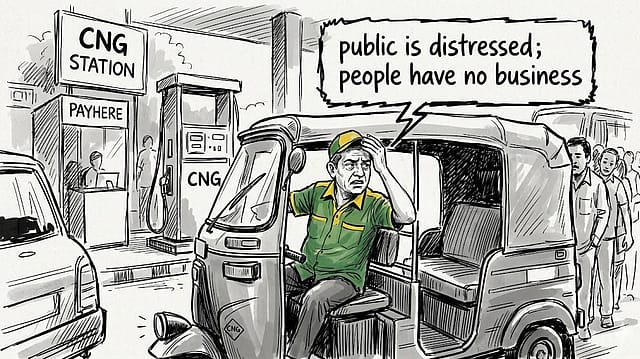
The latest increase in Compressed Natural Gas (CNG) prices in Delhi has triggered frustration among commuters, taxi operators and auto drivers, many of whom say the fuel is no longer the affordable alternative it once promised to be.
From Tuesday, CNG prices in the national capital have risen by Rs 2 per kilogram, taking the rate to Rs 83.09 per kg. The latest revision marks the fourth CNG price hike in less than 15 days, intensifying concerns over rising transportation costs and the broader impact of fuel inflation on household budgets.
The hike comes amid continued volatility in global crude oil markets and geopolitical tensions in West Asia, which have also pushed petrol and diesel prices higher across major Indian cities.
Why are commuters upset over the latest CNG price hike?
For years, CNG was viewed as a relatively economical and cleaner fuel option, especially in cities like Delhi where a large section of public transport and commercial vehicles operate on it. However, repeated price increases have led many commuters to question whether CNG still offers any meaningful cost advantage over petrol.
Speaking to ANI, one commuter questioned the logic behind the latest hike.
“There hasn't been any problem in the CNG supply, so why are prices increasing? Only the companies and the government know why. It will definitely impact the common man's pocket. Now that it has reached Rs 80, what difference is left between it and petrol?” he asked.

Open Minds 2026
26 Jun 2026 - Vol 05 | Issue 26
The power of ideas and arguments in 50 portraits
The concerns reflect growing public anxiety over daily commuting expenses, particularly at a time when inflationary pressures continue to affect household spending.
Taxi and auto drivers say earnings are shrinking
Commercial vehicle drivers, who rely heavily on CNG for daily operations, say the increase is directly affecting their income because transport fares have not been revised in proportion to fuel costs.
One taxi driver pointed to the broader economic pressure on ordinary citizens.
“It's not produced in our country. It comes from outside, so it's a problem for everyone. What will happen to the lives of common people? We are auto drivers. Since it's increasing for everyone, it's not just our problem,” he said.
Another driver expressed anger over stagnant fare structures despite rising operational costs.
“CNG prices should be lower; there's starvation in the country. They've increased petrol prices, they've increased CNG prices, but the transport fares remain the same. Why don't they increase the fares? A driver is operating a 12 lakh rupee car, and the passenger is paying only ₹150. What is all this? Why should CNG prices increase so much? The prices should have remained what they were before. If they increase gas prices, they should at least increase the fares. The public is distressed; people have no business. What more can happen than this?” he questioned.
Another taxi driver appealed directly to the government for relief.
“The price of CNG has increased by Rs 2, and it's making a difference for us. Please reduce the CNG rates a bit,” he said.
Why the latest hike matters beyond private vehicles
The impact of rising CNG prices extends beyond individual car owners and taxi drivers. In Delhi and several other metropolitan cities, large sections of public transport systems, including buses and cabs, operate on CNG.
As fuel costs increase, transport operators may face mounting pressure to either absorb losses or seek fare revisions, potentially affecting commuters across income groups.
The latest increase is also not limited to Delhi. In Mumbai, CNG prices have risen by Rs 2 per kilogram to Rs 84 per kg, with the revised rates coming into effect from Tuesday.
Petrol and diesel prices are rising too
The fresh CNG hike comes alongside repeated increases in petrol and diesel prices across the country.
Petrol and diesel rates were revised upward again on Monday, marking the fourth increase in less than two weeks. In Delhi, petrol prices crossed the Rs 100-per-litre mark after rising by Rs 2.61 to Rs 102.12 per litre, while diesel prices climbed by Rs 2.71 to Rs 95.20 per litre.
Similar hikes have been reported in Mumbai, Kolkata and Chennai, further adding to consumer concerns over rising transportation and logistics costs.
What has the government said?
The Centre has defended its handling of fuel prices, arguing that it has already reduced excise duties to cushion consumers from the impact of global oil price volatility.
According to Sujata Sharma, Joint Secretary in the Petroleum Ministry, the government has forgone nearly Rs 14,000 crore in tax revenue after reducing excise duty on petrol and diesel.
The excise duty cut of Rs 10 per litre on both petrol and diesel was announced on March 27 following a sharp rise in international crude oil prices linked to tensions in West Asia.
Despite those measures, however, consumers continue to feel the impact of repeated retail fuel price increases.
(With inputs from ANI)