Maroof Raza (1959-2026): An Officer and a Gentleman
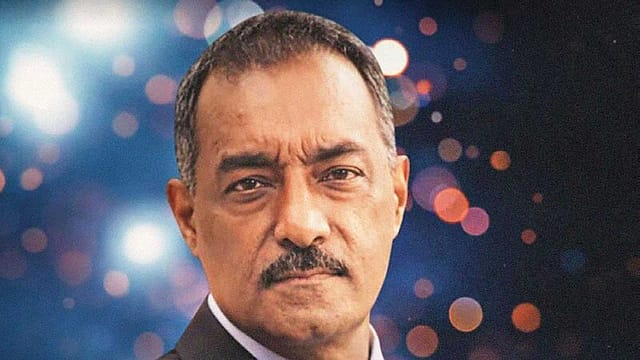
Maroof Raza died on February 27, 2026, after a long and painful illness. He suffered physical and emotional pain for almost nine years. Never have I seen a man who endured so much so stoically. That was perhaps because he accepted the pain generated by his illness as an extension of the battlefield and it had to be faced head on.
For Maroof, the Army was his shadow and remained with him till the end. The traditions and discipline that he acquired from the years he spent in the Army, along with the almost genteel formality and politeness that was a part of him, made him stand out among his peers. These attributes endeared him to millions of his followers across ideological lines and he became a steadfast symbol of patriotism throughout middle-class English-speaking India.
This endearment brought envy from his peers who tried their hardest to deny him or minimise his visibility on their television shows where he featured as the security expert. Despite this, his message percolated down to the mass of viewers who could never find fault with his favourite theme, which was “the idea of India”. Sadly, in recent years, this theme began to recede from public awareness as did he, because of his deteriorating health. Both he and his love for the idea of India began to die a slow contemporaneous death.
Maroof was also in many ways a “Renaissance man” and epitomised this fact beautifully, as he made a seamless transition from a soldier to a scholar and then to a communicator par excellence, as television anchor, public speaker; magazine editor, and author. He brought the distant and, in many ways, cloistered and misunderstood world of the Indian Army to millions of living rooms across India and abroad. He revealed the power of discipline, fair play and the embodiment of the secular tradition upheld by the Army. These were virtues introduced by the British but accepted by Indians and incorporated into their being.
To the best of my knowledge, Maroof’s most admired general in the Indian Army was the legendary cavalry officer Lt General Hanut Singh of Poona Horse fame. Maroof tried to live up to the principles followed by Hanut Singh. Maroof himself was commissioned in the 6th Grenadiers, unofficially known as “Joshila 6th”. The oldest grenadier regiment of the armies in the Commonwealth belongs to the Indian Army. The concept of “grenadiers” evolved from the practice of selecting the bravest and strongest men for the most dangerous tasks in combat. The Grenadiers have the longest unbroken record of existence in the Indian Army. His father Brigadier MM Raza also commanded this regiment. I had the privilege of visiting this regiment in 2013 with Maroof when it was stationed right on the India- Pakistan border and we were making a documentary on the Line of Control for Discovery channel.
Maroof’s transition from soldier to scholar allowed him to study at both London University and Cambridge University. The analytical ability that he acquired in these two institutions and his grounding at Mayo College, St Stephen’s College, and the Indian Military Academy tempered and steeled him into becoming an exceptionally unique “soldier-scholar”.
Above all, he was an officer and a gentleman and will always be remembered for that.