Mark Tully (1935-2026): Mark His Word
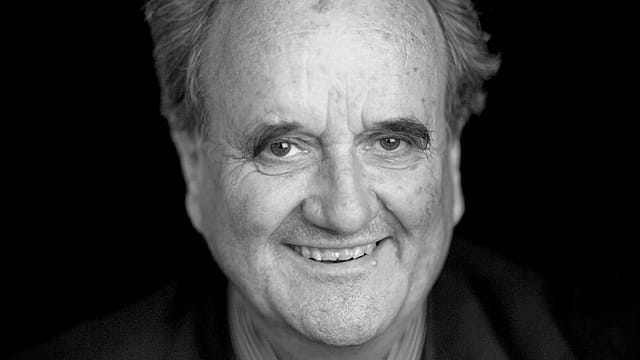
FOR SEVERAL YEARS now, three friends in Delhi celebrated their birthdays together in late October. Mark Tully was older than the other two by a year. He was born on October 24, 1935. Aruna Vasudev, the eminent film historian, was born on November 1, 1936, and I was born eight days after her.
Candles were lit, glasses raised and the three of us cut the cake together. Aruna died two years ago and Mark in late January this year at the age 90. We were thick as thieves though Mark Tully towered above us in every way.
He was legendary. This story has often been told and it is worth repeating. Rajiv Gandhi was on a road trip in some remote part of the country when he was informed that his mother, Indira, had been assassinated. He refused to believe it until he tuned into BBC Radio and heard Mark confirm it.
It was not only India but throughout South Asia people turned on their radio to get an accurate picture from him of what was happening in their country. He was BBC’s man based in New Delhi but would travel to cover the Soviet invasion of Afghanistan, the Tamil uprising in Sri Lanka as well as the liberation of Bangladesh. Closer home, he reported on the destruction of the Babri Masjid, the riots that followed, the siege of the Golden Temple in Amritsar, and the gas tragedy in Bhopal. His listeners often topped 50 million before the arrival of the internet. His reporting would be translated and broadcast in Hindi, Urdu, Tamil, Nepali, and Bengali. For five decades, he was the voice of the subcontinent and BBC’s bureau chief for 22 years.
He spoke Hindi and Urdu fluently and was as comfortable in the company of the rural poor as he was in the posh offices of ministers in New Delhi and Islamabad. He straddled two cultures with ease, he wore a kurta, less often a suit. There were at least two attempts by BBC headquarters to transfer him back to London but Mark made it clear he would rather resign than leave India.
He was a product of the Raj, born in Calcutta, son of a prosperous businessman. His mother could trace her Indian lineage to the 1857 uprising. Mark was sent to a boarding school in Darjeeling until the family moved back to Britain in 1945 and enrolled him in the prestigious Marlborough College. Later, he studied history and theology at Cambridge. Mark was hoping to become a priest—he would have been a good one—but changed his mind after two years at Lincoln Theological College. “I knew I could not trust my sexuality to behave as a Christian priest should,” he said.
In his twilight years, he had two women comfortably in his life, one in England, Margaret, a wife he never divorced and the other in India, Gillian Wright, a partner till the end. Both survive him as do his four children.
He was knighted by the Queen in 2002 but Sir Mark Tully rarely used the title. In 1992, the Indian government awarded him the Padma Shri that was upgraded to Padma Bhushan in 2005. Like other foreign correspondents, Mark was expelled from India by Indira Gandhi during the 1975 Emergency but was allowed to return 18 months later when the situation returned to normal.
Mark Tully did not become a priest but remained a deeply religious person. When in Pakistan, you could find him praying in a mosque; in Delhi, in a Hindu temple; a gurudwara in Punjab; and a Buddhist temple in Sri Lanka. “I still cling to Christianity and identify myself as Christian,” he told Radio Times in 2019. “But living in India with so many religions around me, I no longer believe that Christianity is the only way to God.”