Madhav Gadgil (1942-2026): The People’s Ecologist
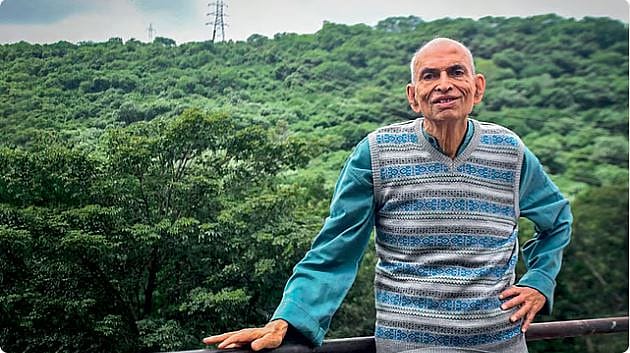
Madhav Dhananjaya Gadgil, the Indian ecologist whose intellect and empathy helped reshape how a nation thinks about nature, died on January 7, 2026 in Pune at the age of 83, after a brief illness. He was, in every sense, an heir to the Western Ghats that cradled his childhood, and he spent six decades insisting that ecology be read as a story of people and place, not as mere data.
Born on May 24, 1942, in Pune to economist Dhananjay Ramchandra Gadgil, he earned a PhD in mathematical ecology from Harvard in 1969 and soon returned home. For 31 years he taught at the Indian Institute of Science, where he founded the Centre for Ecological Sciences, mentoring generations of scientists and bridging laboratories with policy corridors, villages and forests. His scholarship ranged from species distribution and evolutionary biology to the cultural ecology of resource use, but his larger preoccupation remained constant: how societies decide what they will protect, and at whose cost. As chair of the Western Ghats Ecology Expert Panel—the “Gadgil Commission”—he argued for conservation models that recognised both biodiversity and livelihoods, advocating for decentralised governance. He was also instrumental in shaping the Biological Diversity Act and the People’s Biodiversity Registers, embedding local ecological knowledge into national law. Gadgil received the Padma Shri in 1981, the Padma Bhushan in 2006, the Tyler Prize for Environmental Achievement, and, in 2024, the UN Environment Programme’s Champions of the Earth Lifetime Achievement Award. Yet, his most durable legacy may be the ordinary fact of having trusted people with their own landscapes.