Let Kerala Be
OCTOBER 2015. I had my first encounter with the then fledgling ‘hate economy’ over beef in Bishada village near Dadri town in Uttar Pradesh (UP) where a 50-year-oldnamedMohammad Akhlaq was lynched over rumours that he had slaughtered a cow, eaten its meat and stored some of it in his fridge. The second was on a tour of western UP in 2023 when Sudipto Sen’s film The Kerala Story, the first instalment, created ripples on messaging platforms, prompting a Thakur man in a dhaba to ask me whether I ate beef. His eyes were bloodshot hearing my response.
This muscular posturing about eating beef in the Hindi heartland offers a market for display of aggressive religious nationalism, which is what the makers of The Kerala Story 2 are possibly looking to tap by hanging a bad name on Kerala, where beef-eating is part of a long culinary history as in many other parts of India and the world. Incidentally, BJP’s Thrissur MP and actor Suresh Gopi has talked publicly about his love for beef steak and B Gopalakrishnan, another BJP leader from the state, concedes that he eats buff. After a video of him supposedly eating beef surfaced, former BJP state President K Surendran became the butt of jokes for claiming it was “onion curry”. He went on to earn a nickname, “Ulli (onion) Sura”.
Beef or buff (many people can’t tell the difference) with porotta (layered flatbread) is touted as Kerala’s national dish. Personally, I would substitute porotta with pathiri (pancake made with rice flour) or appam for health reasons because too much oil goes into the making of porotta.
Beef is consumed in Kerala by a majority of Malayalis irrespective of their faith. The reason is simple: it is not seen as either sin or violation of religious faith in many communities except a microscopic minority. As in some other parts of the country, Hindu practices here are historically shaped by local customs, traditions and regional food cultures. Beef consumption is normalised and the state government has not enforced a ban on beef, a reflection of its pluralism and regional autonomy in matters of food.
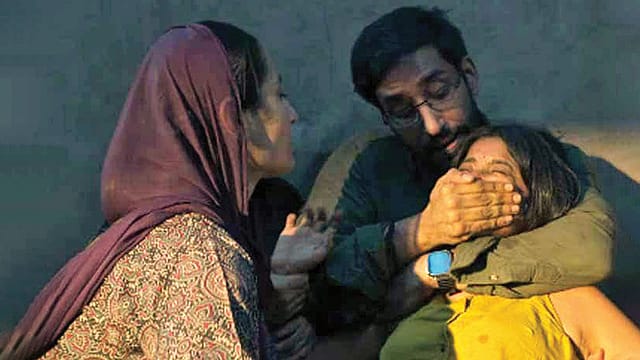
Using North Indian sensibilities to analyse Kerala’s food culture is, therefore, a grievous error. That is what the makers of The Kerala Story 2 seem to have done. In a scene from the movie, a Hindu girl from Kerala resists being force-fed beef and converting to Islam. This contrived symbolism seemed to have backfired in Kerala, where the director and the film have become instant objects of laughter. Memes and videos have gone viral, poking fun at the director for his ignorance of Kerala traditions and over his alleged political plot to discredit Kerala.
In an apparent bid to counter the jokes, the film’s director Kamakhya Narayan Singh and producer Vipul Shah recently called a press meet in Delhi’s India Habitat Centre and paraded 37 reported victims of ‘love jihad’, none of them a Malayali. Faced with inconvenient queries from journalists why the movie still had ‘Kerala’ in the title and about the refusal to let the media interact with these alleged victims, the press meet had ended abruptly.
The claim by the director and others in their defence flies in the face of a National Investigation Agency (NIA) inquiry into interfaith marriages in Kerala. The agency had noted that it could unearth no evidence of coercion or facilitation of conversion or a larger criminal design. Regardless, the filmmaker contends that the second instalment of The Kerala Story focuses on “love jihad”.
Memes continue to break the internet in Kerala, meanwhile, where one video portrays the girl being upset about being fed beef without porotta; another demands information about such a conversion centre which they hope to visit to relish beef curry for free. What the filmmaker was unprepared for was the sense of comic relief about the scene they thought would create extreme outrage. It may have still done so outside Kerala.
Cow protectionism has long been a movement in what we now call the Hindi heartland. It was at the centre of Hindu revivalism in the late 19th century, especially in Punjab and the United Provinces when the Arya Samaj of Dayananda Saraswati made it mainstream. The cow was a tool of mass political mobilisation in this region and over decades and centuries, the animal acquired much more than a divine status; and from being a religious symbol, it became a political boundary between communities.
Kerala and many other parts of India do not share this history, and therefore beef-eating isn’t a prospect worthy of being lynched or violated for. That recognition of truth is missing inthenarrative TheKeralaStory2
pushes. More than two years ago, the promo for The Kerala Story (part one) had projected 32,000 ‘love jihad’ victims before finally settling for three in the face of criticism. “The Kerala Story is a compilation of the true stories of three young girls from different parts of Kerala,” it later said, amending the earlier exaggerated claim.
Here is where the question of rage-baiting—the Oxford University Press word of the year in 2025—comes up. It denotes content designed to elicit outrage.
In the backdrop of the Kerala High Court pausing the release of the film in the state, author Anjana Menon says, “Beef is not a picket line in the language of food in Kerala. There is both an ordinariness and predictiveness to seeing it on plates in restaurants, and a cultural fluidity that gives it a place in many kitchens.”
For his part, Ameer Shahul, author and entrepreneur, notes that beef-eating among Malayalis embodies Kerala’s syncretic culture, where religious diversity across the Hindu, Christian, and Muslim communities has normalised it as a shared culinary staple like beef fry with porotta. “This practice, woven into festivals, social gatherings, and everyday meals underscores the state's culinary defiance against orthodox taboos,” he adds.
Notably, what comes across as defiance today is in fact an ancient Indian custom. Govind Krishnan V, Bengaluru-based author of Vivekananda: The Philosopher of Freedom, says, “He (Vivekananda) didn’t have any problems with anyone eating beef. He even treated Nivedita’s brother in London to beef steak. But he didn’t eat it himself.”
Like other scholars of ancient India, Vivekananda stated beef was widely consumed once upon a time. This is a quote from Swami Nikhilanada’s biography of Swami Vivekananda titled Vivekananda: A Biography: “One day, when asked about what he considered the most glorious period of Indian history, the Swami mentioned the Vedic period, when ‘five Brahmins could polish off an entire cow’.” Sample this one too, from the Complete Works of Swami Vivekananda (Volume 3, page 174): “There was a time in this very India when, without eating beef, no Brahmin could remain a Brahmin: you read in the Vedas how when a Sanyasin, a king, or a great man came into a house, the best bullock was killed.”
Those who invoke ancient India with nationalistic pride had better wake up to the old connection between beef and Brahminism, and that a civilisation is full of complexities and pluralities.