Is Delhi Gymkhana Elitist Enough to Represent New India?
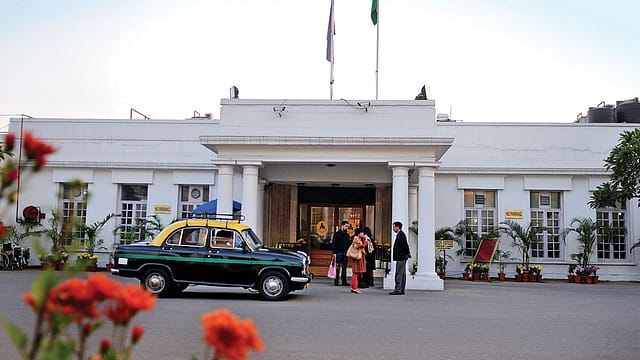
THE DELHI GYMKHANA Club (DGC) was often in the news for its rigid adherence to dress codes which were deemed anti-national and antediluvian in the court of public opinion. Kurtas and chappals were taboo.
Many column inches were then devoted to outrage at the persistence of an outdated colonial mindset which should not have been allowed to continue in the post-Independence era. A minority view would argue that such practices, while anachronistic, were not illegal, and a private body of members was entitled to follow its sartorial preferences.
DGC, because it was in the capital and because of its prominent location within the capital, was always more prone to find itself in the headlines than similar institutions elsewhere in India. While all of them could be branded as bastions of colonial and elite privilege, the Kasauli Club, the Bangalore Club, the Madras Club, the Willingdon Sports Club, the Bombay Gymkhana, and many, many others, upholding many of the same customs, they were less in the public eye and therefore didn’t fail the nationalism test quite so visibly and quite so often. A few of them did not just bother about the criticism because they owned the land they stood on—the vast majority however had to keep an eye on public opinion since they were lessees on government land.
The Calcutta Club, founded in 1907, was an exception. Meant for Indians who were excluded from British establishments, dhotis and punjabis were allowed from the very beginning, as opposed to the other clubs in Calcutta, such as the Bengal Club or the Tollygunge Club which, after 1947, gradually opened their doors to Indian members but stuck to their guns where clothes were concerned. An exception to this Indianisation was the Calcutta Swimming Club which did not accept any Indian member till the mid-1960s—apparently there were enough British and European boxwallahs to sustain it without native Indians muddying its pools. US Ambassador Chester Bowles disapproved of its membership practices and directed US consular officials to stay away. However, the Soviets apparently refused to join the boycott. In 1964, one Indian, the Maharaja of Cooch Behar, was allowed in. In 1969, in protest against its still restrictive membership practices—and presumably its strict dress codes—Marxist Forward Bloc MLA Ram Chatterjee stormed the club with a large group of loincloth-clad Santhals, all carrying bows and arrows. All of whom proceeded to jump into the swimming pool as club officials watched helplessly. Appropriately, Ram Chatterjee later became sport minister in the Left Front government.
The point was made, however, and eventually Indians joined the club in large numbers. The continued existence of such establishments in the old Presidencies, metropolitan cities, regional capitals, hill stations, even district towns (the Narmada Club in Jabalpur in Madhya Pradesh, for instance, is where snooker was invented), did lead to significant transformations where emerging identities of nationalism were willingly accommodated. As applications for club membership continued to swell, the clubs—DGC included—added rummy card rooms for ladies, national dress for men (ladies in saris were always acceptable), allowed sandals with back straps—though slippers and shorts remained largely unacceptable. Menus in particular expanded to include chaat and pakoras while gulab jamuns joined caramel custards in the pudding selections.
Most older clubs were set up to serve British civil or military officials—and are therefore located on government land, with DGC being no exception. The club was set up in 1913 soon after the announcement that the capital was moving to Delhi from Kolkata. Located at what was then one edge of the new city, it remained for long the new capital’s only club, unlike the older Presidency towns which had many more, often serving specific groups—businessmen, railway officials, the military, and so on. Perhaps it was very exclusive then—even racially so. We do know that some Indians who had recently returned from Britain, Mohammad Ansari, Asaf Ali and others, felt excluded from British clubs in Delhi, and set up a club of their own—the Orient Club—which stipulated that no white man was to be admitted as member.
DGC, by the time it moved to its present location in New or Lutyens’ Delhi, had long shed any reputation for being racially exclusionary. By the end of the first quarter of the 20th century there were enough Indian members of the Indian Civil Service (ICS), Indian King’s Commissioned officers and others to make up an acceptable Indian cohort. Of course, for most Indians—even if not officially—membership was elusive. Then independence came in 1947 and Delhi’s social landscape changed radically.

After Independence, DGC continued its tradition of civil and military members with the club presidentship rotating between the two—the ICS for one term, and the generals/ admirals/air marshals for the next. Corporates were also very well represented in the membership as were the professionals—lawyers, judges, barristers, chartered accountants, and others. This continued being the catchment for the membership well into the 1990s and perhaps even later. Admission was through a fairly rigorous vetting process; there was a waiting period, but most people were willing to wait and go through the ‘At Home’ ritual where the committee would meet a bunch of aspiring members and their spouses over tea and sandwiches to ascertain their suitability—to determine whether you were ‘clubbable’. Actually, if you had made it thus far you were probably well on the road to membership anyway, but enough were denied membership after this ritual to make the fear of being ‘blackballed’ real enough.
Dependent children were allowed to use the club’s facilities and, if their parents allowed it (and not all did), have dependant cards, using which they could sign for their own swims, milk shakes, club sandwiches, etc. This lasted only till they were 18 and the cards were withdrawn. This changed with the advent of the so called “green card” system which not only gave dependents priority for membership but allowed them to use the club’s facilities indefinitely.
This weightage given to the progeny of members gradually changed the club’s demographics quite substantially. Relationships overtook qualifications in granting membership and while the civil and military quotas (40 per cent of new membership each) theoretically remained, all new memberships, including the corporates and professionals, were gradually squeezed and the dependents (children and increasingly grandchildren of the original members), who might be corporates and professionals themselves but were apparently unconfident of being selected in those categories, became the bulk of the new membership.
WITH A MEMBERSHIP that increasingly evoked the past rather than the present or the future, the club found itself vulnerable to new ideological threats that were maturing. To be sure, all clubs have always been favoured targets of both the left and the right of the political spectrum. The vocabulary of critique employed by both ends of the political spectrum was also remarkably similar— that they were colonial and that they were elitist.
There is a superficial ring of truth to this criticism—clubs such as the Delhi Gymkhana are obviously colonial in a commonplace sense in that they were set up by colonials in colonial times. But are they vestiges of India’s past colonial and subject status? Perhaps 79 years after independence we need to rethink or rework our analytical categories.
I find analytical terms sometimes used by anthropologists to understand how societies deal with foreign influences over a long period of time useful and here ‘localisation’ comes to mind. By this is meant a process by way of which foreign influences are drained or leeched of their original significance, content and meaning. Through ‘localisation’ fragments of the past—even when of foreign origin—acquire a new personality to discharge new roles and finally make sense only in terms of the new ambiance they are embedded in.
Clearly, institutions, artefacts, even structured activities— that originated in colonial times—military messes, national awards, medals, uniforms or clubs, cricket, and the English language have to be understood in their modern and contemporary contexts and not in terms of their origin myths.
The old ‘colonial’ clubs thus played a new role for a newly emergent post-colonial elite. It was not just an old note in a new symphony and a new orchestra. It was a new note altogether.
OF COURSE, DGC, LIKE all such entities in India, cannot possibly plead ‘not guilty’ to the elitist charge. The world over clubs are by their very nature exclusive and therefore elitist. India can hardly be different—with its elite civil services, elite officer cadres in the military, elite universities, etc. The question is whether the process by which the elite is constituted is fair and open.
In this context, perhaps DGC’s current problems can be traced not so much to its elitism but rather to the fact that it was not elite enough. By not keeping membership open to sufficiently large numbers of new generations of civil servants, military officers, business persons and professionals, and by crowding its rolls with the progeny of existing members, it left itself old, vulnerable and increasingly fragile.
Angst against elitist and elusive clubs or about hierarchies in general is not new and not peculiar to India. US President Donald Trump, a passionate and accomplished golfer, has not been, and is unlikely to ever be invited to become a member of one of the US’ holy of holies—the Augusta National Golf Club. His response to exclusion has been to acquire his own set of golf courses and establish his own exclusive golf clubs.
In Delhi, the political class and the government in particular encouraged a longer-term approach to deal with angst and anger over exclusion from sought-after organisations. It would have been easier to simply let the critique against elitism continue to its logical end but that temptation was resisted. Why was this seen as the government’s responsibility? Largely because it had a near-monopoly over the land market. So, when the doors to membership of the India International Centre (IIC) were found to be restrictive, the India Habitat Centre (IHC) came up. The Civil Services Club came up—quite close to DGC—when it was clear that the latter could not cater to the huge demand there was for membership among civil servants. Similarly, when the Delhi Golf Club would not cater to the growing number of golfers, the Delhi Development Authority (DDA) was encouraged to set up golf courses with facilities that put the Delhi Golf Club to shame. This has happened many times over.
In the process, everybody benefitted because in large part it was understood that given the growing size of India’s elite we needed more institutions like the Delhi Gymkhana and not fewer. The growth of the elite was seen not as a target for critique but as an inevitable part of India’s rise. With diversity comes healthy growth and an environment in which old institutions change and grow stronger, as the Delhi Gymkhana Club must also do and on its own. Closing it down is not an answer just as levelling or grinding everyone down is not an answer to poverty.