India’s Energy Crisis: How the Iran War Could Push the Economy to the Edge
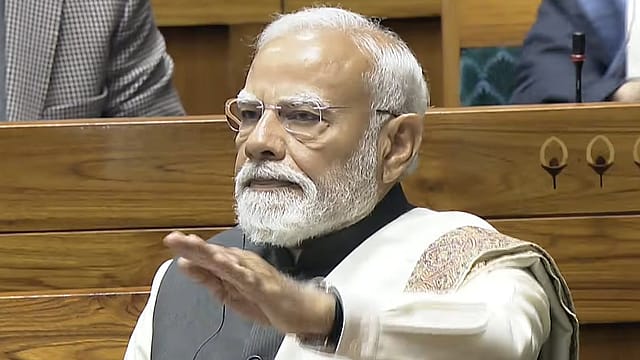
India’s energy story has always been a high-wire act, but the latest Iran war has turned it into a full-blown stress test. Reportedly, the US and Israel’s large-scale offensive against Iran on February 28 has raised the prospect of severe disruptions through the Strait of Hormuz, exposing how vulnerable India’s energy-dependent growth model really is.
Here’s a deeper insight into the crisis.
Why is the Iran war fuelling talk of an energy crisis for India?
The US–Israel offensive against Iran has heightened fears of supply disruptions through the Strait of Hormuz, a critical chokepoint for global oil and gas flows. The concern for New Delhi is less about direct military escalation and more about a sudden energy shock that could buffet the wider economy through higher prices and tighter supplies.

Look Who's Talking Regime Change
23 Oct 2026 - Vol 05 | Issue 43
How dependent is India’s energy system on imported oil and gas?
According to sectoral estimates, nearly 90 per cent of India’s crude oil requirement is imported, making India structurally exposed to external shocks. India sources around 2.5-2.7 million barrels per day from suppliers such as Iraq, Saudi Arabia, Kuwait and the UAE, with a large share of these flows transiting the Strait of Hormuz.
What makes the Strait of Hormuz so critical for India’s energy security?
Energy researchers point out that roughly a fifth of global crude and LNG flows pass through the Strait of Hormuz, making it one of the world’s most important energy chokepoints.
According to industry assessments, any sustained disruption - whether from military strikes, blockades or soaring war-risk insurance - could sharply raise freight rates and crude prices, immediately tightening India’s energy supply conditions.
How could oil price spikes hit India’s economy and inflation?
Analysts quoted in recent economic assessments estimate that a sustained $10-per-barrel increase in crude prices could raise India’s annual import bill by $13-14 billion, widen the current account deficit and put pressure on the rupee.
Reportedly, higher fuel costs would quickly feed into transport and logistics expenses, pushing up retail inflation and eventually seeping into food prices across the country.
What happens if Iran’s own oil exports are disrupted?
Iran currently produces about 3.3 million barrels of oil per day, and any major disruption to this output could drive crude prices 9-15 per cent higher from a $70 base, pushing them into the $76-81 range in the near term.
More extreme scenarios modelled by energy analysts warn of far sharper spikes if the conflict widens or shipping lanes in and around Hormuz are directly targeted, with some global officials even flagging worst-case projections well above $100 per barrel.
How exposed are LPG supplies and everyday cooking fuel?
A senior official from India’s Ministry of Petroleum and Natural Gas has reportedly warned that any blockade or sustained disruption near Hormuz could delay LPG cargoes, raise freight and insurance costs and tighten global LPG availability, because a significant share of India’s LPG imports uses the same corridor.
Since LPG contract prices are closely linked to crude benchmarks, such a surge would likely inflate India’s import bill and raise pressure on subsidies, even if the government initially shields households from immediate price hikes.
Why are basmati rice and tea exports suddenly part of India’s energy crisis story?
Iranian buyers placed large orders for Indian basmati rice in the two months before the conflict, pushing domestic basmati prices up by about 10 rupees per kilogram.
Iran accounts for roughly 25 per cent of India’s basmati exports and Iraq for another 20 per cent - together over 2 million tonnes worth more than $2 billion - while India also exported tea worth around 7 billion rupees to Iran in 2024–25, all of which could be hit by disruptions in shipping routes, insurance or payments.
What does this crisis reveal about structural weaknesses in India’s energy model?
Energy experts argue that the current flare-up underscores how deeply India’s energy system is locked into imported fossil fuels, leaving it exposed to geopolitics despite diversified sourcing from Russia, the US, West Africa and Latin America.
According to analysts from institutions such as CEEW and Ember, India cannot afford to remain hostage to such volatility and must accelerate electrification of power and transport, expand ethanol blending and push renewables as a long-term buffer for India’s energy security.
How is the Indian government responding in the immediate term?
Based on official briefings, Prime Minister Narendra Modi chaired a meeting of the Cabinet Committee on Security on March 2 to review crude supplies, shipping routes and the safety of Indian nationals in the region.
PTI has reported that the discussions covered sea-lane security, contingency sourcing options, the adequacy of strategic petroleum reserves and the safety of nearly nine million Indians in West Asia, even as policymakers focus on cushioning the economy from volatility and maintaining supply continuity.
(With inputs from yMedia)