Indian Leadership at the Global AI Vanguard
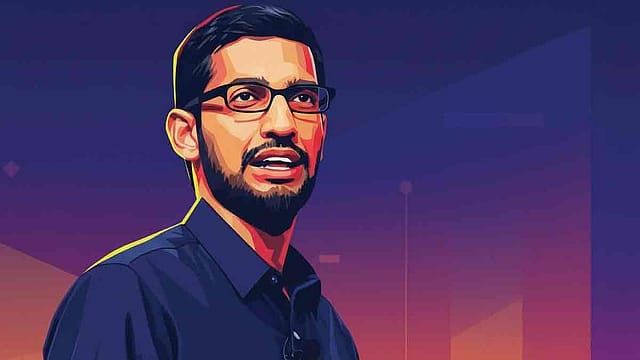
Sundar Pichai, CEO, Google
When OpenAI took the first-mover advantage with ChatGPT’s launch, Google was thought to have missed the boat, even though it had long been working on artificial intelligence. Its main revenue driver, Search, was felt to be under threat. But then Sundar Pichai, CEO of Google and Alphabet, pulled off a remarkable pivot which has not only brought the company to be the frontrunner of the race but also made Gemini, its AI platform, the best in multimodal, or all mediums like image, video, and text put together. On February 4, Pichai’s LinkedIn note indicated the scale of the pivot. Alphabet’s annual revenues had crossed $400 billion for the first time. Even Search had grown after AI was incorporated into it. He added, “Our full AI stack is fuelling our progress, and Gemini 3 adoption has been faster than any other model in our history.”
Satya Nadella, CEO, Microsoft

When he took over Microsoft in 2014, it was a company rooted in the past whose iconic products like Windows were becoming defunct. Nadella brought Microsoft back to the top by focusing on enterprise and cloud services. In 2019, long before AI was a buzzword, Microsoft put $1 billion into OpenAI and then went on to reap the rewards later through special access. When the AI era dawned, despite not having a Large Language Model of its own, Microsoft was right at the forefront of the revolution. It has steadily integrated Copilot into its products. Nadella is now preparing for the future by focusing on making Microsoft create AI-driven services. It is also becoming less dependent on single partnerships and developing models of its own.
Rahul Patil, Chief Technology Officer, Anthropic
Among individual users, Anthropic was not as well-known as the other big AI companies, but when it released updates to its model Claude, the implications were so immense that it drove the valuations of IT companies down by hundreds of billions of dollars. In enterprise, the models of Anthropic remain one of the favourites. Rahul Patil, a Computer Science graduate from Bengaluru, joined it last year after a stint in Microsoft, Amazon, Oracle and Stripe. He is stewarding Anthropic to come out with AI solutions that increase its revenue base across multiple streams. More importantly, in keeping with the company’s stated mission, his task is also to ensure the safety of the technology while making it profitable for them.
Amar Subramanya, Vice President, AI, Apple
Apple has been the great laggard in the AI race. Despite once being the most valued company in the world, it has been overtaken in AI by established players like Google and startups like OpenAI. The man they recently hired to course correct is Amar Subramanya. He will oversee the company’s AI strategy and comes with vast experience in research. An engineering graduate from Bengaluru, he did his PhD in Computer Science in the US before joining the sector there. He was at Google for 16 years while it was developing its AI products, including Gemini, their AI assistant. At Apple, he will be responsible for developing foundational models, and make the company catch up with peers.
Aravind Srinivas, Co-founder and CEO, Perplexity AI
It has not even been five years since Aravind Srinivas co-founded Perplexity, but the AI startup is now valued at $20 billion. Born in Chennai in 1994, Srinivas studied electrical engineering at the Indian Institute of Technology, Madras, before heading to the US to do a PhD in computer science. Perplexity’s success can be explained by its focus on being a simple-to-use but accurate AI search engine, giving conversational answers to queries. A lot of its growth was driven by users realising its dependability, allowing it to stand up to Google with its monopoly on search. Srinivas has aggressive growth plans. Not too long back, they launched Comet, an AI browser, once again challenging Chrome, the Google browser, which is the world’s most popular.