India-Netherlands semiconductor push: Why Piyush Goyal’s talks on chips, critical minerals matter
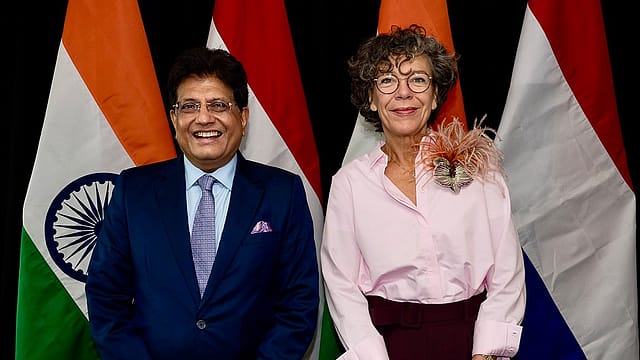
From the chips powering smartphones and data centres to the minerals needed for clean-energy technologies, the race to secure strategic supplies is reshaping global trade. India is looking to strengthen its position in that race, and the Netherlands could become an important partner.
Commerce and Industry Minister Piyush Goyal held talks with Dutch Minister of Economic Affairs and Climate Policy Heleen Herbert on October 26, focusing on cooperation in semiconductors, critical minerals, green hydrogen, clean energy and advanced manufacturing. In a post on X, Goyal said the two sides had also discussed using the India-European Union Free Trade Agreement (FTA) to expand trade and build more resilient supply chains.
Why India wants deeper semiconductor cooperation with the Netherlands
Semiconductors are essential to smartphones, electric vehicles, telecommunications equipment, defence systems and artificial intelligence infrastructure. India has been working to expand domestic chip manufacturing and reduce dependence on overseas suppliers, but building a semiconductor ecosystem requires more than factories. It also depends on specialised equipment, technology, skilled workers and reliable supply chains.

Look Who's Talking Regime Change
23 Oct 2026 - Vol 05 | Issue 43
The Netherlands has an important place in this ecosystem because of its advanced semiconductor equipment industry. Closer engagement could help Indian companies explore industrial partnerships, investment and technology-related opportunities. However, the latest announcement concerns discussions on cooperation; it does not, by itself, establish a new semiconductor manufacturing project or investment commitment.
Critical minerals and green hydrogen are also on the agenda
The talks extend beyond chips. Critical minerals are used in batteries, electronics, renewable-energy systems and other strategic industries. Securing dependable supplies and developing processing capabilities have become important priorities for countries seeking to expand clean technology manufacturing.
Green hydrogen, produced using renewable electricity, is another area of potential cooperation. India sees it as a possible source of cleaner energy for industries that are difficult to electrify, while partnerships with European companies could open avenues for technology development and investment.
For India, the wider objective is to build domestic manufacturing capacity while maintaining access to international expertise and materials. The discussions also covered the broader clean-energy transition and advanced manufacturing, according to Goyal’s statement.
How the India-EU FTA could change trade with the Netherlands
The meeting comes as India and the European Union move towards implementing their long-negotiated trade agreement. The two sides concluded FTA negotiations on January 27, 2026, after talks that were relaunched in 2022. On September 11, the European Commission submitted proposals to the EU Council for the agreement’s signature and conclusion.
The deal has not yet entered into force. It must pass the required approval process, including Council action, signature, European Parliament consent and the completion of India’s own procedures. Once implemented, it is expected to reduce trade barriers and create opportunities for businesses on both sides. The European Commission says goods trade between India and the EU reached €118 billion in 2025.
Goyal’s Netherlands visit brings businesses into focus
Goyal’s October 24–27 Netherlands visit is part of a wider effort to expand trade and industrial cooperation with European economies. According to the Commerce Ministry, around 100 Indian businesses and startups are accompanying him on his Germany and Netherlands trip.
The programme includes engagement with the Port of Rotterdam, a major European logistics hub, and an India-Netherlands Business Forum in The Hague, with discussions spanning high technology, renewable energy, logistics, manufacturing, pharmaceuticals and services.
The immediate outcome is a wider agenda for cooperation, rather than a confirmed package of new projects. For India, the test will be whether these discussions translate into investment, technology partnerships and more secure access to strategic supplies. The proposed EU trade deal could provide additional momentum, but its commercial benefits will depend on when it takes effect and how businesses use the opportunities it creates.
(With inputs from ANI)