India Is Not Posturing On Iran, Its Interests Run Deep
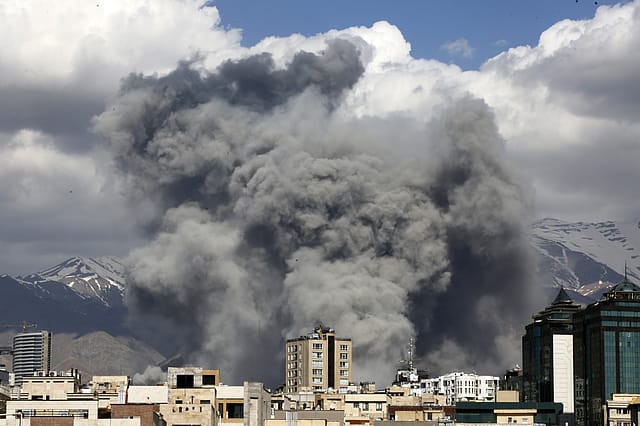
In phone calls to foreign ministers of Iran and Israel on February 28, external affairs minister S Jaishankar called for restraint and dialogue to resolve the latest crisis in the middle east. He also spoke to foreign ministers of Saudi Arabia, Kuwait, Bahrain and UAE and the Prime Minister of Qatar too. The calls were not just posturing and nor was MEA’s formal statement expressing India’s deep concern about the developments in Iran and the Gulf and urging all sides to step back from escalation and respect sovereignty and integrity of states.
Prolonged conflict in the middle east is bad news as India has a lot of skin in the game. For one, there are an estimated 9.5 million Indian nationals in the middle east and great many of them concentrated in the Gulf. Their safety is a matter of priority and any threat to their livelihoods has serious implications to the remittance economy as well. Half of India’s oil supplies comes through the Strait of Hormuz and Qatar alone accounts for close to 40% of LNG supplies. Thousands of Indian businesses operate in the region and imports and exports are growing alongside deepening security relationships with most Gulf nations.
Strategic Zone
India has a dedicated zone at the port of Duqm in Oman and its naval presence in a vast sweep of the Arabian Sea and Indian Ocean from Gujarat to the coast of Somalia and from the Arabian peninsula down to Madagascar has grown even as the US-China rivalry in the region spiralled. The Indian Navy is an important security provider, helping secure passage of goods and is a strong deterrent against piracy. On more than one occasion the Navy has delivered humanitarian assistance and participated in disaster relief operations. The bilateral trade between India and the Gulf Cooperation Council (GCC) is expanding and stood at USD 178.5 billion in 2024-25. The trade itself is become more diverse as the non-oil component has risen in areas such as infrastructure, engineering goods, electrical equipment and chemicals.
The MissOil Strike
03 Apr 2026 - Vol 04 | Issue 65
The War on Energy Security
So, while India is required to do what commentators call a “tightrope” walk in the light of relations with the US that have only recently improved after a bad patch in 2025, a conflict that drags on is a worrying prospect. There is concern that dislocation of commercial activity in the Gulf can cause stress in the Indian economy that has so far withstood storms caused by other wars and US President Donald Trump’s imposition of tariffs on India that added up to 50%. With the tariffs currently whittled down to 10%, India would prefer a period of calm rather than fresh upheaval.
India’s relations with Iran
India has maintained relations with Iran without being a fan of its theological leadership. The regime in Tehran has been a counterweight to Pakistan and the two sides have exchanged missile and drone fire in January, 2024. Pakistan has periodically accused Iran of harbouring Baloch separatists. The Indian participation in Iran’s Chabahar port project is of high strategic importance as it holds the promise of an alternate route to Afghanistan and central Asia.
Yet at the same time, there is a recognition in New Delhi that the actions of the hardline clergy in Iran driven by the regime’s hatred for Israel and America are a serious threat to the stability of the entire middle east. In this context, the sub-text of India’s communication to Iran is not to continue provocative acts such as targeting facilities in neighbouring countries that would escalate hostilities. As of now Iran is indeed lashing out in all directions but the assessment in is that it would be difficult to sustain the resistance and aggression in the face of the combined US-Israel military and the back lash from Gulf nations.
India’s interests in Israel
The criticism of Prime Minister Narendra Modi visiting Israel just ahead of the attacks on Iran and his bonhomie with PM Benjamin Netanyahu do not seem a relevant discussion as nothing India did or did not do was the going to influence the course of events. India was pursuing a distinct relationship with Israel and is keen to tap benefits in terms of strategic cooperation and the Israeli technological expertise across dozens of applications in agriculture, cyber security, avionics, science and counter-terrorism. If Netanyahu did indeed discuss the possibilities of military action in the region, Modi is under no compulsion to oblige busybodies by revealing matters of state.