In Search of an Opposition: The vacuum in the non-BJP political space
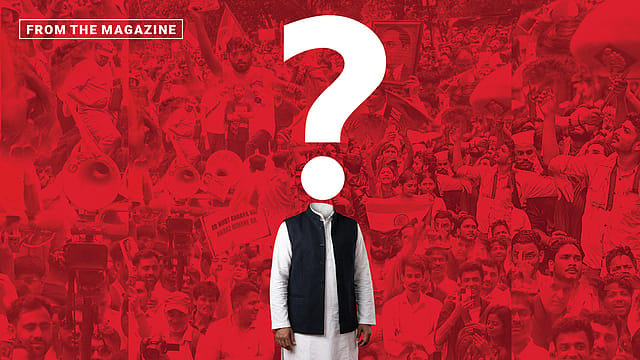
OVER THE LAST FEW YEARS, conversations in middle-class drawing rooms, while largely approving of the Modi government, almost certainly saw someone make the point: “But we need a good opposition, you know.” The question is coated with sanctimonious concern, a self-attestation of pluralism. “Yes, of course!” is the quick response with affirmative nods all around. The genuflection to democratic ideals complete, the small talk continues even as a few take the question more seriously, fretting about the perceived ills of a lopsided polity.
On whom then lies the responsibility of ensuring India has an “opposition”? The way the earnest questioner at a weekend party puts it, it’s almost as if this too is a task for the Bharatiya Janata Party (BJP) and its leaders. But it’s not. It is not the job of the ruling party to ensure India has a viable opposition. Politics is a rough game, much tougher than most competitive fields, such as corporate board rooms, motor racing or the movie business. Not only are there no points for losing, the way back can be very difficult. A key task of the party in office, as it sees it, is to keep the rival out. Generous offers to the defeated party are rare and almost never reciprocated.
Is there then no room for courtesies and grace in politics? As prime minister, PV Narasimha Rao’s respect for Leader of the Opposition Atal Bihari Vajpayee was quite evident. The BJP leader was sharp as a tack and while his words could sting, they did not offend. Given the current acrimony between the principals, so evident with speeches in Parliament resembling rants of trolls on social media, the prospect of amity is remote. The results of the 2024 Lok Sabha polls raised hope in some quarters that BJP’s grip on Parliament would loosen and the voice of the opposition become louder and more assertive. To an extent, this did happen. BJP’s legislative space did shrink, but allies Janata Dal (United) and the Telugu Desam Party (TDP) have so far shown no inclination for brinksmanship. The government remains very stable. What has happened, however, is that Parliament has become dysfunctional. Almost from the start of the 18th Lok Sabha, the I.N.D.I.A. bloc has repeatedly forced adjournments every session.
The problem with using a blunt weapon too often is that it loses its effect. The repeated shutdowns of Parliament breed cynicism not just about the relevance of the institution but also the utility of the tactic. The violent clashes between Cockroach Janta Party (CJP) protesters and police on July 20 in central Delhi definitely called for a discussion in Parliament. So did the theft of donations at the Ram temple in Ayodhya. Repeated disruption demanding the presence of Home Minister Amit Shah and a statement on the July 20 events was intended to put BJP on the back foot but the opposition could have made its point by speaking— there is no bar on cleverly slipping in embarrassing references in virtually any discussion. And whenever there is a discussion, the next day’s headlines reflect the opposition’s point of view quite well. Even the discussion on the Public Examinations (Prevention of Unfair Means) Amendment Bill, 2026—the only debate that took place in the Monsoon Session—proves the point.
The non-stop discussion assessing whether or not BJP has lost ground is not beside the point. The CJP protest posed a serious challenge and BJP’s floor strategy in Parliament could indeed do with a reboot. Did the opposition gain? Congress leader Rahul Gandhi’s aggression, demanding answers from Shah over alleged police excesses, ensured other I.N.D.I.A. bloc parties, such as the Samajwadi Party which was keen on raising the Ram temple issue, followed suit. The altered balance in Lok Sabha, with 20 breakaway Trinamool Congress (TMC) and six Uddhav Sena MPs joining the National Democratic Alliance (NDA), was obscured by the aftermath of the CJP protest. Congress did ensure the focus remained on the July 20 violence and effectively blocked the passage of the politically significant amendments to the Foreign Contribution (Regulation) Act (FCRA) and the even more impactful Constitution amendment on delimitation and women’s quota.
Congress and Rahul Gandhi have continuously claimed that the youth has been short-changed, the economy is doing badly, and there is widespread unemployment. The problem is that this gloomy view of India’s prospects has not caught up with BJP. Voters in major state polls since the 2024 Lok Sabha elections have re-elected BJP governments and, distressingly for the opposition, unseated regional satraps like Mamata Banerjee in West Bengal and MK Stalin in Tamil Nadu. Voters have severely diminished Congress in Haryana and the Uddhav Sena and Nationalist Congress Party (Sharad Pawar) in Maharashtra. The “India failing” slogan is falling short. A large section of voters who are not as audible on social media have not changed their minds about BJP and Modi. On the other hand, a complete upstart like CJP, born of a social media revolution, offered the most viable channel for anger over the medical examination paper leak.
The composition of the mob on July 20 has not been sufficiently discussed. Most commentators chose to see all protesters—including Left and Islamist elements viscerally opposed to BJP—as “students”. But BJP wisely left this discussion to social media gladiators while framing its response. Party MPs were instructed not to criticise “student” protesters and Prime Minister Narendra Modi has continued his engagement with the youth, whether at IIT Delhi, or meeting the contingent of Commonwealth Games medal winners. The prime minister’s annual Pariksha pe Charcha ahead of high school board examinations is part of this outreach where Modi offers less conventional advice, often aimed at countering the impression that the national level tests are make-or-break for students. His monthly radio talk Mann ki Baat frequently includes interactions with young people who have taken the lead in their communities. If the youthful exuberance witnessed on the streets of Kolkata after BJP ousted Mamata Banerjee from office is any evidence, Modi’s popularity is not limited to older voters. The unrestrained cries of “Jai Shri Ram” certainly heralded a sense of freedom after TMC’s tyrannical rule, but it was also a positive endorsement of the saffron party.
CONGRESS HAS NOT been oblivious to the need to woo younger voters and many of Rahul Gandhi’s programmes are centred on the theme. He has visited college campuses, including women-only institutions like Stella Maris College in Chennai, in an effort to project himself as informal and in touch with GenNext. Yet these efforts have yielded limited returns. Despite the occasional welcome he had received, the youth vote has been chary of Congress. BJP’s modern vision of a developed economy, which sits alongside a harkening to cultural roots, has held young voters, particularly in rural areas. Even in urban centres and at elite educational institutions where woke ideas find greater traction, BJP has made a mark. There have been times when Rahul Gandhi’s resentment of the middle class’ steadfast support for Modi has boiled over. Speaking on one occasion on provisions of the Union Budget that he felt hurt taxpayers, the Congress leader mocked the middle class for “banging utensils” at Modi’s urging. Yet, by and large, younger people have not voted very differently than the middle class in general or their parents and family elders. Congress’ electoral successes have had much to do with BJP’s errors, such a botched change of guard in Karnataka in 2023 or the vastly overambitious “400 par” slogan in the 2024 Lok Sabha campaign.
Discontent over public examination paper leaks, dissatisfaction with their circumstances and a lack of regular jobs have been simmering for a while. But it found a focal point in the CJP protest rather than under the banner of an opposition party. At least for a few weeks, the protest at Jantar Mantar proved a much more potent vehicle for channelling dissatisfaction than any political mobilisation. It is therefore not surprising that Rahul Gandhi, on August 6, launched an ‘Ask Me Anything’ session on Instagram, inviting students and Gen Z users to interact with him directly.
It was not just BJP that feels the need to connect with a mobile, restless and aspirational population. The problem for the opposition is that it is seen as another ‘conventional’ entity rather than a genuine alternative. The rejection of the Dravida Munnetra Kazhagam (DMK) in Tamil Nadu did not benefit the All India Anna Dravida Munnetra Kazhagam (AIADMK). Rather, voters saw AIADMK as another decrepit version of DMK marred by similar venality and arrogance. The state does have a tradition of elevating popular actors to high office but young voters were a significant factor in Vijay’s dramatic rise. Again, youthful voters were not outliers and many others, including women, felt similarly. The stunning rejection of both Dravidian parties put paid to conventional calculations that Vijay would find it hard to match DMK’s organisational and financial muscle. Political strategist Prashant Kishor’s upset win at Bankipur at BJP’s expense has a similar message. Voters chose a bold political entrepreneur rather than the Rashtriya Janata Dal (RJD) led by 36-year-old Tejashwi Yadav. Incidentally, Kishor is just under 50.
The dictum that if A declines, B will rise has not been completely overturned. BJP’s mistakes or any reduction of its appeal will most likely benefit the immediate rival. But the emergence of CJP, Vijay’s win in Tamil Nadu, and Kishor’s success in Bankipur highlight a serious weakness in the I.N.D.I.A. bloc. Personal attacks on Modi and obstructionist tactics in Parliament do not evoke any anticipation of change. Rather, they are more of the same old stuff. In an attempt to create divisions in BJP’s social coalition, Rahul Gandhi has demanded caste counts and attacked big business in a manner that even the Mandal parties do not. Advocacy of backward sections needs to be balanced with interests of the middle classes. Any benefits to Congress by way of enhanced OBC support remain uncertain while the ‘Mandal-plus’ rhetoric—promising to do away with the Supreme Court-mandated 50 per cent cap on reservations—has only aroused suspicions.
Political churn is a hallmark of democracy and India’s institutions provide avenues for protest and dissent despite polarised views on the subject. The India Against Corruption movement transformed into the Aam Aadmi Party (AAP) and the record shows that it behaved quite conventionally thereafter. The party in office is expected to face challengers. The hunt for an opposition is a more unusual quest.