In It Together: India and the EU can access the untapped economic potential of their relationship at last
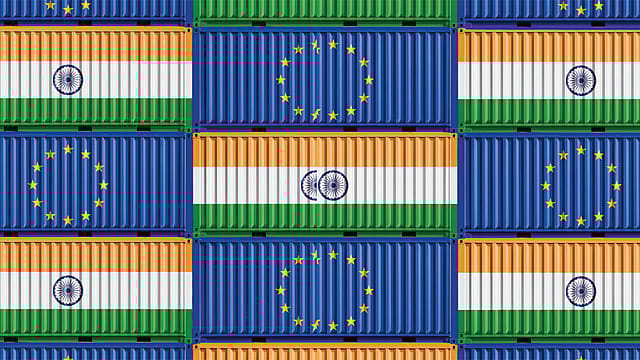
AS CHIEF GUESTS FOR India’s 77th Republic Day parade, European Union (EU) leaders Ursula von der Leyen and António Costa brought much more than optics. From Brussels to New Delhi, they carried intent and substance. And 2026 may finally be the year that the narrative of ‘untapped potential’ that has accompanied EU-India ties for decades is discredited.
On January 27, against the backdrop of global headlines dominated by the Greenland saga, the 16th EU-India Summit took place, resulting in three concrete outcomes related to trade, mobility and security.
The headline deliverable was the signing of the EU-India FTA that was under negotiation for nearly two decades. Dubbed “the mother of all deals” due to its coverage of a market of nearly two billion people, 25 per cent of global GDP and $25 trillion, the agreement removes trade barriers, grants enhanced market access and expects to increase bilateral trade volumes currently valued around €180 billion.
For India, it will yield substantive gains for labour-intensive sectors such as textiles, jewellery and leather that currently face higher than average tariffs in the EU, but also stiff competition from Vietnam and Bangladesh in the EU’s 450-million strong high-income consumer market. Meanwhile, Indian consumers can celebrate a future of cheaper European luxury cars, wines, and chocolates. Overall, the agreement will reduce Indian tariffs on 96.6 per cent of EU goods, while cutting European tariffs on 99.5 per cent of Indian goods over seven years.
The last few months have seen Indian and European negotiators on overdrive, fast-tracking the deal in time for the EU-India summit, with US President Donald Trump’s tariff wars undoubtedly playing a key role. Even while dairy and agriculture are excluded, the agreement’s inclusion of a chapter on sustainable development, and the opening up of certain agri-food sectors, demonstrates how India has shifted previous red lines and moved beyond what it has granted to other free trade partners like Australia and the UK. India’s decision to open up its services market also marks a crucial breakthrough.
While the deal may not offset the impact of Trump’s tariffs, it may strengthen the EU and India’s cards in their own trade negotiations with the US. However, the management of unresolved contentions, such as the EU’s Carbon Border Adjustment Mechanism (CBAM), may determine the extent to which the deal accrues meaningful benefits.
Bringing People Closer
A second key outcome was a mobility pact aimed at easing the movement of Indian professionals, students and researchers across the EU, alongside complementary initiatives like the pilot European Legal Gateway Office. Over 800,000 Indians currently work and live in EU member states, with this number slated to increase as European societies combat economic demands with the realities of an ageing population. It is here that Indian skilled personnel can fill in the gaps, particularly in sectors like IT and healthcare that face manpower shortages in Europe.
Despite immigration targets ultimately being a competency of EU member states, an overall EU framework complements the bilateral initiatives of member states’ Migration and Mobility Partnerships (MMPs) with India, thereby differentiating between Indian skilled migration that complements Europe’s labour market needs, and illegal immigration which is a major issue in Europe, but also enabling a wider contrast with hostile US immigration policies under the second Trump administration.
The Strategic Dimension
As EU contingents participated for the first time in India’s Republic Day parade, another summit deliverable was the signing of the EU-India Security and Defence Partnership (SDP), the EU’s third in Asia after Japan and South Korea. Since the adoption of the 2022 Strategic Compass, SDPs have formed a core component of the EU’s foreign and security policy, building on existing relations with likeminded non-EU nations. These individually tailored partnerships are non-legally binding and without military obligations, rendering them compatible with India’s preference for flexible arrangements over alliances.
Linking European and Indo-Pacific security, the SDP opens the door for potential Indian participation in EU defence initiatives such as the €150 billion Security Action for Europe (SAFE) instrument for common procurement, and Permanent Structured Cooperation (PESCO) projects. Thus, the SDP could provide a long-term opportunity for India’s burgeoning defence industrial ecosystem to integrate into European defence supply chains while enabling access to European defence technologies and advanced capabilities. While the partnership commits to ramping up maritime, cyber and counterterrorism cooperation, both sides also launched negotiations on a Security of Information Agreement to enable the exchange of classified information.
A Way Forward
EU-India relations have already stood out for their successful management of divergences over Russia, paradoxically deepening against the backdrop of the Russia-Ukraine war over shared concerns in the Indo-Pacific and opportunities to work together in the Global South. The latest summit has turned a special page in the partnership.
Amidst pressures on the global trading system, the FTA will provide stability and certainty for businesses, support greater investment flows, and deepen supply chain integration. Meanwhile, the SDP will boost the strategic component of a relationship that has traditionally been dominated by an overt trade focus. Zooming out, the EU-India partnership may serve as a stabilising factor, not only for each other but also for third countries looking for reliable partners as well as an alternative vision.
The symbolism and substance are inescapable—two vast economies pushing their own agendas, betting on openness in an era of coercion, fragmentation and division, and showcasing that partnership is the way forward.