‘Identify, Track and Punish’: PM Modi’s Strong Terror Message Featured in Operation Sindoor Film
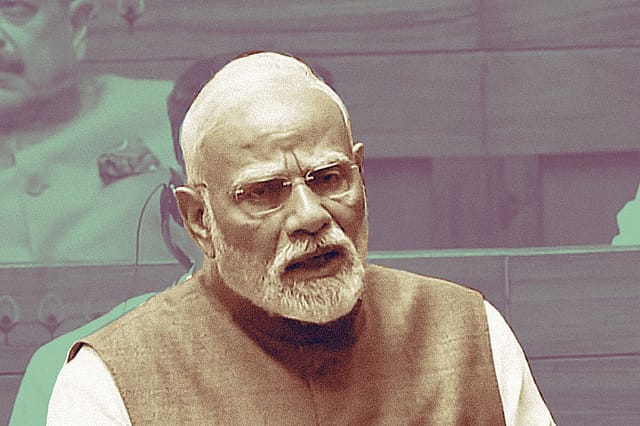
Marking the first anniversary of Operation Sindoor, Defence Minister Rajnath Singh on Thursday released a documentary at the Headquarters of the South Western Command in Jaipur that revisited India’s military response to the 2025 Pahalgam terror attack and highlighted the government’s evolving counter-terror policy under Prime Minister Narendra Modi.
The documentary blended visuals of military operations, strategic planning and political messaging to project what the government described as a policy of “zero tolerance” against terrorism. It focused on India’s military preparedness, indigenous defence capabilities and a more assertive national security posture that emerged after the Pahalgam attack.
PM Modi’s message: ‘Identify, track and punish’
One of the central themes of the documentary was the government’s commitment to retaliatory counter-terror action.
In a statement featured prominently in the film, Prime Minister Modi asserted that India would “identify, track and punish every terrorist and their backers,” while reiterating that any terror attack on India would receive an “overwhelming response” on India’s own terms and conditions.
The documentary used these remarks to reinforce the government’s message that India’s response framework has shifted from reactive defence to proactive deterrence.
Rajnath Singh calls Operation Sindoor a ‘whole-of-government approach’

Open Minds 2026
26 Jun 2026 - Vol 05 | Issue 26
The power of ideas and arguments in 50 portraits
Explaining the significance of the military campaign, Rajnath Singh said Operation Sindoor was “not merely a military operation but a living testament to India’s whole-of-government approach,” where political leadership and military power worked in coordination to launch a decisive strike against terrorism.
The documentary showcased visuals of military preparedness and strategic operations while emphasising the coordination, courage and precision of the armed forces.
Singh further stated that the operation demonstrated India’s willingness to respond to provocations with “solid strategy, strong resolve and immense might.”
High-level security meetings featured in documentary
The film also highlighted a high-level meeting chaired by Prime Minister Modi and attended by senior Union ministers and chiefs of staff. According to the documentary, the meeting focused on reviewing the security situation and deciding the future course of action after the Pahalgam attack.
The inclusion of these visuals appeared aimed at underlining the coordination between the political establishment and the armed forces during crisis response planning.
‘Terror and talks cannot go together’
The documentary concluded by reiterating the government’s long-articulated national security doctrine through a series of strong statements: “terror and talks cannot go together,” “terror and trade cannot go together,” and “water and blood cannot flow together.”
These lines were used to underline the government’s position that engagement with Pakistan cannot continue alongside cross-border terrorism.
What was Operation Sindoor?
Operation Sindoor was launched on May 7, 2025, following the deadly terror attack in Pahalgam in which 26 people were killed. According to the documentary, the operation was conceived as a “punitive and targeted campaign” aimed at dismantling terror infrastructure across the Line of Control and deeper inside Pakistan-occupied Jammu and Kashmir (PoJK).
The film claimed that more than 100 terrorists were killed during the operation, which was presented as a calibrated military response backed by coordinated political and military decision-making.
The documentary also framed the Pahalgam attack as an attempt to derail peace and economic progress in Jammu and Kashmir.
(With inputs from ANI)