How caste still hinders India’s small entrepreneurs
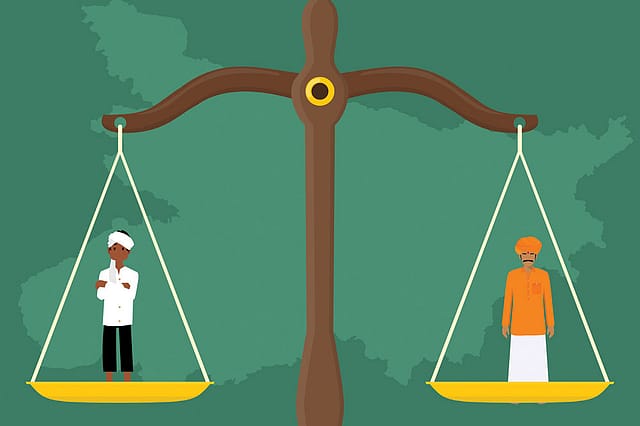
A new study on how caste influences productivity in small firms in India’s informal sector says that exclusion from business networks continues to hurt entities owned by Dalits and tribals, in sharp contrast with such firms owned by disadvantaged ethnic groups in countries like the US and the UK where new policies have produced results.
“The persistent form of exclusion, with marginalised groups largely confined to low-capital, survival-oriented sectors, points to a divergent trend (compared with countries in the west where racial problems persist),” notes the recent peer-reviewed study titled “Behind the Numbers: Exploring Caste Inequities in Entrepreneurial Success”, authored by economists Rajesh Raj Natarajan and Kunal Sen. The study used enterprise-level data from the Government of India’s National Sample Survey Office (NSSO) surveys of unincorporated non-agricultural enterprises in 2010-11, 2015-16 and 2023-24.

Zeroing In on ECI
09 Oct 2026 - Vol 05 | Issue 41
Constitutional legitimacy versus political opportunism
According to the study, the findings reveal large and persistent productivity gaps between SC and ST firms and those owned by non-SC/ST entrepreneurs. “The disadvantage is especially acute for ST-owned firms, where productivity is roughly half that of their non-SCST businesses. For SC-owned firms, the gap remains broadly consistent across the productivity distribution, indicating a steady disadvantage at most levels of productivity. In contrast, the gap for ST firms narrows substantially from the lower to the upper end of the distribution, suggesting that less productive ST firms face greater obstacles, while the most productive are close to their peers, though a meaningful gap remains,” it adds, emphasising that not much has changed since earlier studies were done at least a decade ago.
The authors note in the paper that their analysis identifies two main contributors to these disparities: differences in observable firm characteristics and differences in the returns to those characteristics. “In other words, not only do SC and ST firms have fewer endowments, but these endowments also yield lower returns in the market. Crucially, even after accounting for firm characteristics, a large unexplained component remains, especially for SC firms, indicating that structural disadvantages such as discrimination and exclusion from business networks continue to influence firm performance,” it states.
“Our results show that equalising access is not enough. The terms on which firms participate in markets also need to change. Equal opportunity in business is still more an idea than a reality,” Rajesh Raj Natarajan told Open in an interview.
The paper suggests that efforts to improve firm capabilities must be accompanied by interventions that address structural barriers affecting how those capabilities are rewarded. “Policies must go beyond capacity building to directly address the discriminatory barriers these entrepreneurs face in accessing markets, obtaining credit and shaping customer perception,” the study recommended.
It adds, “From a policy standpoint, two priorities emerge. First, improving access to working capital for SC and ST entrepreneurs remains essential. Despite the importance of this constraint, existing credit support schemes often fail to reach the most disadvantaged. More targeted interventions are needed to address the specific barriers these groups face in both product and credit markets. Second, pre-market disadvantages, importantly those in education and skill acquisition, must be addressed. The rollback of protections, shrinking budget allocations and declining investment in SC- and ST-focused educational programmes risk deepening existing disparities. Closing these foundational gaps is critical to expanding opportunities in entrepreneurship and employment.”
In fact, a study done by these two authors in collaboration with Simone Schotte and published by the United Nations University in 2020 had said that upward mobility for unorganised workers was far less than expected, with women and lower castes facing enormous hurdles and getting confined to what the report called “dead-end” work status. The report by the United Nations University-World Institute for Development Economics Research (UNU-WIDER) in Helsinki, Finland, analysed the transition of jobs between India’s informal and formal sectors during the high-growth period between 2004-05 and 2011-12. During the period of research, the Indian economy grew at an average of 8% per year. The data for that study, titled “Transitions Between Informal and Formal Jobs in India: Patterns, Correlates, and Consequences”, were drawn from the India Human Development Survey (IHDS). The survey covered 215,574 individuals from 41,554 households in 1,503 villages and 971 urban neighbourhoods across all states and union territories of India (with the exception of the Andaman and Nicobar and Lakshadweep islands). In the second round, 83% of the original households were traced and resurveyed. Households were selected using stratified random sampling, and the data relating to the household and the individuals in the household were collected from a knowledgeable member, in most cases the male head of the household.