How Australian hearing technology is helping children in India hear, communicate and thrive
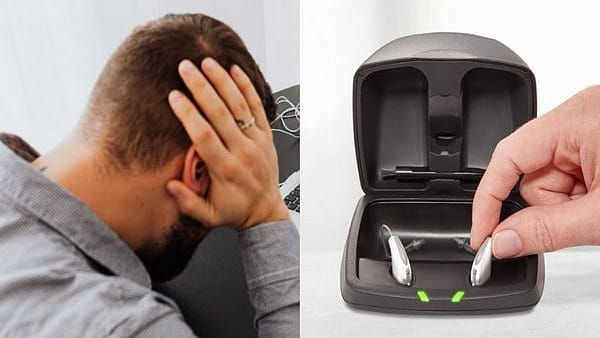
For a child who has grown up struggling to hear, a device can mean much more than sound. It can mean following a teacher in class, understanding a parent, joining a conversation or simply discovering what the world around them sounds like.
That was the human story at the centre of Australian High Commissioner to India Philip Green’s visit to the I Can Hear Foundation’s SpHear Clinic in New Delhi on Tuesday, where Australian hearing technology and India’s clinical expertise came together around children living with hearing loss.
The visit comes just days before the International Week of Deaf People, observed from September 21 to 27, and the International Day of Sign Languages on September 23. This year’s global theme is “Declaring Deaf People’s Human Rights”, according to the World Federation of the Deaf.
Philip Green visits Delhi clinic to see how hearing technology is changing lives
During his visit, Green met children and beneficiaries who have received support through the I Can Hear Foundation and watched demonstrations of cochlear implant mapping and rehabilitation services, the Australian High Commission said.

Zeroing In on ECI
09 Oct 2026 - Vol 05 | Issue 41
Constitutional legitimacy versus political opportunism
Among those he met was Tanya Rampal, who shared how access to hearing technology and continuing support had affected her life.
The visit also highlighted a point that can easily get lost when discussions about medical technology become dominated by devices and specifications: the implant itself is only one part of a much longer journey.
The I Can Hear Foundation works on awareness, early diagnosis, access to hearing aids and cochlear implants, and continuing hearing and speech rehabilitation. Its work is carried out in collaboration with SpHear Speech & Hearing Clinic and other partners. The foundation says its programme is designed to support families through different stages of the hearing journey, rather than stopping once a device has been provided.
Why early detection matters for children with hearing loss
The timing of intervention can matter enormously for a child.
The World Health Organization says hearing plays an important role in communication, language development, learning and social interaction. Its 2026 World Hearing Day campaign specifically highlighted the need for early identification and care for children with hearing problems, noting that untreated hearing loss can affect development, education and future opportunities.
WHO India has similarly stressed that early identification of hearing loss is key to effective management and that rehabilitation can include hearing aids, cochlear implants, sign language and speech and language therapy.
That makes the work of organisations such as the I Can Hear Foundation particularly significant in a country where access to specialised hearing care can vary considerably.
The foundation's own background information says it focuses on increasing awareness, supporting early diagnosis and intervention, providing access to hearing technology and helping children and families with hearing and speech therapy. It also runs Project Ghanti, which has worked to provide hearing aids and cochlear implants to people who may otherwise struggle to afford them.
What makes Cochlear technology Australian?
There is a distinctly Australian thread running through this story.
Cochlear, the company whose implant technology was highlighted during Green’s visit, traces its origins to research by Australian scientist Professor Graeme Clark. Cochlear says the multichannel cochlear implant was invented by Clark in Melbourne in 1978, with the company established in Australia in 1981. Its global headquarters remain in Sydney.
The technology has since become a global medical innovation. Cochlear says more than 700,000 people have been helped by its implantable hearing solutions.
For India, however, the bigger question is not where the technology was invented. It is whether children who could benefit from it can actually reach the diagnosis, treatment and rehabilitation they need.
From an implant to a child’s classroom: why rehabilitation matters
A cochlear implant does not simply switch hearing on and end the story.
Children receiving hearing technology may need ongoing clinical follow-up, device programming, auditory training and speech and language support. The I Can Hear Foundation's model therefore combines technology with rehabilitation and family counselling.
Dr Neevita Narayan, audiologist and co-founder of the foundation, and Dr Ameet Kishore, ENT surgeon and co-founder, said hearing loss is often a “hidden disability” and warned that delays in diagnosis and treatment can have educational, social, psychological and economic consequences for individuals and families.
They said the foundation has spent the past decade working across awareness, early diagnosis, intervention, hearing aids, cochlear implants and long-term support.
Green, meanwhile, described the work as an example of what can happen when innovation, medical expertise and sustained support come together. He said access to hearing solutions is ultimately about more than sound — it can affect communication, education, independence and participation in society.
And perhaps that is the most important takeaway from his visit to the Delhi clinic. The real measure of hearing technology is not the sophistication of the device sitting behind a child’s ear. It is what happens afterwards — when that child can participate in a classroom, speak with confidence, connect with family and begin imagining a future without hearing loss defining the boundaries of everyday life.
(With inputs from ANI)