From Dak Babu to Drone: India Post Takes the Mail to the Skies
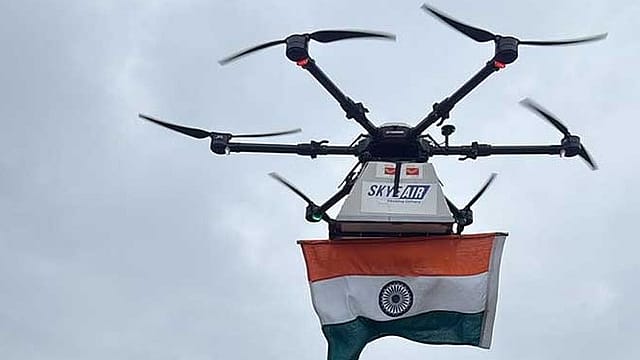
For generations, the Indian postman came on foot. Then came the bicycle. The scooter. The van. Now, the postman has wings.
India Post is taking its Dak to the skies, deploying drones to ferry postal bags across mountains, rivers and difficult terrain in an experiment that could dramatically change last-mile delivery in some of India's hardest-to-reach corners.
And if you want to understand what a drone can do to the humble post, consider one journey in Himachal Pradesh. From Mandi Head Post Office to Rehardhar Branch Post Office, the conventional trip across roughly 12 km of mountainous terrain takes more than two hours.
The drone? Seven minutes. Same letters. Same parcels. A very different postman.

Rise of the Pivotal Power
18 Sep 2026 - Vol 05 | Issue 38
The BRICS declaration is a strategic victory for Modi
Why is India Post flying the mail?
Geography. For much of urban India, getting a parcel delivered is increasingly measured in hours. In remote India, the last few kilometres can still be the hardest. Mountains, floods, rivers, landslides and poor road connectivity can delay the movement of postal bags, sometimes cutting communities off from services that extend far beyond letters. That is the gap India Post wants drones to bridge. Civil Aviation Minister Ram Mohan Naidu Kinjarapu summed up the transformation by recalling an India where a letter could take weeks to arrive. “From waiting weeks for a letter to delivering it through a drone, this is quite a journey,” he wrote on social media. Communications Minister Jyotiraditya Scindia said drones were transforming last-mile Dak delivery “like never before” and that India Post intends to take the technology to more parts of the country.
Where are the drones already flying?
Assam and Himachal Pradesh are emerging as important testing grounds. In Assam, the first drone-powered postal operations began from Hajo Sub-Post Office under the Guwahati postal division. Drones have carried letters and parcels to Khetri Hardia Branch Post Office, about seven kilometres away, and Dampur Branch Post Office, roughly eight kilometres from Hajo. Those are just the beginning. Nine routes covering nearly 82 km have been identified from Hajo alone. In Himachal Pradesh, the mountainous Mandi-Rehardhar journey demonstrates why the technology could be particularly useful. More than two hours by conventional means. Seven minutes through the air.
How big could this become?
Considerably bigger. Once fully operational, the proposed network is expected to cover 110 routes in Himachal Pradesh and 40 in Assam. India Post has partnered with drone logistics company Skye Air Mobility for the operations. The drones can carry postal bags weighing up to 10 kg, operate across routes ranging from five kilometres to more than 80 kilometres and be tracked in real time. But the real significance isn't how quickly a birthday card arrives. This isn't only about letters. In remote India, the post office is much more than a place that delivers mail. Branch post offices connect people to pensions, postal banking, savings products, insurance, government documents and other public services. When the Dak is delayed, some of those services can be delayed too. That makes a drone carrying a 10-kg postal bag something more consequential than a logistics gimmick. “For us, this is not simply about transporting a postal bag faster,” Skye Air Mobility founder and CEO Ankit Kumar said, pointing to the role postal deliveries play in carrying pensions and government communications to isolated communities.
Is the postman disappearing?
Hardly. Drones solve a particular problem: moving postal bags rapidly across terrain where conventional transport is slow or vulnerable to disruption. The human network is still required to get those services to their final destination. Think of it less as replacing the postman and more as giving him a shortcut through the sky. India Post has spent generations connecting one of the world's largest and most geographically complicated countries. The destination hasn't changed. Only now, some of the Dak doesn't need a road to get there.
(With inputs from ANI)