El Nino Strengthens: What It Means for India's Kharif Crops and Farmers
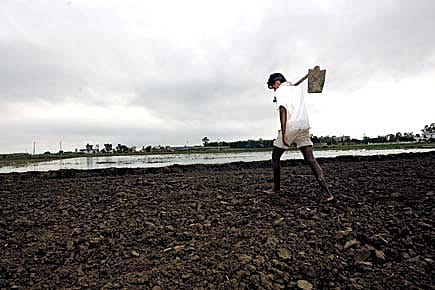
India's kharif sowing season has gathered pace over the past few weeks, but concerns are growing over the impact of strengthening El Niño conditions and the possibility of below-normal rainfall across several key agricultural regions.
According to a report by Dolat Capital, cotton and oilseed crops are likely to face the biggest weather-related challenges if rainfall remains weak during the crucial stages of crop development.
The report noted that while sowing has improved considerably compared to previous weeks, weather conditions over the coming fortnight will play a decisive role in determining crop health and eventual yields.
Overall Kharif Sowing Is Improving
Kharif sowing has continued to gain momentum, with the total sown area rising to 531.3 lakh hectares. The seasonal acreage gap has also narrowed significantly and now stands at just 18.1 lakh hectares compared with the five-year average.

Zeroing In on ECI
09 Oct 2026 - Vol 05 | Issue 41
Constitutional legitimacy versus political opportunism
However, Dolat Capital cautioned that favourable sowing progress alone may not be sufficient if rainfall weakens during the rest of the season.
"However, the IMD's extended-range forecast indicates that overall rainfall is likely to remain below normal over the next two weeks," said Dolat Capital.
Which Regions Could Receive Less Rain?
The report highlighted that Rajasthan and North Peninsular India—including Maharashtra, Telangana, Andhra Pradesh and North Interior Karnataka—are expected to receive below-normal rainfall over the next two weeks.
In contrast, Kerala, parts of East Central India and the Western Himalayan region are likely to witness above-normal rainfall.
The India Meteorological Department's outlook suggests that rainfall distribution will remain uneven across the country, potentially affecting crops that rely heavily on timely monsoon showers.
Rainfall Deficit Is Narrowing
Despite concerns over the outlook, cumulative rainfall has improved gradually.
The all-India rainfall deficit narrowed to -17.8 per cent as of July 12 from -20 per cent a week earlier.
The largest shortfalls continue to be recorded in East and Northeast India (-37 per cent) and the South Peninsula (-20 per cent). Central India (-5 per cent) and Northwest India (-9 per cent) have experienced relatively smaller deficits.
The report also noted that no region of the country currently falls under the "large deficient" rainfall category. Similarly, the small excess rainfall zone seen last week has now returned to normal.
Which Crops Are Performing Better?
Rice has emerged as the strongest performer so far this season.
According to the report, rice sowing has moved into surplus territory compared with the five-year average due to faster transplanting. Acreage has reached 114.7 lakh hectares, which is 17 lakh hectares above normal.
Sugarcane has also recorded healthy progress, with sowing reaching 57.6 lakh hectares, or 2.4 lakh hectares above normal.
Meanwhile, pulse sowing stands at 56.6 lakh hectares, remaining 5.6 lakh hectares below the five-year average. Coarse cereals have improved to 98.7 lakh hectares, but are still 2.7 lakh hectares below normal.
Why Are Oilseeds and Cotton Under Pressure?
The biggest concern remains the slower pace of sowing in oilseeds and cotton, both of which depend significantly on adequate monsoon rainfall.
Oilseed acreage has reached 117.8 lakh hectares, but remains 13 lakh hectares below the five-year average. Although the gap has narrowed in recent weeks, soybean and groundnut sowing continue to lag.
Cotton has also witnessed slower progress.
According to the report, "79.5 lakh ha but remained 16.3 lakh ha below normal."
These crops could face additional pressure if rainfall remains below normal during the critical growth period.
What Could Improve the Situation?
The report also points to some positive weather developments that could provide relief in the coming days.
"Going forward, the anticipated fresh cyclonic circulation over the northwest Bay of Bengal, along with the monsoon trough persisting near its normal position, is expected to sustain rainfall over Central and East India in the near term," Dolat Capital noted.
If these weather systems strengthen as expected, they could improve soil moisture and support crop growth across several key agricultural regions, partially offsetting the risks posed by strengthening El Niño conditions.
(With inputs from ANI)