Centre Reviews Drought Preparedness Amid El Nino-driven Rainfall Deficit
The Central government on Friday reviewed the prevailing situation arising from below-normal rainfall in several parts of the country and its impact due to 'El Nino' weather pattern--a climate phenomenon marked by the warming of sea surface temperatures in the central and eastern equatorial Pacific Ocean, which often weakens the Indian summer monsoon, resulting in below-normal rainfall.
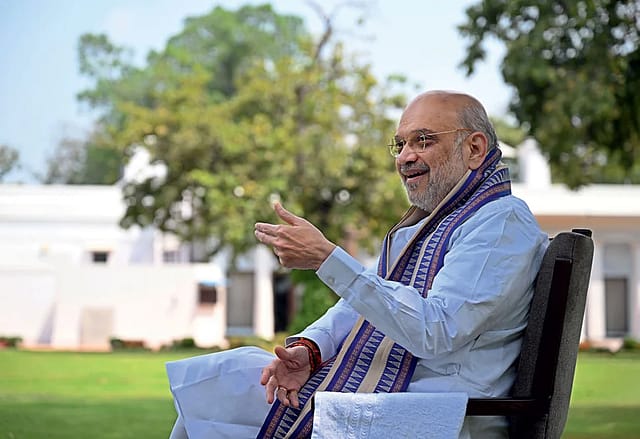
Union Home Minister Amit Shah and Union Minister of Agriculture and Farmers Welfare Shivraj Singh Chouhan reviewed the situation and assessed its likely impact on agriculture, water availability and overall preparedness, with an emphasis on coordinated measures to minimise adverse effects.
Union Home Minister said that the government is continuously monitoring the situation regarding below-normal rainfall and potential drought conditions in certain parts of the country due to El Nino.
He directed the Ministry of Agriculture and all related ministries to remain vigilant and coordinate with state governments to advise farmers on the appropriate crops to sow.
Shah also instructed officials from the Department of Water Resources to monitor all water reservoirs across the country. He further emphasised the need to focus on alternative crops that require less water, such as fodder, millets, and pulses.
Shah directed the Secretary of the Union Ministry of Power to take necessary action to ensure a smooth and adequate supply of electricity.
During the meeting, the Home Minister was apprised that adequate quantities of essential food grains--including rice and wheat--are available in the country, and the prices of essential commodities remain stable.
The meeting was attended by Secretaries from the department of agriculture and farmers welfare; department of water resources, river development and ganga rejuvenation; department of consumer affairs; ministry of fisheries, animal husbandry and dairying; ministry of environment, forest and climate change; ministry of power; ministry of rural development, and department of science and technology; members and heads of divisions of the National Disaster Management Authority (NDMA); the Director General of the India Meteorological Department (IMD); the Chairman of the Central Water Commission; and officials from various other departments, including the Indian Agricultural Research Institute and the National Remote Sensing Centre.
The minister also instructed that the Inter-Ministerial Central Team (IMCT) of the Ministry of Home Affairs should be deputed to Assam and Arunachal Pradesh to assess the damage caused by recent heavy rainfall, flash floods, and landslides, as both states have been affected, with Assam experiencing rising floodwaters in multiple districts and Arunachal Pradesh facing landslides and road blockages in several hilly areas.
The IMCT's on-the-spot assessment is essential to evaluate the extent of damage to infrastructure, agriculture, and human habitations.
(With inputs from ANI)