Breezing into a Sugar Scare
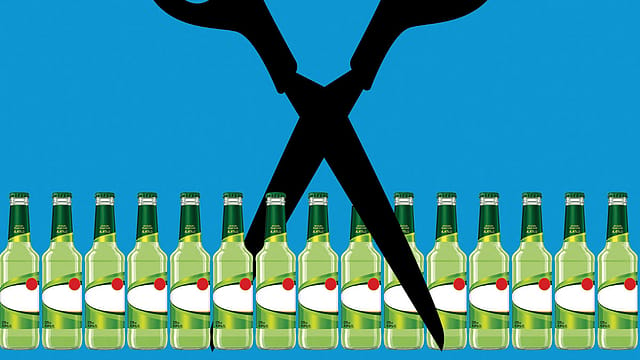
THE BACARDI Breezer brand is caught in the vortex of a political storm in Kerala, where newly elected Chief Minister VD Satheesan, in his revised budget for 2026–27, introduced a lower sales tax for what the government considers low-alcohol drinks. Beverages with 0.5 per cent to 10 per cent alcohol will attract a sales tax of 120 per cent, while those in the 10 per cent to 20 per cent category will attract a tax of 175 per cent, as opposed to the 251 per cent per cent tax applicable to all beverages that come under the Indian Made Foreign Liquor (IMFL) umbrella term. Those with more than 20 per cent alcohol content will continue to be taxed at 251 per cent.
Amid the heated exchanges between the opposition Left Democratic Front and Congress, which, in fact, still faces resistance to this new provision from within, Health Minister K Muralidharan said that if such beverages (with low alcohol content) are not available, some people may resort to consuming adulterated liquor, leading to disasters. He also said that the purpose of offering low-alcohol drinks is to lessen the impact of alcohol consumption in a state where liquor consumption is considered high.
The health minister’s statement has given the government’s move, which was undertaken without consulting the allies of the Congress-led coalition, a justification—and a strange one at that: a health reason of sorts.
Herein lies the problem. The chief minister’s rationale for the new tax slab for drinks—or for that matter, the excise minister's assertion that the plan was borrowed from the previous Left government's proposals, which, according to him, were about to be implemented—sounds more like politics than public-health concerns. Accusations that the chief minister has offered Bacardi India Limited an inducement are being hurled at Congress. A CPM lawmaker said that the chief minister “smells of Bacardi”, while another politician said there is a new kind of tax in Kerala, and it is called the “Bacardi tax”.
Trying to lessen the impact of alcohol consumption is a claim that has brought to the fore a debate around how healthy Breezer really is. In cocktail-circuit conversations, Breezer has always been considered a sissy drink, or one that is not in the league of an alcoholic drink at all. Even women increasingly do not want to be grouped among Breezer drinkers, although the brand was initially targeted at them. Women, in fact, want to be seen as no less capable than men of holding their drink. Among the more health-conscious, the effort has been to move away from the so-called alcopops, which are low in alcohol by volume (ABV) but highly sweetened. Among the super-rich, tequila has emerged as a fad—not as shots, but consumed by the peg with plain water or ice, not soda, and without salt on the rim.
Now, on average, Breezer is highly sweetened, except for its Lite variety. According to Bacardi’sowndisclosure, Breezer Peach, an alcopop with below 5 per cent alcohol, contains 21.5gms of sugar and carbohydrates in its 275ml bottle. Bacardi Lemon Elderflower contains 23.4gms of sugar and carbohydrates. Breezer Blood Orange Ginger contains 22gms of sugar and carbohydrates in its 275ml bottle. Breezer Strawberry Daiquiri contains 33.6gms of sugar and carbohydrates. In a state often called the diabetes capital of India—the country that is widely described as the diabetes capital of the world— this decision to lower taxes on a highly sweetened alcopop comes nowhere near being a solution to reducing the impact of alcohol consumption, especially on health parameters.
According to a comprehensive study conducted by the Indian Council of Medical Research (ICMR) and the Madras Diabetes Research Foundation, published in The Lancet Diabetes & Endocrinology, Kerala consistently exhibits one of the highest diabetes prevalence rates in the country, at 23.6 per cent to 25.5 per cent. This rate far outpaces the national average of around 11.4 per cent. The study further highlighted that an additional 18.1 per cent of Kerala’s population is in the pre-diabetic stage. The final results of the study, conducted across 31 states and titled ‘Metabolic Non-Communicable Disease Health Report of India’, show that Kerala figures among the top three states with the worst overall indicators for lifestyle diseases and related health conditions.
Which only means that reducing sales tax on sweetened products because they contain low levels of alcohol is an unproductive, if not suicidal, move.
For a state that prides itself on its social development indicators that are comparable to those of advanced countries and a relatively robust public-health system that didn’t get overwhelmed even by the Covid-19 outbreak, Kerala is often expected to align its policies with global trends. It has sought to do exactly so in the case of Type 1 diabetes, where Chief Minister Satheesan wants to address gaps in the implementation of the flagship Mittayi scheme for children afflicted with this serious health condition.
Globally, greater priority is increasingly being given to combating lifestyle diseases caused by excessive sugar consumption. In fact, in 2022, the World Health Organization (WHO) released its first-ever global tax manual for sugar-sweetened beverages (SSBs). According to the latest available data, more than 85 countries have implemented some form of SSB taxation, prompting the WHO to state that the benefits of such taxes are evident in countries including Mexico, South Africa, and the UK. “Taxes on sugar-sweetened beverages can be a powerful tool to promote health because they save lives and prevent disease, while advancing health equity and mobilising revenue for countries that could be used to realise universal health coverage,” a WHO official was quoted as saying in the organisation’s report.
The report also emphasised that taxes on SSBs, tobacco and alcohol have proven to be cost-effective ways of preventing diseases, injuries and premature mortality. It is also believed that an SSB tax can encourage companies to reformulate their products to reduce sugar content. WHO has also stated that regular “consumption of SSBs, including soft drinks, flavoured milks, energy drinks, vitamin waters, fruit juices and sweetened iced teas, is associated with an increased risk of dental cavities, Type 2 diabetes, weight gain and obesity in both children and adults, heart disease, stroke and cancer.”
Let’s also look at what world-renowned nutrition researchers have found. Frank Hu, chair of the Department of Nutrition and the Fredrick J Stare Professor of Nutrition and Epidemiology at Harvard TH Chan School of Public Health, says that although alcohol, nicotine and opiates are all classified as addictive substances based on strict clinical criteria, sugar has not been, technically. He adds, “But the physical and psychological effects [cravings] are real.” And so he warns in a 2025 write-up, “People should be aware of the amount of sugar they’re consuming. Read the food labels for your cookies and snacks. Going cold turkey can backfire, so reduce your amount of added sugar gradually.” Although Frank Hu is not fanatically anti-sugar, he is worried about the consequences of high sugar consumption becoming a habit.
As of now, the political controversy in Kerala has opened up the possibility of a nationwide debate on whether sugary drinks, including Breezer and other alcopops, should attract a higher tax instead of a tax cut. While Indian politics could admittedly do with a dose of sweetness, lumping sugar with alcohol can prove to be counterproductive.