Artificial Intelligence: Perfecting the Future
NOT LONG AFTER he became the prime minister in 2014, Narendra Modi approved an ambitious plan to bring millions of unbanked people into the banking system through zero balance PM Jan Dhan (PMJD) accounts. Aware of the documentation hurdles the poor face, Modi instructed officials to ensure the application form was no more than a page. By January 2020, just ahead of Covid striking India, there were 38 crore PMJD accounts. They proved a lifeline as women account holders received a direct transfer of `500 a month to mitigate the impact of the pandemic.
The linking of Aadhaar with PMJD accounts and mobile numbers formed the JAM (Jan Dhan- Aadhaar-Mobile) trinity that was simple in design but spectacular in impact. French President Emmanuel Macron put in perspective at the India AI Summit on Thursday, February 19, when he said a street vendor in Mumbai in 2014 had no bank account. “No address, no papers, no access…And today the same vendor accepts payments on his phone, instantly and for free. That is not just a tech story, that is a civilisation story,” Macron said.
Modi understood the utility and unbounded prospects of Aadhaar’s biometric-based system that could confirm identity in 0.3 seconds, making banking and financial transactions safe and fast. The decision to place Aadhaar under a statutory framework—which the Supreme Court upheld—meant India did not miss the second digital age, one where applications and e-commerce dominate the consumer experience and are the backbone of not just banking but almost every form of business from leading brands to the neighbourhood mom and pop store.
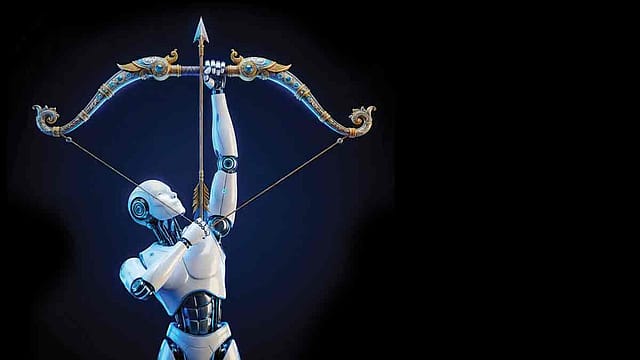
Speaking after Macron, the prime minister embraced the next, and much larger technological surge to envelop human society, and firmly wedded it to India’s future. “There are two types of people in the world. One, those who fear AI. They always talk like that [negatively] but there are others who see destiny in AI. I can say with responsibility, with pride, India does not fear AI, it sees the future in AI,” Modi said. It was an extraordinary statement, indicating the prime minister’s determination to develop all stacks of AI from applications to innovation in India.
The MissOil Strike
03 Apr 2026 - Vol 04 | Issue 65
The War on Energy Security
A few years ago, when Modi began to explore AI as a concept in course of his engagement with the internet, he found the technology intriguing and, despite its unsettling aspects, a possible governance tool. He asked officials to begin using AI and studying its possibilities. He met leading AI innovators like Sam Altman, founder of OpenAI and developer of ChatGPT. Altman was present at Bharat Mandapam and stood alongside Modi and other tech czars like Google’s Sundar Pichai, Anthropic’s Dario Amodei and Meta’s chief AI officer Alexandr Wang.
The prime minister set out India’s AI mantra simply and precisely. India did not see AI as a secret weapon and a strategic asset but rather as an open and collaborative model. Countries like India and France, who are more in the nature of middle powers, can cooperate to counter attempts to construct hegemonies. Most importantly, AI need not only be large in scale and indigenous models can provide cultural context, enhance access across languages and build sovereign knowledge reservoirs that do not interpret India through a foreign and insensitive lens. n