Ajit Doval Meets UAE President: Key Takeaways from High-Level Talks
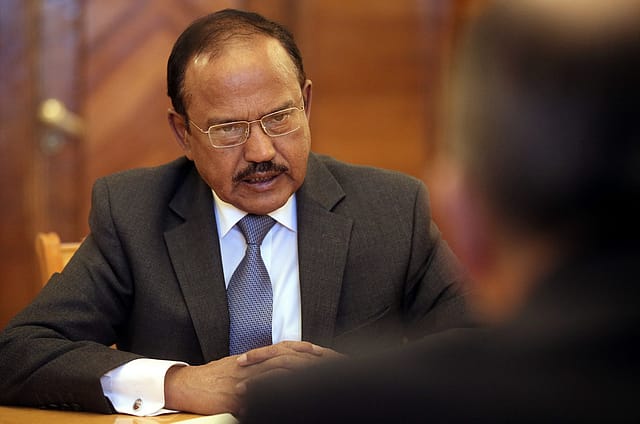
India’s National Security Adviser Ajit Doval’s latest visit to the United Arab Emirates signals a continued push to deepen ties with one of India’s most critical partners in the Middle East. Doval’s meeting with UAE President Sheikh Mohamed bin Zayed Al Nahyan comes at a time of shifting regional dynamics and growing global energy concerns, placing renewed focus on strategic cooperation between the two nations.
What happened during Ajit Doval’s meeting in Abu Dhabi?
NSA Doval met the UAE President in Abu Dhabi, where both sides discussed expanding the Comprehensive Strategic Partnership. The talks covered a wide range of issues, including energy security, regional developments, and broader bilateral cooperation.
According to the Indian Embassy in the UAE, Doval also conveyed greetings from Prime Minister Narendra Modi and emphasized strengthening ties. As stated in the Embassy’s post, “He called on President HH Sheikh Mohamed bin Zayed Al Nahyan. Conveyed greetings of PM, Narendra Modi. Measures to deepen the Comprehensive Strategic Partnership, the regional situation, and other issues of mutual interest were discussed.”

Zeroing In on ECI
09 Oct 2026 - Vol 05 | Issue 41
Constitutional legitimacy versus political opportunism
The UAE’s state-run news agency WAM noted that the meeting included an exchange of greetings and goodwill messages between the leadership of both nations. Doval conveyed “PM Modi's greetings and best wishes for the UAE's continued progress and prosperity,” while the UAE President reciprocated with wishes for “further development and prosperity for India and its people.”
Why is energy security a key focus right now?
Energy security has emerged as a central pillar of the India-UAE relationship, particularly amid ongoing geopolitical tensions in the Middle East. Both countries discussed global energy concerns and how evolving regional developments could impact supply stability and pricing.
As one of India’s key energy partners, the UAE plays a crucial role in ensuring steady oil and gas supplies. The discussions reflect India’s intent to safeguard its energy needs while also strengthening long-term cooperation frameworks in the sector.
How does this meeting fit into the broader India-UAE relationship?
This high-level engagement is part of a series of recent diplomatic interactions that highlight the strength and continuity of India-UAE ties. Notably, this is the second such meeting in just a month.
Earlier, External Affairs Minister S Jaishankar met the UAE President during his visit, where he highlighted the resilience of the partnership. He noted that the relationship remains robust and transparent despite a “complex regional environment.”
Doval’s meeting also included key UAE officials such as Sheikh Khaled bin Mohamed bin Zayed Al Nahyan, Crown Prince of Abu Dhabi, and Ali bin Hammad Al Shamsi, Secretary-General of the Supreme Council for National Security, underscoring the strategic importance both sides attach to this engagement.
What does this mean for regional security and diplomacy?
The discussions went beyond bilateral ties, touching upon recent developments in the Middle East and their implications for regional and global stability. With ongoing uncertainties in the region, India’s proactive engagement with the UAE signals its intent to play a stabilizing and cooperative role.
By aligning on shared concerns such as security and energy, both countries are reinforcing a partnership that extends beyond traditional diplomacy into strategic and economic collaboration.
(With inputs from ANI)