2026 Forecast: Travel: Where Indians Dare
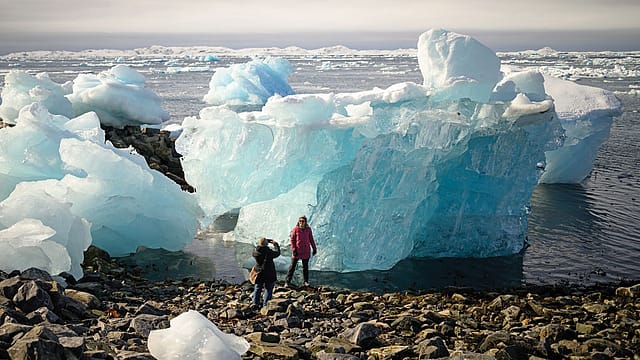
ON A FEBRUARY NIGHT IN 2026, SHIVANI THAKKAR HOPES TO BE standing still in the dark. She will be somewhere outside Rovaniemi, far enough from streetlights for the sky to recover its depth. Weather willing, the aurora will begin to move across the horizon, slowly at first, then in ripples. The northern lights demand patience, cold, and a willingness to feel very small. Thakkar, 33, a software engineer in Whitefield, Bengaluru, has never travelled like this before. Until recently, she preferred Dubai, Sri Lanka, places that offered reassurance. But Sri Lanka unsettled her in an unexpected way. In early 2025, she signed up for a diving course off the island’s southern coast. Days passed underwater and “changed how I think about travel,” she says. “You stop chasing things. You start paying attention.”
A week in Finland will cost her and her partner `6 lakh. They have been saving for six months. They will eat what is served—salmon soup, rye bread, game stew—and for the first time, not expect a poor approximation of Punjabi fare. That instinct, to step briefly outside familiarity, is reshaping how Indians travel abroad. Indian outbound travel is increasingly about avoiding crowds that feel like extensions of home. Avoiding places where Indian restaurants arrive faster than luggage. Avoiding the anxiety of disparagement. The familiar circuits—Dubai, Phuket, Bali, even Vietnam, which emerged as a breakout destination for Indians in 2025—feel oddly domestic now, saturated with expectation. You land already understood. By 2026, that ease has begun to feel like a loss.
Instead, Indian travellers are drifting sideways. They are travelling into regions that sit adjacent to known geographies but resist easy consumption. The Baltics, interior Spain, Borneo, Slovenia, Hungary, Austria, Rwanda. These destinations have not yet been folded into the Indian imagination. But they are attractive to the curious traveller whose excitement partly stems from the fact that there are no agreed-upon itineraries, that English is spoken but not offered pre-emptively, that vegetarian food exists but you must look for it. You must, briefly, fend for yourself.
“You can feel the shift in how people want to spend time,” says Junaid Iqbal, who heads the Bengaluru operations for Riya Travels, a travel company that offers visa services and holiday packages besides a full-stack travel booking experience. “Places we once sold as three-day breaks are finally being explored at leisure.” Malaysia is a case in point. Travellers are heading into Sabah and Sarawak, into Borneo’s rainforests where orangutans move like reluctant philosophers and rivers are still highways. Thailand, too, is being re-explored via Chiang Rai and Isan instead of Phuket. Skyscanner’s 2026 forecast for India in fact suggests a traveller who is less interested in conquest than in texture: 41 per cent plan to travel with family, including multi-generational journeys, 37 per cent want to meet new people on the road, 36 per cent want to explore local supermarkets and grocery stores, and 35 per cent want accommodation that is part of the experience, not just a base. Hilton’s 2026 trend report too describes “grocery store tourism” as a broad traveller impulse.
At the other end of the scale, agents say HNIs are experimenting with Caribbean cruises and canyoning in the Canadian Rockies; Bollywood stars are lounging at private islands in the Maldives; and politicians are island hopping in Indonesia. Pensioners and corporate retirees have meanwhile emerged as a big category, signing up for guided tours of Europe, Australia, New Zealand, and the Baltics with deep pockets and even deeper expectations.
Travel platforms that tracked the trends of 2025 describe a strong value-and-experience orientation among Indians. Cleartrip’s year-end recap, for instance, points to a sharp rise in Gen Z bookings and mobile-first planning, with travellers “chasing experiences” more than once-a-year holidays. Increasingly, young Indian travellers are building trips around what might be called experience capsules, not sightseeing in the old sense, but moments dense with symbolic value: swimming with whale sharks in the Philippines, driving through Tuscany during harvest, waiting for the northern lights to appear in silence. “Gen Z is super aspirational with travel—and they are redeeming credit card points for flights and hotels like never before,” says Kanishk Razdan, founder of PointsCasa, a startup working in credit card rewards and redemption for travel. The trip becomes a financial project, a small private discipline. His co-founder, Ayan Singh, notes how even expensive regions like Europe are being explored: “People increasingly want to tackle smaller regions. Hungary and Austria instead of a pan-Europe trip. The idea is to unlock more value out of each place.”

IF EARLIER GENERATIONS travelled with guidebooks and later ones with TripAdvisor, the present Indian traveller relies on Instagram as though it were a navigation system: not merely showing people where to go but teaching them how to want—the angle of the shot, the must-do experience, the tempo of an itinerary designed for posting. Skyscanner’s 2026 report reveals that 59 per cent of Gen Z cite Instagram as a favourite source of travel inspiration (with YouTube at 54 per cent), especially for “authentic” insider guidance—what is worth the hype, what isn’t, and where the “hidden gems” are. The paradox is that Instagram sells individuality at scale, with millions of people chasing the same “unmissable” moment. Even as travellers complain about overtourism, social media keeps manufacturing fresh micro-pilgrimages, an assembly line of desire, so much so that Booking.com’s travel predictions have flagged a counter-instinct: 44 per cent of travellers say they avoid tagging locations to keep “Instatourists” from descending and ruining the mood. The new travel status isn’t just going somewhere beautiful; it is getting there before the feed turns it into a queue.
In 2025, Indians made over 30 million outbound trips, a scale that has altered how Indian travellers are perceived abroad, and how they perceive themselves. The instinct to arrive before a place becomes crowded with one’s own reflection is a response to the numbers. For some destinations like Russia and parts of Eastern Europe, cost remains the key driver. “You can wrap up a five-day trip for `1.25 lakh per head and visas are manageable. And crowds thin out when you head out of the cities and you don’t have to bump into loud Indian crowds even when on a budget,” says Iqbal.
Among wealthier travellers, that concern has sharpened. “There’s a sense now that the Indian tourist image precedes you,” says Karan Aggarwal, who consults with a US-based luxury travel firm handling HNI portfolios. “People worry about partial service, about being lumped together.” Last year, he sent a group of friends, entrepreneurs in their late thirties, to Croatia. They weren’t looking for history alone, though Dubrovnik delivered that. They wanted space, music and an easy party vibe. “They came back relieved that the place wasn’t overrun with Indians,” he says.
That relief is shaping destination choice in subtle ways. Africa is rising, especially Kenya and Rwanda, where scale overwhelms self-consciousness. In Europe, the appetite has moved to the Dolomites, Lake Como, Portugal’s Algarve, and small-town Spain. Aggarwal recently helped a couple draft a 15-day honeymoon itinerary that entirely avoided the big cities and made its way through Granada, Seville, and Malaga instead. “They wanted to stay at boutique properties and drive across Spain. This is another trend we are seeing. Indians are increasingly willing to drive and explore destinations.”
Indian arrivals in Spain crossed 2.2 lakh in 2024, and provisional data suggests the numbers are slowly rising. Travel planners report Indians staying longer, exploring inland routes and experiencing the country chapter by chapter. Visa consultant Karthik Jonnakadla notes that solo travellers and couples without children are the most adventurous. He recalls his trip to Spain last October, when he covered Barcelona, Madrid, and Costa Brava: “Eight days and barely another Indian in sight.” Cost comparisons sharpen the calculus. Switzerland’s hotel prices feel punitive when Slovenia offers alpine lakes, medieval towns, and gourmet lunches at half the price, and without the sense of being late to the party. Even the Middle East is being reinterpreted. If Oman is emerging as an adventure destination, Abu Dhabi’s cultural push, with temples, museums, and Bollywood star appeal, is attracting first-time travellers.
This new wave of travel is due in part to easier visas. The Philippines, for instance, introduced visa-free entry for Indian nationals for short visits from June 2025. By the end of the year, India had become one of the country’s fastest-growing source markets, with over 85,000 Indian visitors recorded, many of them first-timers drawn not by cities but by islands, diving sites and encounters that resist easy repetition, whether it is swimming with whale sharks or long boat rides between uninhabited shores.
Japan has also moved into clearer view on Indian travel radars. According to figures cited by the Japan National Tourism Organization (JNTO), Indian arrivals crossed two lakh in 2024, making it the strongest year so far for the India–Japan travel corridor, and preliminary updates through 2025 suggest the numbers have continued to rise. Several factors are at work, including more flight connections, a relatively favourable yen, and growing interest in seasonal travel, such as cherry blossom viewing, and autumn and winter trips. What travel planners are seeing on the ground is not just first-time visitors doing Tokyo and Kyoto but also repeat travellers adding smaller towns, countryside rail routes and regional food trails to their itineraries, often extending stays to two or three weeks rather than city-hopping. While interest in Japan continues to spill over into 2026, Priyesh Sharma, founder, Viszapp, a visa assistance startup, says that China may actually be the big new destination in Asia for discerning Indians. “We are currently seeing a huge surge in the number of applications for Chinese tourist visas,” he says. “I think this could become a big trend.”
India’s global footprint has expanded too quickly for comfort. The Indian traveller arrives almost everywhere already known by stereotypes. By 2026, the deepest luxury will be temporary anonymity. To order badly at cafés. To misunderstand. To wait it out in the cold. The seasoned traveller knows how quickly circuits form now. What is empty this year is crowded the next. The new sophistication lies in arriving at a place before the Indian menu. As Shree Bhooshan, a 40-year-old frequent traveller from Mumbai, puts it, “There are tandoori restaurants even in Reykjavik.”